





The Unseen Threat of Storm Surges
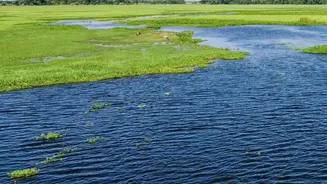
When a powerful cyclone makes landfall, we often focus on the destructive force of its winds. However, the most lethal aspect of a tropical storm is frequently the storm surge—an abnormal rise in sea level pushed ashore by the storm's powerful gales.
This is not a normal tide or a simple wave, but a massive dome of water that can sweep tens of kilometres inland, causing catastrophic flooding and immense loss of life. India, with its 7,500-kilometre coastline and densely populated coastal plains, is highly vulnerable. Historically, storm surges have been responsible for the highest number of casualties during cyclones in the region. Accurate prediction is therefore not just a scientific challenge; it's a matter of life and death.
ISRO’s Sharper Eyes in the Sky
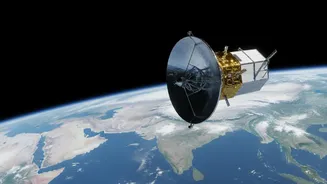
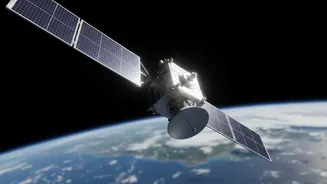
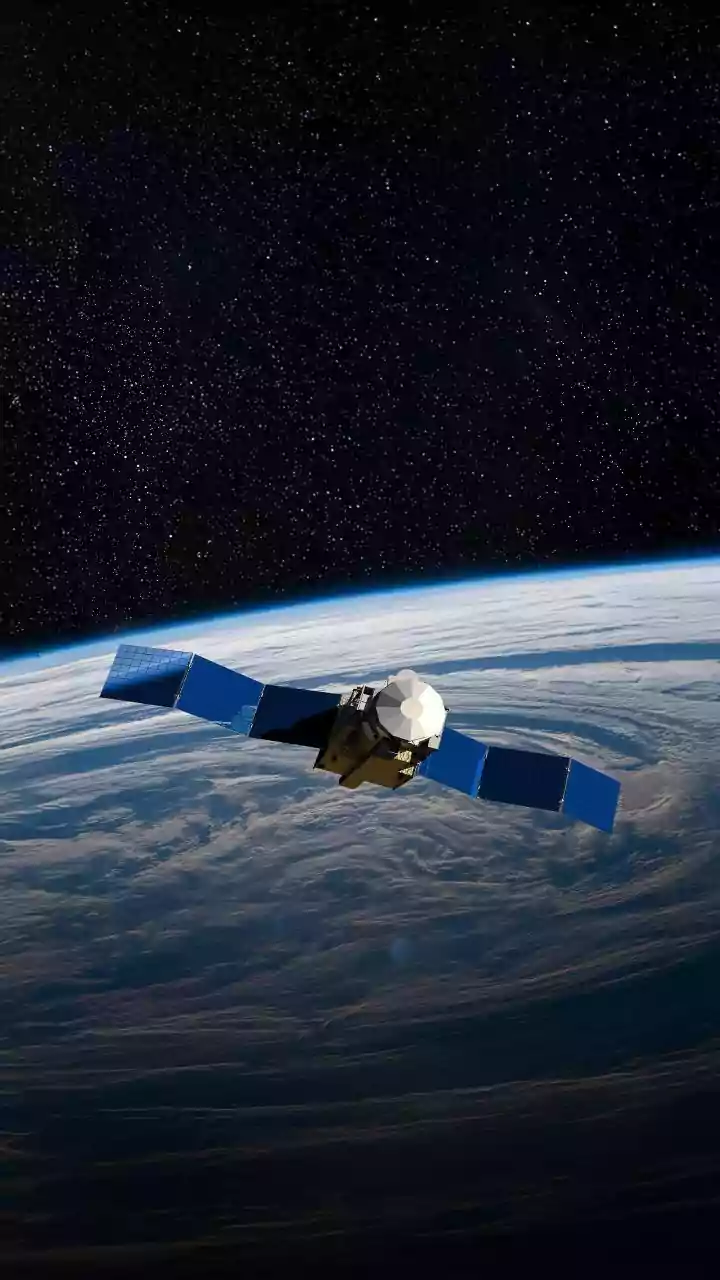
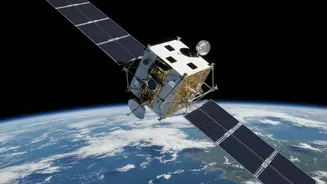
The Indian Space Research Organisation (ISRO) has long been the nation's first line of defence, providing crucial satellite data for disaster management. The latest advancements centre on a new generation of sensors and the sophisticated application of artificial intelligence (AI). Satellites like INSAT-3DR, INSAT-3DS, and Oceansat-3 are at the forefront of this effort. These platforms are equipped with advanced sounders, imagers, and scatterometers that provide a wealth of data on cloud formation, sea surface temperatures, and wind speeds. The key upgrade lies in the fusion of data from multiple satellites and the use of AI to process this information faster and more accurately than ever before. AI models can now analyse vast datasets to spot the subtle signs of cyclone intensification and improve storm tracking, a process that was previously more reliant on manual techniques.
From Raw Data to Life-Saving Alerts
A satellite image, no matter how detailed, is only the first step. The real magic happens when this data is fed into powerful numerical models on the ground. ISRO works in close coordination with agencies like the India Meteorological Department (IMD) and the Indian National Centre for Ocean Information Services (INCOIS). These organizations take the near real-time satellite inputs and run them through complex models like the Advanced Circulation (ADCIRC) model to simulate how a storm surge will behave. The improved data from ISRO's sensors enhances the initial conditions for these models, reducing uncertainty. This collaboration allows forecasters to predict not just that a surge will happen, but its potential height and the specific coastal areas likely to be inundated.
What 'Pinpoint Accuracy' Really Means
The phrase "pinpoint accuracy" doesn't mean predicting a surge down to the last centimetre. Rather, it represents a significant leap in forecast reliability and resolution. Thanks to these technological advancements, forecast accuracy for cyclone tracks and intensity has improved by as much as 15-45% in recent years. For coastal communities, this translates into more precise warnings. Instead of evacuating a vast, general area, authorities can issue targeted alerts for specific villages or coastal districts that are at the highest risk. This reduces false alarms, builds public trust in the warning system, and allows for more efficient and orderly evacuations. The lead time for forecasts has also extended, giving disaster management teams more precious hours and even days to prepare.
A New Shield for India’s Coastline
The impact of these upgrades extends far beyond the control rooms of meteorologists. For millions of Indians living in coastal regions, it means a greater sense of security. Improved forecasts protect critical infrastructure like ports, power plants, and transportation networks. They provide vital information for the fishing community, who can receive alerts through dedicated apps like SAMUDRA and specialized advisory services. Ultimately, this fusion of space technology, AI, and meteorological science represents a powerful shield. It is a testament to India's commitment to harnessing its scientific capabilities for the well-being of its citizens, turning cutting-edge innovation into a tangible tool for saving lives and building a more climate-resilient nation.