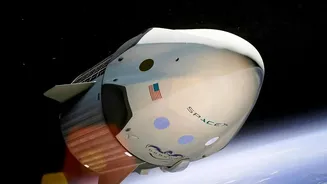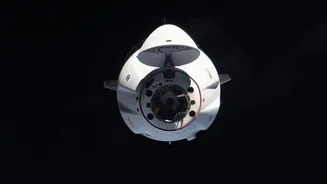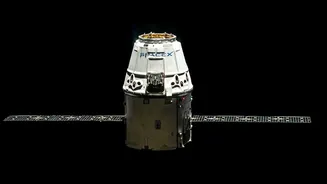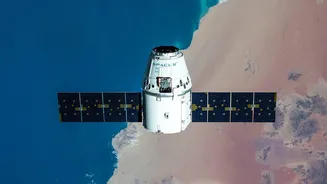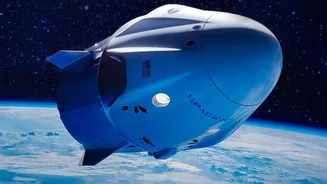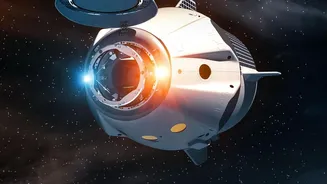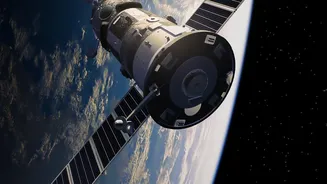


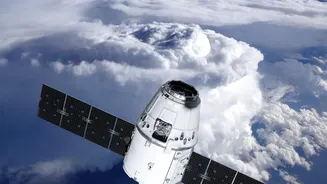
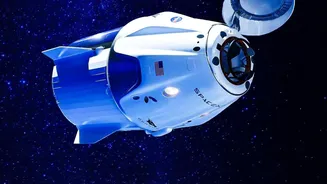
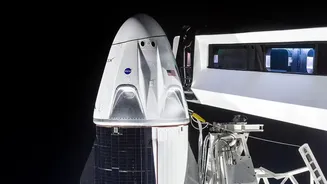
A SpaceX Dragon capsule has successfully returned to Earth, splashing down in the Pacific Ocean and marking the official end of a critical resupply mission for NASA. But this was no ordinary delivery van; it was a refrigerated time capsule for science.
A Fiery Return and a Gentle Splash
On November 21, after undocking from the International Space Station (ISS) a day earlier, the unpiloted Dragon spacecraft blazed through Earth's atmosphere and parachuted down to a soft landing off the coast of California. This concluded the 35th Commercial Resupply Services (CRS) mission, a long-running partnership between NASA and SpaceX to keep the orbiting laboratory stocked and productive. Launched on October 13, the capsule spent over a month docked to the ISS, delivering more than 2,860 kilograms of supplies, hardware, and new experiments. Its return journey, however, is arguably the most critical part of the mission for scientists back on the ground.
Why the Dragon Is a Scientific Lifeline
While other cargo vehicles can deliver supplies to the ISS, SpaceX's Dragon is currently the only one capable of bringing a significant amount of cargo back to Earth intact. Other vehicles, like Northrop Grumman's Cygnus and Russia's Progress, are designed to burn up upon reentry, serving as a disposable trash service for the station. The Dragon's reusability and gentle splashdown make it an indispensable tool for modern space research. It allows scientists to get their hands on experiments that have been exposed to the unique microgravity environment, turning the ISS from just a remote outpost into a fully functioning laboratory with a return service.
Precious Cargo: What Was in the Freezer?
The highlight of the return cargo was thousands of pounds of scientific samples, many of them carefully frozen to preserve their biological integrity for analysis. Among the precious items were frozen tumor organoids that were treated with experimental drugs aboard the station. Studying these in a lab on Earth could reveal new ways to improve cancer treatments and advance personalised medicine. Also returning was a 3D-bioprinted blood vessel structure. Researchers used this to study vascular aging and cardiovascular disease, hoping that the accelerated aging effects seen in microgravity can unlock new insights into conditions that affect millions on our planet. Additionally, frozen microbial samples were returned to help scientists understand how antibiotic-resistant bacteria survive and adapt in space, a critical area of study for both astronaut health on long missions and public health on Earth.
A Race Against Time on the Ground
Once the Dragon capsule is hoisted from the Pacific onto a recovery vessel, a different kind of mission begins: a race against time. The most time-sensitive scientific samples are immediately unloaded and prepared for a swift trip to research facilities. For splashdowns off the California coast, this means a quick flight back to science teams waiting to process the materials. This rapid return is crucial. For biological samples like the organoids and blood vessel constructs, every minute counts to prevent degradation and ensure the data gathered is as pure as possible. It is this final, frantic leg of the journey that ensures the multi-million dollar investment in space-based research pays off with tangible results.
From Orbit to Earth: The Future of Health
While the sight of a rocket launch captures public imagination, the quiet return of a cargo capsule is where potential breakthroughs are born. The experiments from CRS-35 are prime examples of how the ISS is being used as a powerful platform for biomedical discovery. Research into the manufacturing of artificial retinas, studies of 3D human heart tissue models, and investigations into neurological conditions like Alzheimer's and Parkinson's disease were all part of this mission's broader scientific portfolio. By leveraging the microgravity environment, scientists can study complex biological systems in ways that are impossible on Earth, potentially accelerating the development of new drugs and therapies. Each returning capsule is a treasure chest, bringing us one step closer to solving some of humanity's most pressing health challenges.