


Use Your Senses: The Look and Smell Test
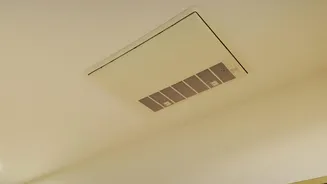
The simplest checks involve your own eyes and nose. Take a walk through your home and look for tell-tale signs. Is there a constant, fine layer of dust on surfaces shortly after cleaning? Check the areas around your HVAC vents for significant dust buildup.
These are indicators that your current filtration isn't catching common particles. Your nose is also a powerful tool. Persistent musty or stale odours can suggest mold, mildew, or a lack of fresh air circulation. If you notice unpleasant smells when your heating system kicks on, it could mean your filter is dirty and circulating contaminants instead of trapping them.
Monitor Your Health and Comfort
Your body often provides the clearest clues about poor indoor air quality. Pay attention to recurring physical symptoms that seem to lessen when you leave the house. An increase in sneezing, coughing, sinus congestion, watery eyes, headaches, or general fatigue can be linked to airborne irritants. If you or your family members find that allergies or asthma flare up more often while indoors, it’s a strong signal that allergens like dust, pet dander, and pollen are circulating freely. During winter, when homes are sealed, these symptoms can become more pronounced, pointing directly to a need for better air filtration.
Inspect Your Current HVAC Filter
The first line of defence in your home's air quality is the filter in your heating, ventilation, and air conditioning (HVAC) system. You should check it regularly. Locate the filter, which is typically near your indoor furnace or air handler unit. Slide it out and hold it up to a light. If it’s grey, clogged with dirt, or you can't see the light through it, it’s overdue for a change. A clogged filter not only fails to clean the air but also restricts airflow, forcing your system to work harder and increasing energy bills. Most standard filters should be replaced every 30 to 90 days, but this can vary based on your home's specific conditions, such as having pets or living in a dusty area.
Understanding Filter Ratings (MERV)
When you replace your filter, don’t just grab any size that fits. Look at the MERV rating, which stands for Minimum Efficiency Reporting Value. This scale from 1 to 16 indicates how effectively a filter traps airborne particles; the higher the number, the smaller the particles it can capture. For most homes, a filter with a MERV rating between 8 and 13 is the sweet spot. A MERV 8 filter is good for capturing basics like dust and pollen. If you have pets or allergies, upgrading to a MERV 11 can trap pet dander and finer particles. A MERV 13 filter can capture even smaller particles like smoke and smog. However, a higher rating also means more restricted airflow, so check your HVAC system's manual to ensure it can handle a higher-efficiency filter without straining the motor.
Consider Air Quality Monitors and Purifiers
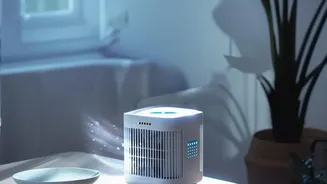
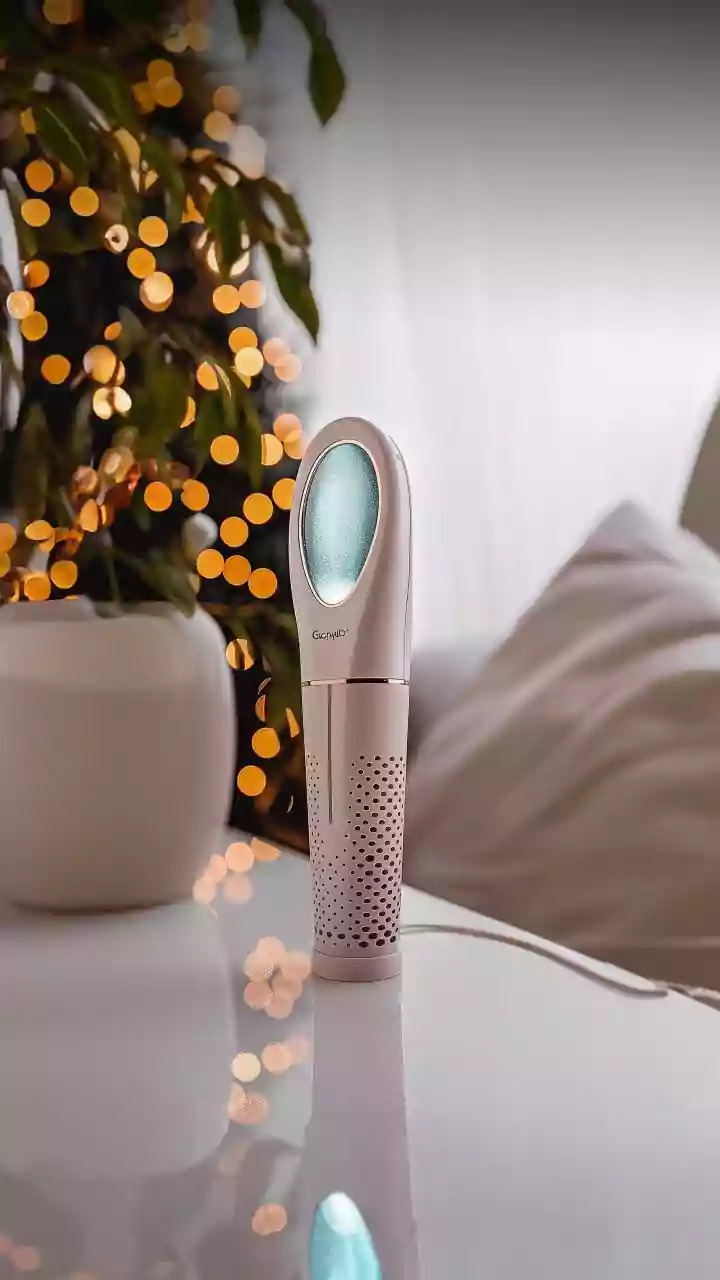
For a more scientific approach, you can use an indoor air quality (IAQ) monitor. These devices track levels of pollutants like particulate matter (PM2.5), volatile organic compounds (VOCs) from cleaning products and furniture, and carbon dioxide. If your checks reveal consistent issues that a new HVAC filter can't solve, it may be time to consider an air purifier. These devices work to remove contaminants that can get through many standard filters. Portable units with HEPA (High-Efficiency Particulate Air) filters are highly effective at trapping very small particles and can be placed in bedrooms or main living areas to create zones of cleaner air. For a comprehensive solution, a whole-house air filtration system can be installed directly into your ductwork.