





The Annual Pothole Problem
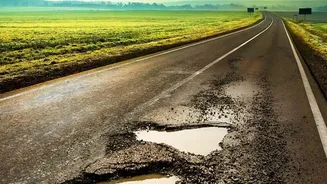
For millions of Indians, the arrival of the rainy season brings with it the certainty of navigating a landscape of broken, cratered roads. Potholes are more than just an inconvenience; they are a significant economic drain and a public safety crisis.
They cause vehicle damage, increase travel times, and are cited as a major contributor to road accidents and fatalities across the country. Traditionally, road maintenance is a reactive and costly cycle of patchwork that often fails to withstand the next downpour. The core issue lies in conventional asphalt, which is a mixture of sand and gravel held together by bitumen. Over time, exposure to traffic, water, and temperature fluctuations causes the bitumen to degrade, leading to microcracks that quickly grow into large, dangerous potholes.
A Road That Heals Itself?
Imagine a road that could automatically repair these tiny cracks before they become a problem. This is the promise of self-healing asphalt, a field of material science that is gaining global attention. The concept involves embedding special agents within the asphalt mixture that can be activated to repair damage. Instead of waiting for a maintenance crew, the road itself initiates the first response to wear and tear. This proactive approach could dramatically extend the lifespan of roads, reduce maintenance costs by up to 30%, and improve overall safety. In India, where authorities spend thousands of crores on road repairs annually, this technology could be a game-changer, with bodies like the National Highways Authority of India (NHAI) beginning to explore its potential.
The Science of Bio-Repair
The headline's "bio-engineered binders" refer to several innovative methods. One of the most promising involves embedding microscopic capsules containing a rejuvenating agent into the asphalt. A popular choice for this agent is sunflower oil. When a microcrack forms under the stress of traffic, it breaks open these tiny capsules. The released oil then seeps into the surrounding area, softening the aged and brittle bitumen binder. This allows the asphalt to 'flow' back together, effectively sealing the crack and preventing water from getting in and causing further damage. Another bio-based approach uses specific types of bacteria. When water enters a crack, it activates dormant bacteria that have been added to the mix. These microorganisms then produce limestone, which naturally fills and seals the fissure, mimicking how a wound heals. These organic solutions are often derived from renewable resources like vegetable oils, agricultural waste, and even microalgae, making them a more sustainable alternative to purely petroleum-based materials.
Other Healing Methods
Bio-binders are not the only solution being explored. Another leading technology involves mixing small steel fibres or iron oxide nanoparticles into the asphalt. To repair cracks, a special maintenance vehicle passes over the road, generating a magnetic field. This field heats the metallic particles, which in turn melt the surrounding bitumen, causing it to reseal cracks. This induction heating method is quick and can be applied periodically—perhaps every few years—to essentially rejuvenate the road surface and potentially double its lifespan. Researchers in India, including at institutions like CRRI and IIT-Madras, are experimenting with various forms of self-healing asphalt, including polymer-modified versions, to find the best fit for the country's unique climate and heavy traffic loads.
The Future of Indian Roads
While the technology is incredibly promising, moving from the lab to nationwide implementation presents challenges. The primary hurdle is cost. Self-healing asphalt is currently more expensive to produce than its conventional counterpart. However, proponents argue that the higher initial investment would be offset by massive long-term savings in maintenance, reduced traffic disruption, and fewer accidents. A cost-benefit analysis is crucial before widespread adoption can be considered. Pilot projects are the next logical step. In fact, two engineering students in Maharashtra have already developed and tested their own version of bio-healing, luminescent road technology on a small scale. As India continues its ambitious infrastructure expansion under programs like Bharatmala, integrating smarter, more resilient materials could be the key to building roads that are not just new, but built to last.