
A Bread Forged by Necessity
Long before modern refrigeration, preserving food was a matter of survival, especially in the sun-drenched, economically challenged regions of Southern Italy like Puglia, Campania, and Calabria. This is the world that created friselle. Born from 'cucina
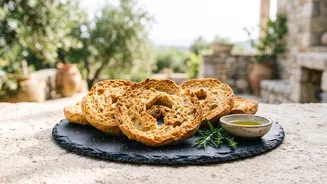
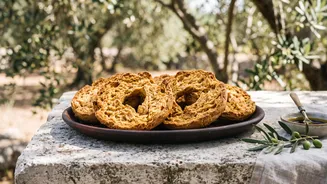
povera', or 'peasant cooking', friselle were designed to last. Fishermen heading out to sea for days and farmers working distant fields needed sustenance that wouldn't spoil. The answer was a bread baked not once, but twice. This second baking draws out nearly all moisture, resulting in a bone-dry, incredibly hard bread that could be stored for months without going stale, ready to provide a meal at a moment's notice. Its history is ancient, with similar twice-baked breads feeding Roman sailors and even being nicknamed the 'bread of the Crusaders' for their reliability on long journeys.
The Practical Magic of the Second Bake
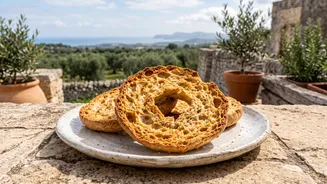
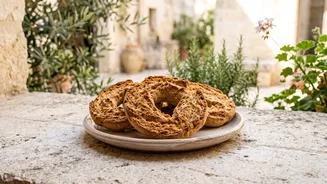
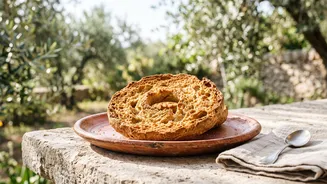
The process of making friselle is a testament to its practical origins. The dough, often made from durable durum wheat or sometimes barley, is first shaped into rings. The ring shape itself was a clever design choice; it allowed sailors and merchants to easily string the bread onto a rope for compact storage and transport. After an initial bake, the still-warm loaves are sliced horizontally and returned to a low oven for a long, slow second bake. This crucial step is what transforms it from ordinary bread into a long-lasting rusk. Historically, there were two versions: a more common one made with barley for everyday families and a durum wheat version reserved for wealthier households or special occasions. Today, while durum wheat is common, the rustic, nutty flavour of barley friselle is often highly prized.
The Ritual of Waking It Up
Eating friselle is an experience in itself, involving a time-honoured ritual known as 'sponzare', or soaking. Because it's too hard to be eaten dry, a frisella must be 'woken up' with water. The traditional method, born on fishing boats, was a quick dip in clean seawater. Today, a brief run under cold tap water for just a few seconds is all it takes. The goal is to soften the porous, rough side just enough to be chewable while allowing the base to retain some of its satisfying crunch. Over-soaking is a common rookie mistake that turns the beloved bread into a flavourless mush. Once softened, the rough surface is perfect for rubbing with a clove of garlic or a fresh tomato, allowing it to catch all the juices and pulp.
A Canvas for Summer Flavours
Once softened, friselle become the perfect base for a variety of simple, fresh toppings that define Mediterranean cuisine. The quintessential topping is a classic combination of chopped ripe tomatoes, a generous drizzle of extra-virgin olive oil, salt, and a sprinkle of oregano. This simple preparation is a summer staple across Southern Italy, a light and refreshing meal that requires no cooking. But the possibilities are nearly endless. Regional variations include the addition of tangy capers, olives, or spicy Calabrian red onions. Some top it with canned tuna or anchovies for a heartier meal, while others might add creamy burrata or fresh basil. This versatility is part of its charm; it’s a blank canvas for the best seasonal ingredients available.