



A New Home in the Cosmos
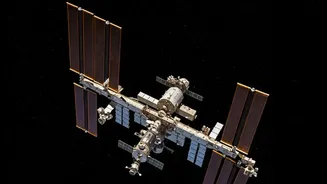
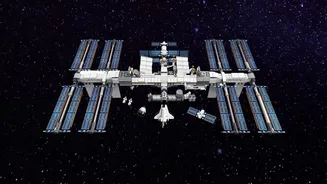
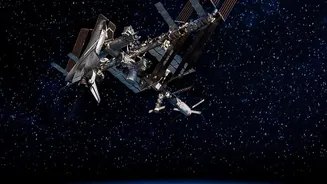
India's next major space endeavour is the Bharatiya Antariksha Station (BAS), a modular space station planned for Low Earth Orbit at an altitude of about 400-450 kilometres. The project envisions a 52-tonne, five-module orbital outpost assembled in phases.
The first component, BAS-01, has already received government approval and is targeted for launch by 2028. The entire station, which will be able to host three to four astronauts for missions lasting three to six months, is slated for completion by 2035. This represents a monumental shift from temporary missions to establishing a sustained human presence in space, placing India in an elite club of nations with such capabilities.
The Scientific Frontier
A dedicated space station will serve as a unique laboratory for Indian scientists. The microgravity environment allows for cutting-edge research impossible on Earth. Key areas of study will include life sciences, such as the effects of long-duration space travel on human physiology like muscle atrophy and bone density loss. This research provides critical data for ensuring astronaut health on future deep-space missions. Furthermore, the BAS will be a platform for materials science, astronomy, and advanced Earth observation, potentially improving disaster management and climate monitoring. By providing this orbital research outpost, India creates an invaluable asset for its scientific community, reducing reliance on international partners.
Powering Indian Industry and Innovation
The ambition to build a space station is a powerful catalyst for India's domestic industry. The project is expected to create a surge in demand for high-technology manufacturing, robotics, advanced materials, and electronics. ISRO has already signalled a strategic shift, encouraging the private sector to take the lead in manufacturing launch vehicles and other components, allowing the agency to focus on research and pioneering missions. This move is expected to energise India's burgeoning ecosystem of space startups, which already number around 450. The development of the BAS will create thousands of jobs in high-tech sectors and spur technological spin-offs that can benefit other industries, from medicine to automotive. This positions the station as an anchor around which a robust commercial space economy can grow.
Building on Gaganyaan's Legacy
The Bharatiya Antariksha Station is a natural and logical extension of the Gaganyaan programme, India's flagship human spaceflight mission. Gaganyaan is focused on developing the foundational capabilities required to safely send astronauts into orbit and return them. This includes creating a human-rated launch vehicle (the LVM3), sophisticated life support systems, and protocols for crew training and recovery. Every successful step in the Gaganyaan mission directly contributes to the technologies and expertise needed for the more complex task of assembling and operating a space station. The missions leading up to the first crewed Gaganyaan flight are essential for testing the very systems—like docking and life support—that will be the backbone of the BAS.
The Road Ahead: Challenges and Collaboration
The path to 2035 is ambitious and fraught with challenges. Assembling a space station module by module in orbit is an exceptionally complex engineering feat that requires flawless execution of rendezvous and docking procedures. The project demands sustained financial investment and the development of a highly skilled workforce to manage the complex operations. Furthermore, India's space calendar is incredibly crowded, with simultaneous work on lunar missions, a Venus orbiter, and other projects. While the BAS is a symbol of India's strategic autonomy in space, it also opens new avenues for international collaboration. As the International Space Station nears its potential retirement, India's station could become a vital platform for global scientific partnership, offering training and research opportunities to other nations.