



Beyond Bedrock Engineering
Aeronautical and mechanical engineering have long been the traditional pathways into India's space sector, and they remain absolutely essential. A B.Tech in these fields from a reputed institution like an IIT, NIT, or the Indian Institute of Space Science
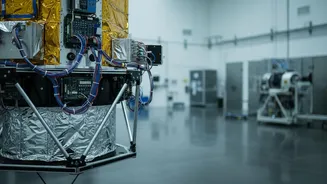
and Technology (IIST) is still a primary entry point for organisations like ISRO and private firms. However, the work is evolving. Today’s engineers need a strong grasp of modern software tools for computer-aided design (CAD), simulation, and systems engineering. The focus is shifting towards creating lighter, more efficient, and reusable systems, which requires a multidisciplinary approach right from the start.
Data Science and AI: The New Rocket Fuel
Modern space exploration and Earth observation generate mind-boggling amounts of data. A single satellite can produce petabytes of information. The real value lies in interpreting this data. This is where data scientists and AI/ML specialists come in. Companies like SatSure and Pixxel are hiring experts who can build algorithms to analyse satellite imagery for applications in agriculture, climate change monitoring, urban planning, and defence. Skills in Python, data analysis, and machine learning are now as crucial to the space economy as rocket propulsion.
Robotics and Autonomous Systems
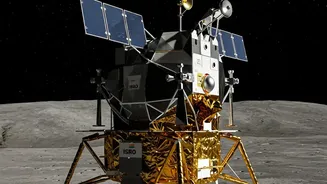
From manufacturing rockets and satellites on the ground to operating rovers on the Moon and Mars, robotics and automation are becoming central to the space industry. This field blends mechanical engineering with control systems and artificial intelligence. As India pursues more ambitious missions, including in-orbit servicing of satellites and potential deep-space exploration, the demand for robotics engineers who can design, build, and program these complex autonomous systems is set to increase significantly.
Software and Cybersecurity
Every spacecraft, satellite, and ground station runs on complex software. Mission operations, navigation, and data transmission all depend on millions of lines of code. Aerospace software engineers are vital for developing and maintaining these critical systems. With the increasing reliance on digital systems, cybersecurity has also become a paramount concern. Protecting valuable space assets—from communication satellites to navigation systems—from cyberattacks is a high-stakes field with growing opportunities. Skills in embedded systems and real-time operating systems are particularly valuable.
The Law of the Stars: Space Law and Policy
As the space domain gets more crowded with private satellites, questions of regulation, liability, and international treaties become critical. Who is responsible for space debris? What are the rules for satellite internet constellation s? This has created a new and vital career path: the space lawyer. Professionals with a background in law and public policy are needed to navigate the complex legal landscape. Institutions like the National Law School of India University and others are now offering specialised courses in space law and policy to meet this emerging demand.
Materials Science: Building for Extremes
The performance of any rocket or satellite is fundamentally limited by the materials it is made from. The push for lighter, stronger, and more resilient components that can withstand the extreme temperatures and radiation of space is driving innovation in materials science. Researchers and engineers in this field work on developing advanced composites, alloys, and 3D-printing materials. Their work is crucial for building next-generation launch vehicles and spacecraft that are more cost-effective and capable. This specialisation is a key area of research and development for both government agencies and private startups.