





Beyond the Metros: The New Frontier
The relentless pace of online food delivery in India is entering a new phase, with smaller cities emerging as the primary engine for future growth. While metros and Tier-1 locations still represent a large portion of the market, the most significant expansion
is now happening beyond these traditional strongholds. According to a recent Redseer report, transaction volumes in Tier-2 and smaller cities have nearly tripled in the last five years, soaring from approximately 60 million in FY21 to 180 million in FY26. This structural shift indicates that the market is maturing from a convenience once reserved for a handful of urban centres into a mainstream habit across the country. Projections show the online food delivery segment's share of the total food services market is expected to jump from 11% in 2026 to 18% by 2031, powered by this broadening demand.
What's Fuelling the Small-Town Appetite?
Several factors are converging to create this surge in demand. The foundational driver is India's digital revolution. Near-universal smartphone ownership, coupled with affordable mobile data plans, has brought millions of new users from smaller towns online. This digital access, combined with the widespread adoption of UPI for seamless payments, has removed significant barriers to entry. Beyond technology, there are profound lifestyle changes at play. Rising disposable incomes, an increase in dual-income households, and the aspirational pull of urban convenience are reshaping consumption patterns. For many in these cities, ordering online is no longer a novelty but a practical solution for busy weekdays, social gatherings, or simply a desire for greater culinary variety.
The Playbook for a New Market
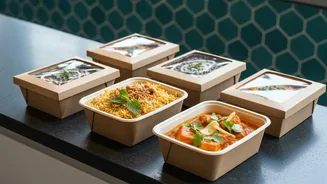
Food-tech giants are actively adapting their strategies to capture this burgeoning market. The focus is shifting from pure user acquisition to increasing engagement and order frequency. This involves a more nuanced approach than what worked in the metros. Companies are curating localized menu options to cater to regional tastes and implementing pricing strategies that align with the typically lower average order values in these areas. The logistical challenges are also different, requiring solutions for lower population density and longer last-mile delivery routes. Furthermore, the expansion of cloud kitchens and delivery-only brands is playing a crucial role. These digital-first restaurants can expand into new locations with lower investment compared to traditional dine-in establishments, allowing for a faster and more agile response to growing demand.
A Double-Edged Sword for Local Eateries
For local restaurants in Tier-2 and Tier-3 cities, the arrival of delivery aggregators presents both a massive opportunity and a significant challenge. On one hand, these platforms offer unprecedented access to a wider customer base, allowing a popular local eatery to reach far beyond its immediate neighbourhood. However, this visibility comes at a cost. Commission fees, which can range from 18-25% or higher, can squeeze already thin profit margins. Many small restaurant owners find themselves in a difficult position, dependent on the platforms for volume but struggling with the economics. The platforms also intensify competition, pitting local favourites against well-funded national chains and delivery-only brands that are optimised for the online marketplace.
The Road Ahead: Profitability and Potential
While the growth story is compelling, the path to sustained profitability in these new markets is complex. High operational costs, intense competition, and the need for continuous investment in logistics and technology remain significant hurdles. The success of this expansion will depend on the ability of platforms to solve the unique unit economics of smaller cities, where order values might be lower but the hunger for convenience is proving to be just as strong. For both Zomato and Swiggy, the strategic expansion into India's heartland is no longer just an option; it is central to their long-term vision.