


The Universe's New Detective
Launched in July 2023, the Euclid space telescope is on a six-year mission to create the most extensive 3D map of the universe ever made. While its primary goal is to investigate the enigmatic forces of dark matter and dark energy that shape our cosmos,
its unique design has made it an unparalleled tool for discovery. Unlike telescopes that take a narrow, deep look at one patch of sky, Euclid combines sharp, high-resolution imaging with a massive field of view. This allows it to survey about a third of the night sky efficiently, capturing vast cosmic landscapes in exquisite detail. This capability, known as the Euclid Wide Survey, is what enables it to find extremely rare objects that would otherwise be missed, acting like a wide net cast across the cosmic ocean.
Peering into Cosmic Dawn
The “Dark Cosmic Era” isn’t a formal astronomical term, but it perfectly captures the period Euclid is now illuminating. After the Big Bang, the universe was a hot, dense soup that eventually cooled and went dark. This period, known as the Cosmic Dark Ages, ended when the very first stars and galaxies ignited, filling the cosmos with light in a process called the 'epoch of reionization'. This was the dawn of the universe as we know it, occurring in the first billion years of cosmic history. Studying this era has been incredibly difficult because objects from that time are extraordinarily faint and distant. It's like trying to spot a single candle from thousands of kilometres away. Until now, we had only fleeting glimpses of the brightest, most unusual objects from this time.
A Trove of Ancient Light
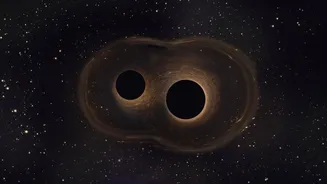
In early July 2026, the Euclid team announced a monumental discovery that has transformed our view of this early period. Using its wide-field survey, the telescope identified 31 previously unknown quasars from when the universe was less than a billion years old. Quasars are the intensely bright cores of young galaxies, powered by supermassive black holes actively feeding on surrounding gas and stars. This single discovery more than doubled the number of quasars known from this ancient epoch. Among the haul is a new record-holder: the most distant quasar ever seen, whose light comes to us from a time when the universe was only 670 million years old, just five percent of its current age.
Why This Changes Everything
This isn't just about breaking records. For decades, astronomers painstakingly hunted for these objects one by one, finding only the most luminous and exceptional examples. As one scientist on the Euclid team noted, it's as if they have now taken a true 'census' of quasars at the dawn of the universe for the first time. Instead of just studying the outliers, they can now study the 'typical' population of these objects. This shift from anecdote to statistics is a huge leap forward. It allows scientists to build a comprehensive picture of how the first large structures in the universe formed and what the cosmic environment was really like during its infancy. Euclid is providing the data to turn a few scattered puzzle pieces into a coherent image.
The Billion-Sun Puzzle
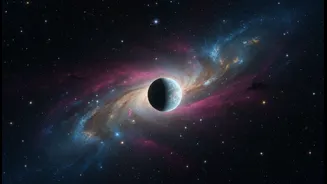
The discovery of so many ancient quasars deepens one of the most perplexing mysteries in modern astrophysics: how did supermassive black holes get so big, so fast? The black holes powering these newfound quasars already have masses millions or even billions of times that of our sun, yet they formed in an incredibly short amount of cosmic time. There simply wasn't much time after the Big Bang for them to grow so enormous through conventional means. Early analysis of the Euclid data suggests these ancient black holes are also surprisingly large relative to their host galaxies, further challenging our models of galaxy and black hole evolution. Euclid hasn't solved this puzzle yet, but by providing a rich new dataset of these enigmatic objects, it has given scientists the crucial clues needed to start figuring it out.