
Beyond the Six-Pack: What is Functional Core Strength?
When most people think of 'core training', they often picture achieving a visible six-pack. While the rectus abdominis muscles are part of the core, true functional strength goes much deeper. Your core is a complex system of muscles in your torso, including
your back, hips, pelvis, and diaphragm. A strong, functional core acts as a stable centre for your entire body, providing the foundation for almost every movement you make. This isn't about aesthetics; it's about improving your quality of life. Benefits include better posture, enhanced balance, a reduced risk of injury, and making daily activities like lifting, bending, or climbing stairs feel easier and safer. By training for functional power, you're building a body that is resilient, coordinated, and better equipped for the demands of everyday life.
The Plank: Your Foundation For Stability
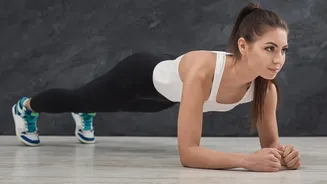
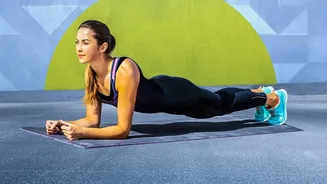
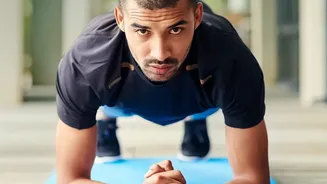
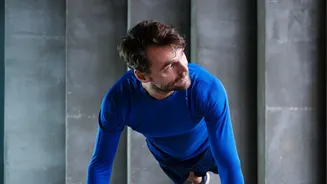
The plank is a fundamental isometric exercise, meaning it builds strength by holding a static position. It engages every muscle in your core, along with your shoulders and legs. To perform a forearm plank, start by lying on your stomach. Place your forearms on the floor with your elbows directly under your shoulders. Lift your hips until your body forms a straight line from your head to your heels. Engage your abdominal muscles as if bracing for a punch, and squeeze your glutes. Avoid letting your hips sag or raising them too high. A common mistake is craning the neck; keep your gaze on the floor just ahead of your hands to maintain a neutral spine. If a full plank is too challenging, you can modify it by performing it on your knees. Start by holding for 20-30 seconds and gradually increase the time as you get stronger.
The Dead Bug: Smart and Safe Spinal Control
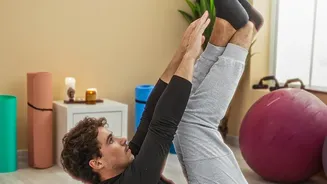
The dead bug is an excellent exercise for developing core stability without putting stress on the lower back. It teaches your body to keep the spine neutral while your limbs are in motion. To start, lie on your back with your arms extended towards the ceiling. Bend your hips and knees to a 90-degree angle, as if you're sitting in a chair. Press your lower back gently into the floor. On an exhale, slowly lower your right arm and left leg toward the floor, moving in a controlled manner. Go only as far as you can without your lower back arching. Inhale to return to the starting position, and then repeat on the other side. The key is slow, deliberate movement. This exercise targets the deep stabilising muscles of the core, like the transverse abdominis, which are crucial for spinal health.
The Bird-Dog: Mastering Balance and Coordination
The bird-dog is another fantastic move for improving stability and coordination across the core, back, and hips. It challenges your ability to resist rotation, a key function of the core muscles. Begin on all fours, with your hands directly under your shoulders and your knees under your hips. Engage your core to keep your back flat. Simultaneously, extend your right arm straight forward and your left leg straight back, creating a long line from your fingertips to your heel. Keep your hips and shoulders square to the ground, avoiding any twisting or dropping to one side. Hold for a few seconds before returning to the start and repeating with the opposite arm and leg. This movement strengthens the back and glutes in addition to the abs, making it a highly functional, full-body stabiliser.
The Glute Bridge: Powering Your Posterior Chain
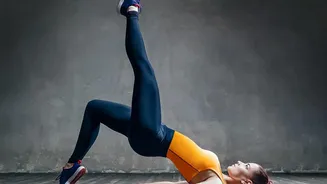
A strong core isn't just about the abs; it includes the glutes and lower back, often called the posterior chain. The glute bridge is a simple yet powerful exercise to activate these muscles. Lie on your back with your knees bent, feet flat on the floor about hip-width apart, and your arms by your sides. Squeeze your glutes and tighten your abdominals, then lift your hips off the floor until your body forms a straight line from your shoulders to your knees. Pause at the top, squeezing your glutes, before slowly lowering your hips back down. This move is excellent for activating underactive glute muscles—a common issue for those who sit for long periods—and can help alleviate lower back pain by improving hip extension and core stability.