






What is Chat-Based Creation?
Imagine typing, "Take this product photo, remove the background, make it look like it's on a marble countertop, and then create versions for Instagram, Facebook, and a website banner." In the past, this was a multi-step, multi-app process requiring technical
skill. Now, Adobe is making it a conversation. This is the core of chat-based creation: using natural language prompts to direct powerful software. Instead of mastering menus and tool palettes, the user describes their desired outcome. The new Firefly AI Assistant acts as a conversational partner, interpreting these requests and executing them across Adobe's suite of applications.
Meet the Firefly AI Assistant
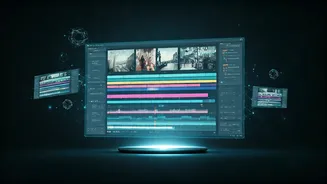
At the heart of this shift is the Firefly AI Assistant, an 'agentic AI' designed to work across the entire Creative Cloud ecosystem. It’s not just another chatbot. This assistant can orchestrate workflows that use tools from Photoshop, Illustrator, Premiere Pro, and more, all from a single interface. Recent updates have seen the assistant integrated directly into apps like Premiere, Illustrator, and InDesign as a sidebar, allowing creators to delegate tedious tasks like organizing footage, batch-renaming clips, or applying consistent branding across a project without leaving their primary workspace. This assistant is designed to understand project context, meaning you don't have to start the conversation from scratch every time you switch applications.
Why Chat, and Why Now?
Adobe's move is a direct response to a rapidly changing market. The rise of accessible generative AI tools like Midjourney created a new paradigm for creation, one that threatened to leave traditional, complex software behind. Investors grew skeptical about whether Adobe could keep up with nimbler, AI-native startups. By integrating its tools with a chat interface, Adobe is not just competing; it is absorbing the trend. The goal is to lower the barrier to entry for millions of new users who are comfortable with conversation but intimidated by professional software. This also positions Adobe's powerful, commercially-safe Firefly models as the foundational engine for creativity, even when the conversation starts in third-party platforms like ChatGPT or Claude, where Adobe has also integrated its tools.
The Future of the Creative Professional
This evolution prompts a fundamental question: what does it mean to be a creative professional when an AI can execute complex tasks? Adobe's answer is that it frees creators from repetitive, administrative work to focus on high-level direction and strategy. The AI becomes a production assistant, handling the tedious aspects of resizing assets, organizing files, or creating initial rough cuts. This shifts the creator's role from a hands-on tool operator to a creative director. However, the creative community remains divided. While some see a powerful co-worker, others fear a loss of control and the devaluing of technical skills. Adobe maintains that the human remains in control, with the ability to step in and make manual adjustments at any point.
The Road Ahead and Its Challenges
The transition to chat-based creation is still in its early stages, with many features in public or private beta. The primary challenge will be making the AI assistant reliable enough to handle messy, real-world projects without errors. Adobe is also focused on ensuring ethical AI development, training its Firefly models only on licensed Adobe Stock content and public domain images to provide commercial safety and intellectual property indemnification for users. Ultimately, success won't be measured by whether AI can generate an image, but whether it can replace an entire workflow involving teamwork, version control, and brand consistency—areas where Adobe believes its ecosystem remains unmatched.