






The Power of Intentional Curation
Think of a single floating shelf not as a storage unit, but as a mini-museum dedicated to your life. The principle of minimalism isn't about having nothing; it's about making sure everything you have is either useful or brings you joy. By focusing on
one shelf, you are forced to be intentional. This single, curated space becomes a focal point, drawing the eye and telling a story without the visual noise of a cluttered room. It’s an exercise in mindful decoration, where every object earns its place. Curation is the art of telling a story through objects you love. Instead of a random assortment of knick-knacks, a well-styled shelf feels purposeful and deeply personal. It’s an opportunity to transform a small corner of your home into a sophisticated gallery of your own experiences.
Deciding on Your Narrative
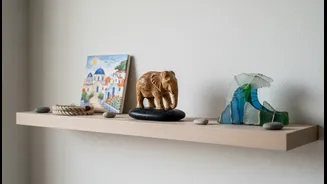
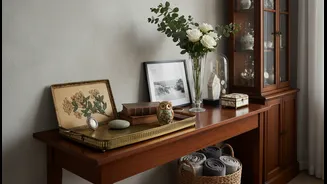
Before you place a single object, ask yourself: what story do I want to tell? Your journey is unique, and your shelf should reflect that. Perhaps it's a travelogue, showcasing sand from a favourite beach, a painted tile from a memorable trip, and a framed photo of a distant cityscape. Maybe it’s a tribute to your passions—a stack of well-loved novels, a vintage camera, or a small sculpture that speaks to your artistic side. Your theme could also be a colour story, using a cohesive palette of three to four complementary shades to create a harmonious look. The goal is to select items that share a common thread, whether it’s a time period, a subject matter, or simply a feeling. This thematic approach will create a visually pleasing arrangement that feels connected and whole.
Gathering Your Story's Elements
Once you have your theme, it’s time to gather the items. Look for objects that hold personal significance, not just things bought to fill a space. Think about family heirlooms, souvenirs, meaningful gifts, and photos that evoke happy memories. But a story needs more than just plot points; it needs texture and depth. To achieve this, mix materials and shapes. Combine hard and soft, rough and smooth, natural and manufactured. A smooth ceramic vase, a rough-hewn wooden bowl, a stack of paper-paged books, and the soft leaves of a small plant can coexist beautifully. Don't be afraid to think outside the box; a framed swatch of fabric, a vintage teacup, or even a beautiful stone from a hike can be powerful storytellers.
The Art of Arrangement
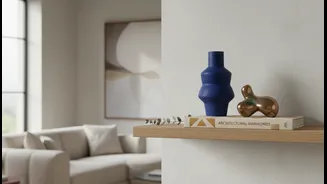
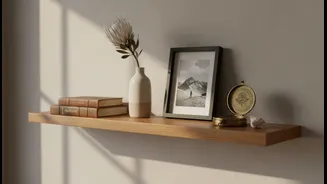
Styling a shelf is about creating visual balance and rhythm. Start by clearing the shelf completely to give yourself a blank canvas. First, place your 'anchor' pieces—the largest and most substantial items that will ground the display. This could be a tall vase, a leaning piece of framed art, or a horizontal stack of large books. Next, layer in medium-sized objects, and finally, sprinkle in the smallest items. Create depth by placing some things in front of others. A key designer trick is the 'Rule of Three', which suggests that grouping items in odd numbers is more visually appealing and natural to the human eye. Vary the heights of your objects to guide the eye across the display. Alternate between vertical stacks of books and horizontal ones, using the horizontal stacks as pedestals for smaller decorative items. Most importantly, embrace negative space. Leaving some areas empty allows each object to breathe and stand out, preventing the shelf from looking cluttered.
An Evolving Story
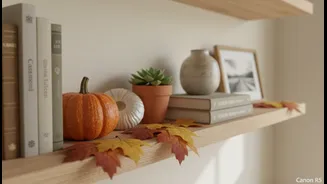
Your journey isn’t static, and neither is your shelf. Think of it as a living display that can evolve with you. As you travel to new places, celebrate new milestones, or discover new passions, you can update your shelf to reflect your current chapter. Periodically rotating items keeps the display fresh and ensures it remains a true representation of your life. You might swap out photos, add a new souvenir, or change the colour palette with the seasons. This isn't a one-time project but an ongoing conversation with your space. The beauty of this approach is its flexibility; it allows you to refresh your decor without any significant investment or effort, simply by editing the story you choose to tell.