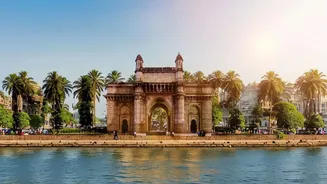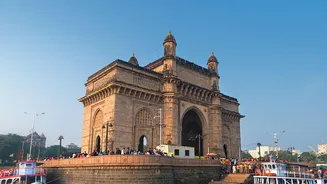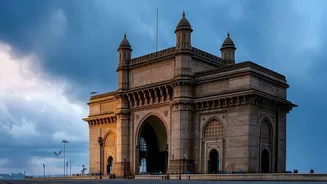




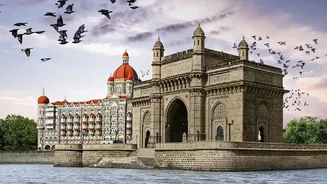
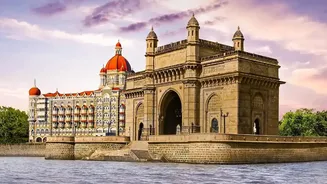
Day 1: The Gateway of India, Mumbai
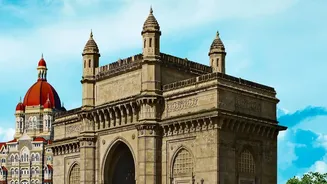
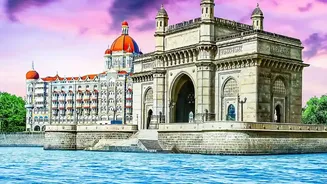
Begin your Maharashtrian adventure in the bustling metropolis of Mumbai. Start your day at the iconic Gateway of India, an arch-monument built in the early 20th century that has become synonymous with the city. From here, the magnificent facade of the Taj
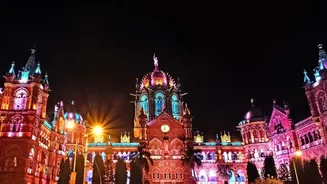
Mahal Palace hotel is just a stone's throw away. A short ferry ride from the Gateway will take you to the Elephanta Caves, a UNESCO World Heritage site featuring impressive rock-cut temples dedicated to Lord Shiva. In the afternoon, marvel at the Victorian Gothic architecture of the Chhatrapati Shivaji Maharaj Terminus, another UNESCO site that functions as a major railway hub. Depending on your interests, you can also explore the city's rich art scene at the Jehangir Art Gallery or delve into history at the Chhatrapati Shivaji Maharaj Vastu Sangrahalaya, formerly the Prince of Wales Museum. In the evening, board an overnight train like the Devagiri Express from CSMT to your next destination, Aurangabad.
Day 2: Arrival in Historic Aurangabad
Arrive in Aurangabad, a city named after the Mughal emperor and a gateway to some of India's most significant historical sites. After checking into your hotel and resting from the overnight journey, ease into the city's atmosphere. The train journey from Mumbai takes approximately 6 to 8 hours, with several options available. Use the afternoon to explore a local landmark like the Bibi Ka Maqbara. Commissioned by Aurangzeb in memory of his wife, this mausoleum is often called the 'Taj of the Deccan' due to its resemblance to the Taj Mahal. Its intricate marble carvings and grand design offer a fascinating glimpse into Mughal architecture. The remainder of the day can be spent exploring local markets and trying regional cuisine, preparing for the extensive cave explorations to come.
Day 3: The Painted Caves of Ajanta
Dedicate the day to the Ajanta Caves, a UNESCO World Heritage site located about 105 kilometres from Aurangabad. It's best to hire a car for this road trip, which takes around 2-3 hours each way. The Ajanta complex consists of around 30 rock-cut Buddhist caves, famous for their exquisite murals and sculptures that are considered masterpieces of religious art. These paintings depict the Jataka tales, which are stories of the Buddha's previous lives. The caves were carved in two phases, starting from the 2nd century BCE, and were rediscovered in 1819 after being abandoned and hidden by dense jungle for centuries. To see the best-preserved paintings, focus on Caves 1, 2, 16, and 17. A full day is recommended to truly appreciate the artistry and historical significance of this incredible site.
Day 4: The Monolithic Marvels of Ellora
Today’s journey takes you to the Ellora Caves, another UNESCO World Heritage site just 30 kilometres from Aurangabad. Unlike Ajanta, Ellora features a mix of Buddhist, Hindu, and Jain temples, showcasing the religious harmony of the era. The site's crowning jewel is Cave 16, home to the Kailasa Temple. This staggering structure is the world's largest single monolithic excavation, carved top-down from a single rock to resemble a chariot-shaped temple for Lord Shiva. The entire complex of 34 caves can be explored in about half a day. Afterwards, you can travel to Pune. The most practical option is a direct bus, which takes around 5-6 hours, or a private cab. Train options are also available but can be longer.
Day 5: Pune, the Cultural Capital
Spend your final day in Pune, often called the 'Cultural Capital of Maharashtra'. Start with a visit to the historic Shaniwar Wada, the 18th-century seat of the Peshwa rulers of the Maratha Empire. Though much of it was destroyed by a fire, its grand foundations, gates, and gardens still tell tales of its glorious past. Next, visit the Aga Khan Palace, a place of national importance where Mahatma Gandhi was imprisoned during the freedom struggle. For a deeper dive into the region's artistic heritage, head to the Raja Dinkar Kelkar Museum, which houses a vast one-man collection of fascinating Indian artifacts. You can also explore the 8th-century Pataleshwar Cave Temple, a rock-cut shrine dedicated to Lord Shiva located in the heart of the city. Pune serves as a fitting end to a journey through Maharashtra's rich timeline, from ancient rock-cut wonders to the heart of the Maratha empire.