


From a Toaster to a Fuel Factory
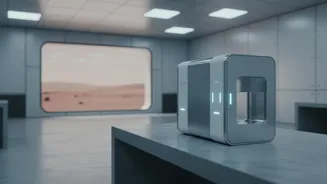
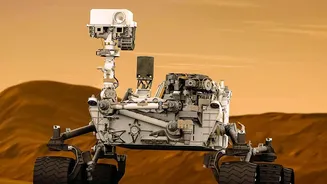
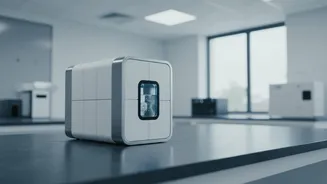
For years, the concept of creating oxygen on Mars was proven by a small, toaster-sized instrument aboard NASA's Perseverance rover. The Mars Oxygen In-Situ Resource Utilization Experiment, or MOXIE, successfully demonstrated that it could pull in the thin,
carbon dioxide-rich Martian air and split the molecules to produce pure oxygen. Over its mission, MOXIE produced about 122 grams of oxygen—enough to keep a small dog alive for ten hours. It was a monumental proof of concept. But for human missions, it’s not enough to support a pet; you need to be able to fuel a rocket for the return journey. That requires shifting from grams to tons, and from a small experiment to an industrial-scale production plant.
The Science of Breathing on Mars
The technology at the heart of this breakthrough is called solid oxide electrolysis. In simple terms, the system acts like a mechanical tree. It inhales Mars's atmosphere, which is about 95% carbon dioxide, and heats it to an extreme 800 degrees Celsius. At that temperature, an electrochemical process splits the CO2 molecules. It separates the oxygen atoms (O2) from the carbon monoxide (CO). The pure oxygen is stored, while the carbon monoxide is vented back into the atmosphere. The success of MOXIE confirmed this chemical process works flawlessly in the harsh Martian environment. The new breakthrough is not in the chemistry itself, but in the engineering to make it bigger, more efficient, and far more productive.
Why Scale Is the Real Game-Changer
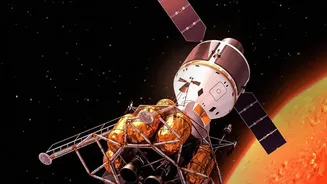
The primary goal of creating oxygen on Mars isn't for breathing, although that's a welcome bonus. The real prize is rocket propellant. A Mars Ascent Vehicle (MAV), the rocket needed to lift astronauts off the Martian surface to begin their trip home, would require approximately 30 metric tons of liquid oxygen. Shipping that much oxygen from Earth is considered logistically unfeasible and prohibitively expensive. By producing it on-site—a concept known as In-Situ Resource Utilization (ISRU)—the entire architecture of a human Mars mission becomes more achievable. The new “scaled” systems being developed are designed to be 30 to 50 times larger than MOXIE, capable of producing two to three kilograms of oxygen per hour. Running continuously for over a year, such a system could generate the massive stockpile of propellant needed for launch.
The Challenges of an Industrial Plant
Scaling up from a small experiment to a full-blown production facility presents immense engineering challenges. The system must operate autonomously and reliably for 14 months or more in the unforgiving Martian environment, with its dust storms and extreme temperature swings. Furthermore, the high-temperature electrolysis process requires a significant and constant power supply, likely in the range of 25 kilowatts. This amount of energy cannot be reliably supplied by solar panels, especially during a global dust storm, pointing towards the necessity of a dedicated nuclear fission power source to run the oxygen plant. Managing the intense heat generated by the process is another critical factor for ensuring the long-term stability of the equipment.
The Road Ahead for Martian Settlers
With the core science proven and the scaling technology now demonstrated, the next phase involves rigorous testing. Engineers will build and operate full-scale prototypes in Mars-simulation chambers on Earth to refine their designs and ensure they can withstand the rigors of a long-duration mission. This technology is a cornerstone of future plans for Mars exploration. The strategy involves sending an automated mission consisting of a power source and the oxygen-generating plant to Mars well ahead of the first human crew. The system would spend over a year quietly manufacturing and storing all the oxygen needed for the return trip before astronauts even leave Earth, securing their ticket home before they've even begun their journey.