






The Zero-Fee Revolution and Its Hidden Cost
For years, the engine of UPI’s explosive growth was a simple, powerful policy: a zero Merchant Discount Rate (MDR). MDR is the fee merchants traditionally pay for processing digital payments. In a bid to drive digital adoption and financial inclusion,
the government scrapped these fees for UPI in 2020. This made it incredibly attractive for millions of small vendors and businesses to accept digital payments, transforming India’s retail landscape. However, 'free' was never truly free. The companies building and maintaining the vast infrastructure—the payment apps, banks, and gateways—were bearing the operational costs without a direct revenue stream from the transactions themselves. This created a growing sustainability problem.
A New Chapter: The Return of MDR
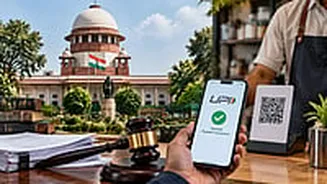
Recognizing the financial strain on the ecosystem, a major policy shift is set for October 15, 2026. The National Payments Corporation of India (NPCI) has announced the introduction of a 0.4% MDR on person-to-merchant (P2M) UPI transactions above ₹2,000. This charge will be paid by merchants, not consumers, and is capped at ₹300 for very large transactions. Crucially, this new rule is designed to be surgical. It will not affect the vast majority of daily transactions, as payments below ₹2,000—which constitute about 96% of all merchant transactions—remain free. Small merchants collecting up to ₹1 lakh per month are also exempt, protecting the smallest businesses. The move, which the Supreme Court has allowed to proceed, is aimed at creating a sustainable commercial framework. The revenue generated will be shared among the ecosystem players to fund infrastructure, cybersecurity, and innovation.
Why Fintechs Are Re-evaluating Everything
While the reintroduction of a limited MDR provides some relief, it doesn't solve the entire profitability puzzle for fintechs. For years, their primary strategy was to acquire a massive user base on the back of free UPI payments, hoping to monetise them later. With the economics of payments remaining tight even with the new MDR, that 'later' is now. The focus has aggressively shifted from just transaction volumes to building durable, multi-layered business models. Fintechs are no longer just payment apps; they are evolving into comprehensive financial service platforms. The core payment service is now seen as the entry point—the top of the funnel—to engage customers for more profitable offerings.
The Search for Sustainable Revenue
The urgent look at merchant economics has spurred innovation in several key areas. Fintechs are doubling down on value-added services for their merchant partners. Beyond just processing payments, they are offering solutions like digital lending, inventory management software, payroll services, and loyalty programs. These services create 'stickiness' and generate revenue independent of transaction fees. On the consumer side, the strategy is to cross-sell other financial products. A large, active user base acquired through UPI is a prime audience for services like insurance, mutual fund investments, and personal loans, which offer much higher margins than payments. This pivot towards a diversified service model is seen as the key to long-term survival and profitability in India's competitive fintech landscape.