






Decoding the Colours: What IMD Alerts Mean
The India Meteorological Department (IMD) uses a colour-coded system to warn citizens about the severity of expected weather. For drivers, these are the most important signals to understand before starting a journey. A Green alert means 'All is Well',
and no advisory is issued. A Yellow alert means 'Be Aware'; it signals that weather could change for the worse and might disrupt daily activities. When you see a Yellow alert, it's a good time to check your route and allow for extra travel time. An Orange alert means 'Be Prepared'. This is issued for extremely bad weather with a high chance of disrupting travel, including road closures and power supply interruptions. If an Orange alert is active for your route, you should seriously consider postponing non-essential travel. The highest level is a Red alert, which means 'Take Action'. This signifies a significant threat to life and property from extremely severe weather, and authorities advise against any travel unless absolutely essential.
Beyond Alerts: Understanding Forecast Language
Forecasts often use specific terms that quantify risk. For instance, the IMD has defined rainfall amounts for its alerts: a Yellow alert may correspond to rainfall between 64.5 mm and 115.5 mm, while an Orange alert is for 115.6 mm to 204.4 mm. A Red alert is issued when rainfall is expected to exceed 204.5 mm in a 24-hour period. Beyond these numbers, pay attention to descriptors. 'Isolated showers' suggests localised rain that you might be able to drive around, whereas 'widespread' or 'heavy to very heavy rain' implies a much larger, more dangerous system. These terms help you gauge whether you're facing a minor inconvenience or a significant hazard like flash floods and large-scale waterlogging.
Your Pre-Monsoon Vehicle Checklist
A prepared vehicle is your first line of defence. Before the monsoon season intensifies, conduct a thorough check. Your tyres are critical for grip on wet roads; ensure the tread depth is well above the minimum recommendation of 3mm. Brakes are equally important, as stopping distances can increase on wet surfaces. Have your brake pads, discs, and fluid checked by a professional. Windscreen wipers are a non-negotiable safety item. Replace cracked or brittle blades that leave streaks and reduce visibility. Finally, test all your lights—headlights, brake lights, and turn indicators. In heavy rain, being seen by other drivers is just as important as being able to see.
On The Road: Safe Driving Techniques
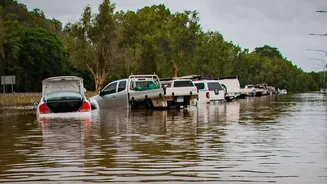
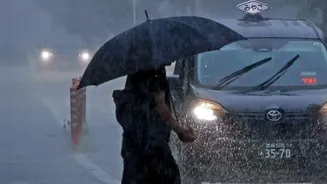
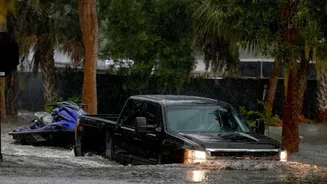
When driving in the rain, your technique must change. First, reduce your speed significantly to lower the risk of hydroplaning, where your tyres lose contact with the road surface. Increase the following distance between you and the vehicle ahead to at least a four-second gap. Use your low-beam headlights, not high beams, as the light from high beams reflects off raindrops and worsens visibility. Never use cruise control in wet conditions. The biggest rule is to never drive into standing water. It's impossible to judge the depth or see hidden dangers like open manholes or large potholes. If your car stalls in water, do not try to restart the engine, as this can cause a catastrophic failure known as hydrostatic lock. If you get trapped, it's often safer to abandon the vehicle and move to higher ground if the water is not moving fast.