



We love bananas for their sweet, creamy texture. But what about their firm, starchy, and entirely unsweet alter ego? The green banana is a culinary chameleon, and in Indian kitchens, it's treated not as a fruit, but as a vegetable.
The Great Banana Transformation
Every banana begins
its life as green, firm, and waxy. As it ripens, a natural process unfolds. The starches that make up most of a green banana's composition begin to convert into simple sugars like sucrose, fructose, and glucose. This is why a yellow banana is soft and sweet, while its green counterpart is starchy and has a more vegetal, slightly bitter taste. A ripe banana contains only about 1% starch, a dramatic shift from the 70-80% starch content found in its unripe state. This transformation changes everything: its flavour, its texture, and most importantly, how it's used in the kitchen.
A Nutritional Divide
The key difference between a green and yellow banana lies in a powerful carbohydrate: resistant starch. This type of starch 'resists' digestion in the small intestine, travelling to the colon where it acts as a prebiotic, feeding the good bacteria in your gut. This process has several benefits, including improved digestive health and better blood sugar control, since the starch doesn't cause the same spikes in glucose as simple sugars do. Green bananas are also packed with pectin, a type of fibre that helps you feel full and contributes to their firm structure. As the banana ripens and yellows, this resistant starch and pectin content declines, while antioxidants and sugar levels rise, making it easier to digest for some.
The Green Banana's Role as a Vegetable
In India, the green banana, often called 'Kaccha Kela' in Hindi or 'Vazhakkai' in Tamil, is rarely seen as a fruit. Its firm texture and low sugar content make it behave much like a potato, absorbing spices and holding its shape when cooked. This versatility allows it to be the star of countless savoury dishes, from simple stir-fries to rich curries. Unlike its sweet, yellow sibling that graces fruit bowls and smoothies, the green banana is found in the vegetable basket, ready to be boiled, fried, or mashed into a savoury delight. Its ability to take on the flavours of masalas without turning mushy is what makes it a beloved ingredient in regional Indian cuisine.
Savoury Stars of the Indian Kitchen
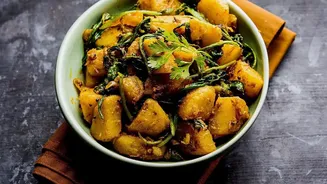
The applications for green bananas in Indian cooking are wonderfully diverse. In South India, a 'Vazhakkai Poriyal' or 'Thoran' is a common side dish, where boiled and diced banana is stir-fried with mustard seeds, curry leaves, green chillies, and a generous amount of fresh coconut. Further north, you might find 'Kacche Kele ki Sabzi', a dry or gravy-based curry where banana chunks are cooked with onions, tomatoes, ginger-garlic paste, and a blend of spices like turmeric, coriander, and garam masala. For a special treat, raw bananas are boiled and mashed with spices to form patties for 'Kela Koftas', which are then fried and simmered in a creamy tomato-based gravy. Even simpler are homemade banana chips, where thinly sliced green bananas are fried until crisp and seasoned with salt and chilli powder.
Tips for Cooking with Green Bananas
Working with green bananas can be a little tricky at first. Their peel is thick and doesn't come off as easily as a ripe banana's. It's often best to boil them with the skin on for a few minutes, which makes peeling much easier. Alternatively, you can trim the ends and use a knife to slice through the peel lengthwise before prying it off. Rubbing your hands and the knife with a little oil can prevent the sticky sap from staining your skin and utensils. Once peeled, it's a good idea to place the chopped banana in a bowl of water to prevent it from browning while you prepare your other ingredients.