

What Is a Celestial Conjunction?
In simple terms, a conjunction is when two or more celestial objects, like planets or the Moon, appear to be very close together in our sky. It's an optical illusion created by our vantage point here on Earth; the objects themselves are still millions
of kilometres apart in space. These alignments are a common and beautiful sight. The most frequent ones involve the bright planets—like Venus, Jupiter, or Saturn—and the Moon. For sky-watchers, these events are fantastic opportunities to easily identify planets and enjoy a dynamic, ever-changing cosmic display.
When and Where to Look in October
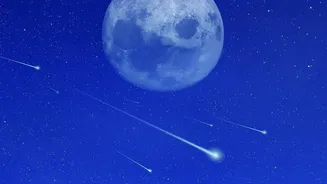
Mark your calendars for the nights of October 23rd and 24th, 2026. During this period, the bright, nearly full Moon will pass by the planet Saturn. The planet will be visible all month, having been at its brightest for the year during its opposition on October 4th, when it rose at sunset and was visible all night long. For the conjunction, look towards the eastern or southeastern sky in the hours after sunset. As the night progresses, the pair will climb higher in the sky. You don't need to be in a specific location in India; this event will be visible from anywhere with clear skies.
How to Spot Saturn
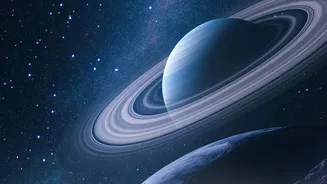
Finding Saturn next to the Moon will be straightforward. The Moon acts as a giant signpost in the sky. On the nights of the conjunction, look for a bright, steady, yellowish point of light very close to it. That will be Saturn. Unlike stars, which twinkle because of atmospheric disturbance, planets tend to shine with a more constant light. This difference is a key way to distinguish them. Even without a telescope, Saturn will appear as a prominent, star-like object, made unmissable by its proximity to our Moon.
Do You Need a Telescope?
Absolutely not. The beauty of a conjunction like this is that it is a wonderful naked-eye event. You can simply step outside, look up, and enjoy the sight. However, if you have a pair of binoculars, you might be able to notice that Saturn is not perfectly round, but slightly oval-shaped—a hint of its famous rings. A small beginner telescope, even one with modest power, will transform that oval shape into the distinct and breathtaking sight of the rings themselves. It’s a view that often hooks people on astronomy for life. But don't let a lack of equipment stop you; the main event is seeing the two objects together in the sky, which requires nothing but your eyes.
Tips for the Best Viewing Experience
To make the most of this celestial event, try to find a viewing spot away from bright city lights. Streetlights and building lights can create light pollution that washes out fainter stars and makes the sky less clear. Even a local park, a rooftop, or a balcony with a clear view can make a big difference. Give your eyes about 20-30 minutes to fully adapt to the darkness; this will allow you to see much more detail in the night sky. Finally, consider using a stargazing app on your phone, like Stellarium or SkyView. These apps use your phone’s location to show you exactly where to look for planets, stars, and constellations in real-time.