




The Supreme Court's Landmark Directive
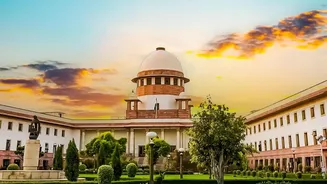
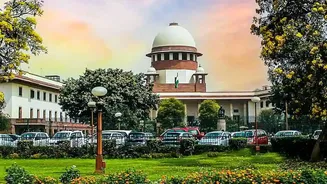
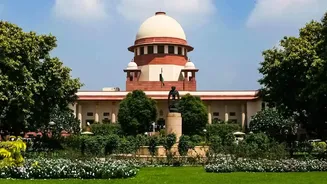
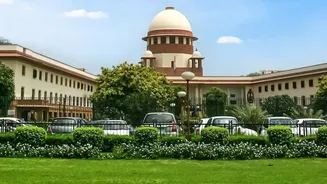
In a significant move for passenger rights, the Supreme Court of India has ordered Indian Railways to provide travel insurance for all tickets sold at station counters. The directive, issued on October 6, 2026, sets a firm deadline of October 27, 2026, for implementation.
A bench of Justices Ahsanuddin Amanullah and R. Mahadevan made it clear that this is a mandatory order, not an optional facility. The court also stated that the Railway Board will be held directly responsible for any failure to comply, expressing its 'utter disappointment' at the previous lack of progress on this front. The ruling came during a hearing related to a petition filed after the tragic Odisha train accident in June 2023, which brought passenger safety issues into sharp focus.
Why This Order Is a Game-Changer
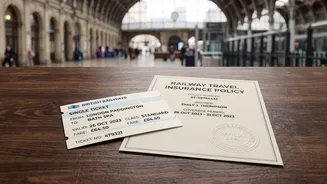
Until now, the option to buy travel insurance was exclusively available to those who booked their tickets online via the IRCTC website or app. This left out a significant portion of the population—an estimated 12% of reserved ticket buyers—who rely on physical counters. The court noted that these are often people from 'the lowest strata of society', including villagers, labourers, and elderly individuals who may not have access to digital platforms or be comfortable using them. The Supreme Court's decision is built on a simple, powerful principle: the value of a passenger's life and safety cannot depend on how their ticket was purchased. This order effectively bridges a major gap, ensuring that everyone has access to the same financial protection.
What Does Railway Insurance Cover?
The travel insurance offered to online passengers, which will now be extended to counter tickets, is a remarkably affordable safety net. The premium for online bookings is just 45 paise per passenger. While the exact premium for counter tickets is yet to be announced by the Railways, the court's directive implies a similar structure. This nominal fee provides significant coverage in the event of a train accident or other 'untoward incidents' as defined by the Railways Act. Under the existing scheme for online tickets, coverage includes up to ₹10 lakh for death or permanent total disability, ₹7.5 lakh for permanent partial disability, and up to ₹2 lakh for hospitalization expenses. The policy also covers the transportation of mortal remains.
How Will It Work at the Counter?
The Supreme Court has made the insurance mandatory, a shift from the optional 'opt-in' system currently used for online bookings. This suggests that the insurance will be automatically included with every counter ticket sold from October 27 onwards. The exact mechanism is still being finalised by Indian Railways, which will likely need to update its Passenger Reservation System (PRS) software to comply. It is expected that the nominal premium will be added to the total ticket fare at the time of purchase. Passengers should keep an eye on official announcements from Indian Railways for the final details on how the premium will be collected and how to manage claims if needed.
A Step Towards Broader Passenger Safety
This insurance mandate is part of a wider judicial push for enhanced passenger safety across the Indian Railways network. During the hearings, the Supreme Court also scrutinised other critical safety issues, such as the slow implementation of the 'Kavach' automatic train protection system, the need for fencing along railway tracks to prevent accidents, and the construction of foot overbridges. The court's firm stance signals a move towards recognising comprehensive travel protection not as an optional add-on, but as an essential and non-negotiable component of every railway journey. By holding the Railway Board directly accountable, the court has ensured that these safety directives are treated with the urgency they deserve.