








The Engine of the Digital World
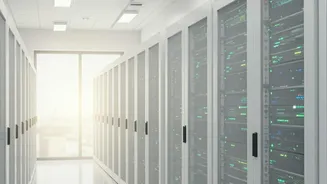
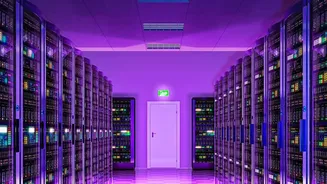
Data centres are the invisible factories of the 21st century. These massive, power-hungry buildings house the servers and storage that power everything from your social media feed and corporate networks to the streaming services you use every night. A
recent study published in Nature Sustainability examined 403 of the largest 'hyperscale' data centres in the US between May 2024 and April 2025. It found their combined electricity use accounted for roughly 1.8% of the country's total consumption. This energy demand is what generated the 25.7 million tonnes of carbon emissions, a figure two to three times higher than previous estimates from 2018. More than half of this electricity came from burning fossil fuels, primarily natural gas and coal.
The AI Accelerator
While data centres have been growing for years, the recent explosion in demand for artificial intelligence is pouring fuel on the fire. Training and running complex AI models, like those behind generative AI tools, requires immense computational power. This, in turn, demands significantly more energy than traditional computing tasks. Some experts note that an AI training cluster can consume up to eight times more energy than a typical workload. The lead author of the Harvard study, Gianluca Guidi, highlighted that the research period ended in April 2025, which he called 'ancient history' in AI time, suggesting today's actual energy consumption and carbon footprint are likely much larger. The International Energy Agency projects that electricity consumption from data centres could double globally by 2030, with AI being the primary driver of that growth.
Putting the Numbers in Perspective
To grasp the scale of 25.7 million tonnes of CO2, comparisons are helpful. The emissions from these 403 facilities are roughly equivalent to the annual carbon footprint of the entire country of Denmark or the US state of Michigan. The electricity consumed was enough to power nearly seven million American homes for a year. This concentration of energy use is not evenly distributed across the country. Four states—Virginia, Oregon, Ohio, and Iowa—accounted for more than half of the total electricity demand found in the study. Virginia, known as 'Data Centre Alley', alone produced an estimated 11.5 million metric tonnes of CO2, almost half of the total.
The Search for Greener Clouds
The tech industry is aware of the problem and is under increasing pressure to act. Major companies like Google, Microsoft, and Amazon have made ambitious public commitments to become carbon neutral or operate on 100% renewable energy. These companies have become the largest corporate buyers of clean energy in the world, signing massive power purchase agreements (PPAs) for new wind and solar projects to power their operations. For example, Google aims to run its entire operation on carbon-free energy on an hourly basis by 2030, while Microsoft is aiming to be carbon negative by the same year. However, the sheer pace of AI-driven expansion is challenging these goals. One report noted that the electricity consumption for Amazon, Microsoft, and Google rose 240% between 2022 and 2025, complicating their climate targets.
An Inescapable Dilemma
The location of a data centre is critical. The same computing workload can have a vastly different carbon footprint depending on the local power grid. A facility in Oregon, which has significant access to clean hydropower, produces far fewer emissions than one in a state heavily reliant on fossil fuels. This geographic reality presents a challenge for both companies and policymakers. As communities push back against the strain data centres place on local electricity and water supplies, the industry faces a dilemma: how to meet the insatiable demand for digital services and AI-driven progress without reversing hard-won climate gains. As UN Climate Chief Simon Stiell recently warned, 'Claims about future emissions savings cannot excuse rising pollution now'.