





The Moon's Two Faces
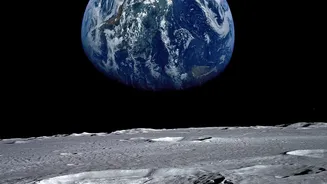
Anyone looking at the Moon can see its two-toned nature: bright, cratered highlands and large, dark plains. These dark patches, named 'maria' (Latin for seas), are vast, solidified lava flows. But this familiar landscape is almost exclusive to the near
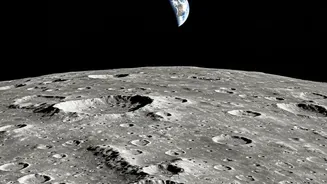
side, which covers about a third of its surface in these dark basalts. The far side is a different world. It is almost entirely devoid of large maria, presenting a surface that is more uniformly pale, mountainous, and peppered with countless craters. Beyond the visual contrast, scientific observation has revealed deeper asymmetries. Data from NASA's GRAIL orbiters showed the far side's crust is, on average, about 20 kilometres thicker than the crust on the near side. This thicker crust likely made it much more difficult for magma from the mantle to erupt onto the surface, explaining the scarcity of volcanic plains on the far side.
A History of Fire and Impact
Why the two sides developed so differently has been a major lunar mystery. The leading explanation traces back to the Moon's formation, likely from debris left after a Mars-sized object called Theia collided with early Earth. In the aftermath, the Moon was tidally locked with its much larger parent, meaning one side always faced the hot, molten Earth. This constant radiant heat kept the near side warmer, while the far side cooled more rapidly. This temperature difference had profound consequences. It's now believed this uneven heating drove large-scale circulation within the Moon's ancient magma ocean, concentrating heat-producing radioactive elements like potassium and thorium on the near side. This concentration of radioactive fuel contributed to the prolonged and extensive volcanism that formed the near side's vast maria, while the cooler far side's crust thickened and solidified much sooner.
The Promise of the South Pole-Aitken Basin
To test these theories, scientists needed rock samples from the far side. The ideal location was the South Pole-Aitken (SPA) basin, a colossal crater on the far side that is the largest, deepest, and oldest known impact basin on the Moon. Stretching over 2,500 kilometres in diameter, the impact that created the SPA basin some 4.3 billion years ago was so immense it punched deep into the lunar crust, potentially dredging up material from the Moon's upper mantle. This makes it a unique window into the Moon's interior and its earliest history. By sampling material from this basin, researchers hoped to find clues about the Moon's internal composition and understand why volcanism on the far side seemingly ended much earlier than on the near side.
First Contact with Farside Rocks
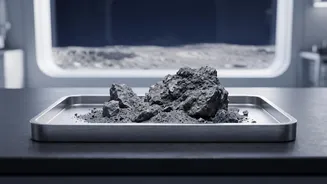
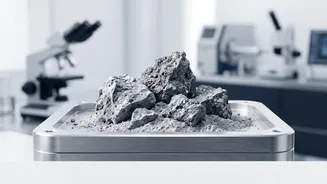
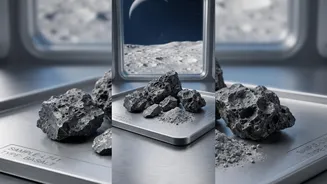
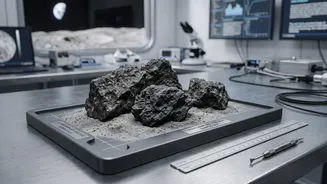
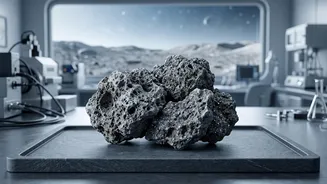
That historic opportunity arrived in June 2024, when China's Chang'e-6 mission successfully collected and returned the first-ever samples from the SPA basin. Analysis of these precious rocks and soil, totalling nearly two kilograms, is providing ground truth to decades of remote observation. Early findings reveal a complex mixture of local basalts and other rock fragments excavated by impacts. Crucially, the samples help confirm that while the crusts are different, the deeper mantle material from which far side lavas originated is chemically similar to that which sourced near side lavas. This supports the idea that the differences are a crustal and thermal phenomenon, not a fundamental difference in the Moon's deeper composition. The rocks also show evidence of the intense heat from the SPA impact, which seems to have boiled off lighter volatile elements, a process that would have influenced the region's later geological evolution.