
What is a 'Super-Earth'?
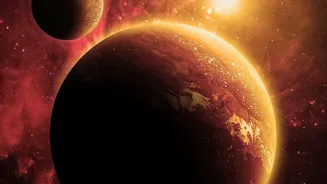
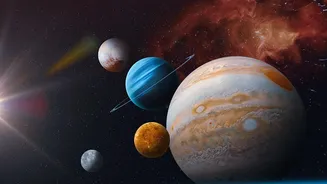
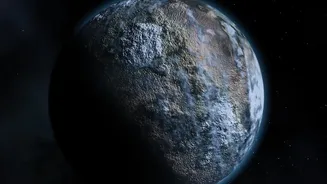
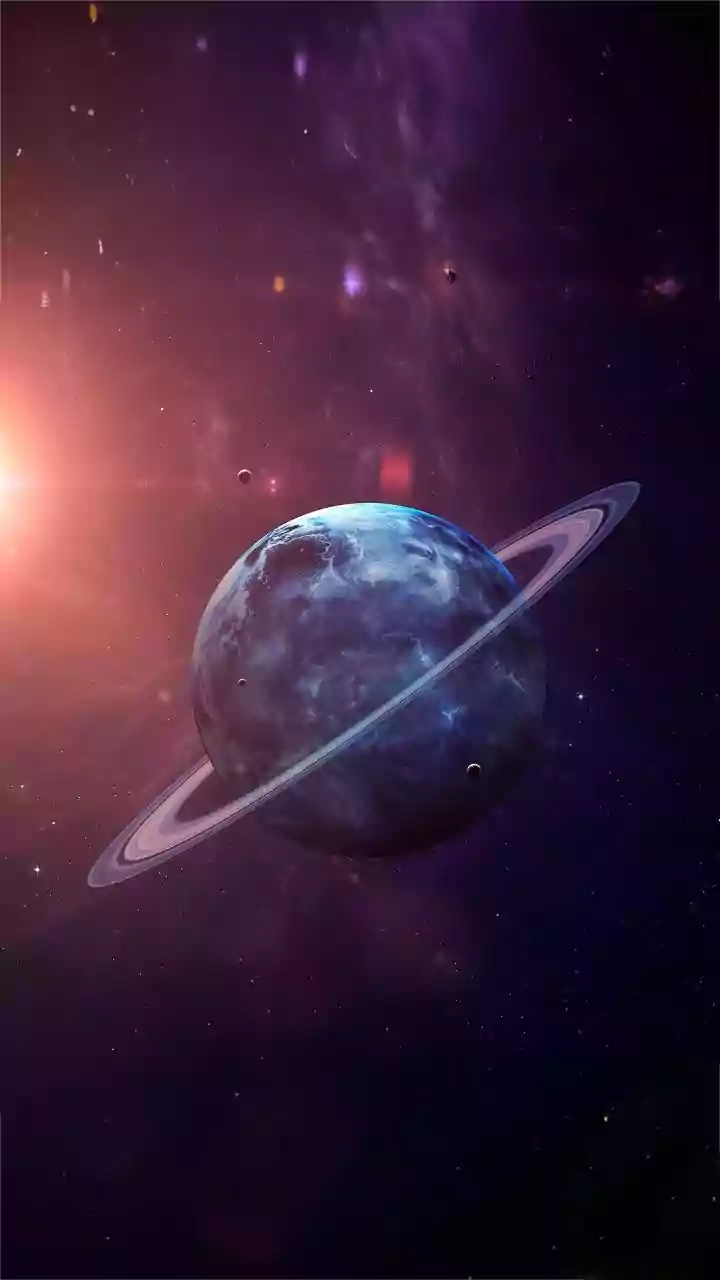
In the vast catalogue of planets discovered outside our solar system, one of the most common types is the 'super-Earth'. The term doesn't mean they are necessarily habitable, but rather refers to a planet's size: larger and more massive than Earth, but smaller
and lighter than ice giants like Neptune. They can be rocky, gaseous, or a combination of both. Our own solar system curiously lacks a planet of this size, making super-Earths a fascinating mystery for astronomers. They represent a completely different class of world, and studying them helps scientists understand the incredible diversity of planets that exist throughout our galaxy.
The Ultimate Cosmic Detective
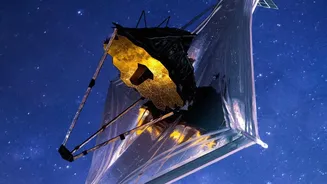
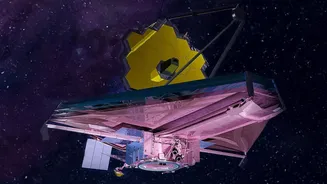
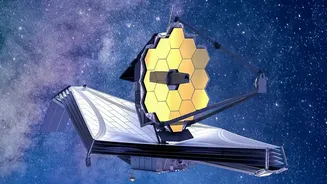
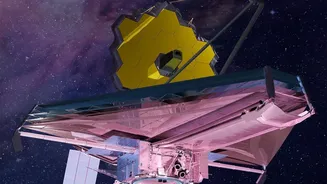
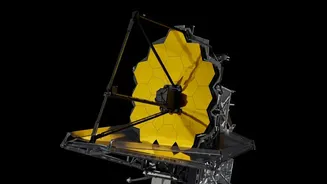
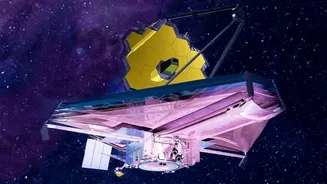
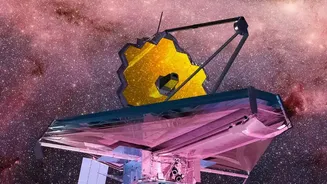
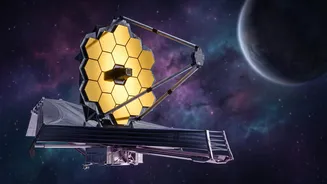
Enter the James Webb Space Telescope, a collaboration between NASA, the European Space Agency, and the Canadian Space Agency. Launched on Christmas Day 2021, the JWST is the most powerful space telescope ever built. Its massive mirror and ability to see in infrared light allow it to capture faint light from the most distant corners of the universe. A key part of its mission is to study exoplanets. One of its most powerful techniques is called transmission spectroscopy. When a planet passes in front of its host star from our point of view, the starlight filters through the planet's atmosphere. By analyzing which colours of light are absorbed, scientists can identify the chemical fingerprints of molecules like water, methane, and carbon dioxide.
A Glimpse of Water
Recently, the JWST has turned its powerful gaze on several super-Earths, and the results are tantalizing. In one case involving a rocky planet named GJ 486 b, located 26 light-years away, scientists found a signal that was almost certainly due to water. This was a landmark moment, but it came with a major scientific caveat. The planet orbits its star so closely that it's scorching hot, reaching temperatures of around 430 degrees Celsius. The researchers had to determine if the water vapor was truly part of a planetary atmosphere or if the signal was actually coming from the cool spots, known as starspots, on the planet's host star itself. It's a scientific puzzle that highlights the incredible precision and challenges of this work.
Not Earth 2.0, But Still Groundbreaking
It's important to temper expectations. Finding water vapor on a planet like GJ 486 b, or the lava world 55 Cancri e where a secondary atmosphere might be generated by its molten ocean, does not mean we've found life. Many of these super-Earths are far too hot or have conditions completely inhospitable to life as we know it. For example, K2-18b, another famous super-Earth with water vapor detected by the Hubble telescope, is eight times the mass of our planet and has a different atmospheric composition. These worlds are not 'Earth 2.0'. However, the very act of detecting water on a small, rocky world is a monumental achievement. It confirms that planets with water-rich atmospheres can and do exist outside our solar system, a crucial step in the search for habitable worlds.
A New Era of Exploration
The detection of water vapor, even in the most extreme environments, is more than just a single discovery; it's a proof of concept. It demonstrates that the JWST has the capability to detect the key ingredients for life on planets orbiting distant stars. Each observation, whether of a hellish lava world or a mysterious water-rich planet, provides crucial data. Scientists are building a library of planetary atmospheres, helping them understand how these worlds form and evolve. This groundwork is essential for the ultimate goal: to one day point the telescope at a smaller, cooler, truly Earth-like planet and find out what's in its air. Finding water is the first step in that much longer journey.