


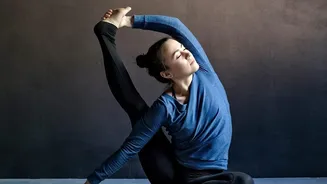
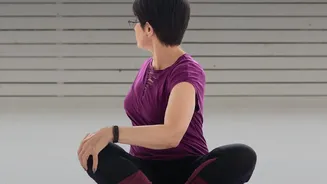
Why Yoga for Flexibility?
Unlike many exercises that focus on specific muscle groups, yoga works on the body holistically. It combines active and passive stretching to lengthen muscle fibres, improve the mobility of your joints, and increase your overall range of motion. Regular
practice circulates synovial fluid, which lubricates and supports joint health, helping to reduce stiffness. This process not only makes muscles and connective tissues more elastic but also enhances body awareness. You learn to listen to your body and understand its limits, which is crucial for preventing injury. The controlled movements and deep breathing techniques encourage tight muscles to relax, alleviating tension stored in the body from stress or sedentary habits. This mind-body connection is what makes yoga a uniquely powerful tool for becoming more flexible.
Cat-Cow Stretch (Marjaryasana-Bitilasana)
This gentle, flowing movement is an excellent way to warm up the spine and improve its flexibility. Start on your hands and knees in a 'tabletop' position, with your wrists directly under your shoulders and your knees under your hips. As you inhale, drop your belly towards the mat, lift your chest and tailbone, and look forward (Cow Pose). As you exhale, round your spine toward the ceiling, tuck your chin to your chest, and press into your hands (Cat Pose). Continue flowing between these two poses for about one minute, synchronising your breath with the movement. This pose is fantastic for relieving tension in the back and neck.
Downward-Facing Dog (Adho Mukha Svanasana)
A cornerstone of many yoga practices, Downward-Facing Dog is a full-body stretch that targets the hamstrings, calves, shoulders, and spine. From your hands and knees, tuck your toes and lift your hips up and back, forming an inverted 'V' shape with your body. Spread your fingers wide and press firmly into your palms. Keep your head between your upper arms, and don't worry if your heels don’t touch the ground. To deepen the hamstring stretch, you can gently 'pedal' your feet by bending one knee and then the other. Hold the pose for five deep breaths, feeling your body lengthen and open.
Bridge Pose (Setu Bandhasana)
Bridge Pose is a gentle backbend that stretches the chest, neck, and spine while strengthening the glutes and hamstrings. Lie on your back with your knees bent and feet flat on the floor, hip-width apart. Your arms should be alongside your body with your palms facing down. On an exhale, press through your feet and lift your hips off the floor. Keep your thighs parallel and try to interlace your fingers on the mat beneath you, rolling your shoulders under for a deeper chest opener. Hold for 30 seconds, breathing steadily, before slowly rolling your spine back down to the floor.
Seated Forward Bend (Paschimottanasana)
This pose provides a deep stretch for the entire back of the body, from the heels to the neck, particularly targeting the hamstrings and lower back. Sit on the floor with your legs extended straight in front of you. You can place a folded blanket under your hips for support. Inhale and lengthen your spine, raising your arms overhead. As you exhale, hinge at your hips and fold forward, reaching for your shins, ankles, or feet. Keep your spine long and avoid rounding your back excessively. If your hamstrings are tight, bend your knees slightly. Hold for 5-10 breaths, feeling the release in your back body.
Butterfly Pose (Baddha Konasana)
An excellent hip-opener, the Butterfly Pose stretches the inner thighs, groin, and knees. Sit tall on the floor and bring the soles of your feet together, letting your knees fall out to the sides. Hold onto your feet or ankles. You can gently flap your knees like butterfly wings to loosen the hips or hold the stretch statically. For a deeper stretch, inhale to lengthen your spine and exhale to gently fold forward, keeping your back straight. This pose is wonderful for those who sit for long periods, helping to release tension in the hips.