





From Ambition to Action
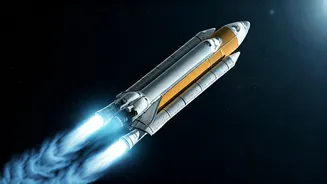
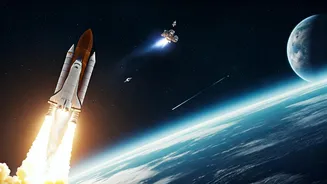
Announced in 2018, the Gaganyaan project aims to demonstrate India's human spaceflight capability by launching a crew of three into an orbit of 400 kilometres for a three-day mission and returning them safely to Earth. After initial timelines were adjusted
due to the complexities of developing new technologies and pandemic-related delays, the Indian Space Research Organisation (ISRO) has hit a steady cadence of testing and validation. The mission is now in its final phase, with the first crewed flight targeted for 2027. This acceleration signals India's readiness to join the elite group of nations—after Russia, the USA, and China—with independent human spaceflight capabilities.
A Flurry of Crucial Tests
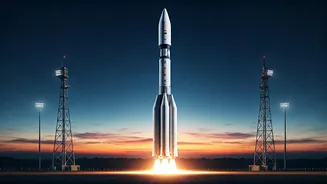
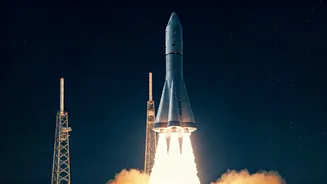
The recent momentum is built on the back of numerous successful tests. ISRO has been methodically checking every component, from the crew escape system to the parachutes needed for a safe splashdown. In April 2026, ISRO successfully conducted the second Integrated Air Drop Test (IADT-02), where a mock crew module was dropped from a Chinook helicopter to validate the performance of its critical parachute system. The human-rated LVM3 rocket, a modified version of ISRO's reliable heavy-lifter, has been qualified and is ready for the first uncrewed flight. This rigorous testing process is essential, as astronaut safety is the absolute top priority.
The Path to the Stars
Before any Indian astronaut, or 'Gaganyatri', flies, a series of uncrewed missions will pave the way. The first of these, the G1 mission, is scheduled for the second half of 2026. This crucial flight will carry Vyommitra, a sophisticated humanoid robot, into space. Vyommitra will simulate human functions, monitoring the crew module's environment and system performance to provide invaluable data on life support and control systems before a human crew is on board. Following G1, two more uncrewed missions are planned to ensure every aspect of the flight is proven safe and reliable.
Meet the Nation's Space Heroes
At the heart of this monumental endeavour are four Indian Air Force test pilots: Group Captains Prasanth Balakrishnan Nair, Ajit Krishnan, Angad Pratap, and Wing Commander Shubhanshu Shukla. These individuals have undergone extensive training both in Russia and at ISRO's astronaut training facility in Bengaluru. Their preparation has been rigorous, covering everything from flight simulations to survival training. Wing Commander Shukla also gained valuable hands-on experience by flying to the International Space Station as part of a commercial Axiom Mission in 2025, conducting microgravity experiments that have strengthened India's readiness for future crewed missions.
More Than Just a Mission
Gaganyaan is more than a technological showcase; it's a catalyst for national progress. Prime Minister Narendra Modi has highlighted the mission as a stepping stone towards establishing India's own space station, the Bharatiya Antariksh Station (BAS), by 2035. The first module for this station is targeted for a 2028 launch. The Gaganyaan program is expected to boost India's space economy, which the government aims to grow from around $9 billion to $45 billion over the next decade. It is also inspiring a new generation of scientists and engineers and fostering innovation in areas like materials science, medicine, and robotics that will have benefits across society.