
Location, Location, Location: The Goldilocks Zone
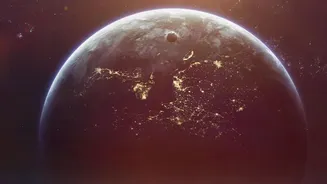
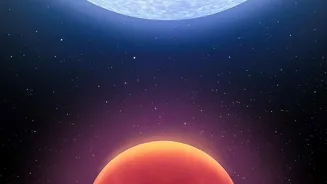
The first and most famous criterion for a potentially habitable world is its address. A planet must orbit its star within a specific range known as the 'habitable zone', or more affectionately, the 'Goldilocks Zone'. This is the orbital distance where
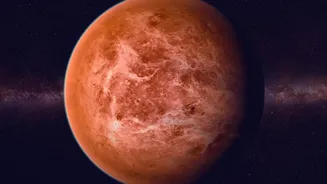
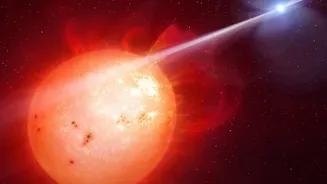
temperatures are just right—not too hot and not too cold—for liquid water to exist on the planet’s surface. If a planet is too close to its star, any water would boil away into steam, like on Venus. If it's too far, water would be locked up as ice. The size and brightness of the star determine where this zone lies; for dimmer, cooler stars, the habitable zone is much closer than it is for a large, bright star like our Sun. This concept is the first filter scientists use to sift through the thousands of exoplanets discovered.
Size and Substance
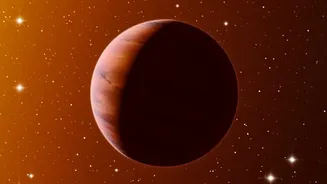
Not just any planet in the Goldilocks Zone will do. For a world to be considered potentially habitable, it needs to be terrestrial, meaning it must have a solid, rocky surface. Gas giants like Jupiter, while massive, have no surface for liquid water to pool on. Scientists generally look for planets with a certain size and mass. If a planet is too small, its weak gravity won't be able to hold onto a substantial atmosphere. If it's too large—typically more than about 1.6 times the radius of Earth—it tends to accumulate a thick, hydrogen-rich atmosphere, becoming a 'mini-Neptune' rather than a rocky world. Therefore, the ideal candidate is a planet with enough mass to retain an atmosphere but not so much that it becomes a gas giant.
The Crucial Role of Liquid Water
Liquid water is considered the single most important ingredient for life as we know it. It acts as a universal solvent, a medium that transports nutrients and facilitates the chemical reactions that are fundamental to biology. Because all known life depends on it, the entire concept of the habitable zone is built around the conditions necessary for liquid water to be stable. NASA's definition of habitability criteria explicitly includes 'extended regions of liquid water' as a primary requirement. While life might exist in other forms using different solvents, the search for habitable worlds is currently guided by the one successful example we have: Earth. Therefore, the potential for oceans, lakes, or rivers is a non-negotiable feature for a planet to be labeled 'potentially habitable'.
An Atmosphere That Protects and Warms
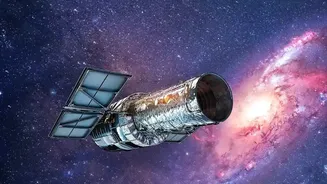
A suitable atmosphere is another key piece of the puzzle. An atmosphere not only provides protection from harmful stellar radiation and cosmic rays but also plays a vital role in regulating a planet's climate through the greenhouse effect. It traps heat from the star, keeping the surface warm enough for liquid water. However, there must be a balance. An atmosphere that is too thick, like Venus's, can lead to a runaway greenhouse effect, making the surface scorchingly hot. Scientists use advanced telescopes like the James Webb Space Telescope to study the light from a star as it passes through an exoplanet's atmosphere, looking for the chemical fingerprints of gases like water vapor, carbon dioxide, and methane. These observations help them determine if the atmospheric conditions could support life.
Beyond Habitable: The Search for Biosignatures
Finding a rocky planet in the habitable zone with signs of water and a stable atmosphere is a monumental discovery. But 'potentially habitable' does not mean 'inhabited'. The next step is to search for biosignatures—substances or phenomena that provide evidence of life. On Earth, life has dramatically altered our atmosphere, filling it with oxygen, a highly reactive gas that wouldn't be present in such quantities without photosynthesis. The detection of certain gases in a planet's atmosphere that are out of chemical balance, such as a combination of oxygen and methane, could be a strong indicator of biological processes at work. Detecting these faint signals from light-years away is incredibly challenging, but it represents the ultimate goal in the search for life beyond our planet.