


Your Window to the Universe
Before you start your cosmic journey, it’s important to understand what “simple stargazer binoculars” means. You don't need a large, expensive piece of equipment. In fact, a good pair of binoculars is often better for beginners than a cheap telescope
because they offer a wider field of view, making objects easier to find. Look for models described as 7x50 or 10x50. The first number is the magnification (7x or 10x closer), and the second is the diameter of the main lenses in millimetres. A 50mm lens is excellent for gathering the faint light from distant objects, which is crucial for stargazing. Models like the Celestron Cometron 7x50 or Nikon Aculon 10x50 are popular, affordable choices that offer clear views. The key is stability; even the best binoculars are useless if you can't hold them steady. If you find your hands shake, try bracing your elbows on a stable surface like a wall or car roof.
Jupiter and Its Hidden Court
Jupiter, the king of the planets, is a brilliant, unblinking jewel in the autumn sky. Unlike stars, it won't twinkle, making it easy to distinguish. To find it, you can use a simple stargazing app on your phone, which will show you its exact position. Once you have it in your sights, focus your binoculars. You won't just see a bright dot; it will resolve into a tiny, distinct disc. Look closely at the area immediately to the left and right of the planet. You should see up to four tiny pinpricks of light, all arranged in a nearly perfect straight line with Jupiter at the centre. These are the Galilean moons: Io, Europa, Ganymede, and Callisto, discovered by Galileo in 1610. Seeing these moons for yourself is a profound experience, connecting you directly to a pivotal moment in scientific history. If you see fewer than four, it’s likely one is hidden behind or in front of the planet.
Finding the Ghostly Andromeda Galaxy
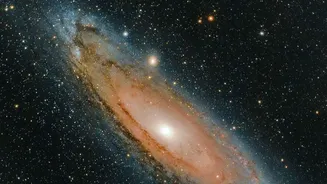
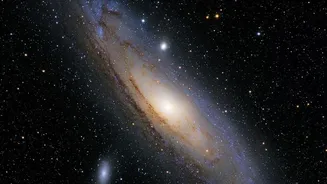
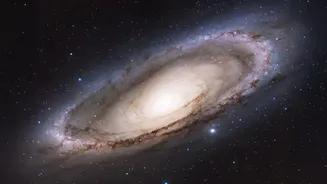
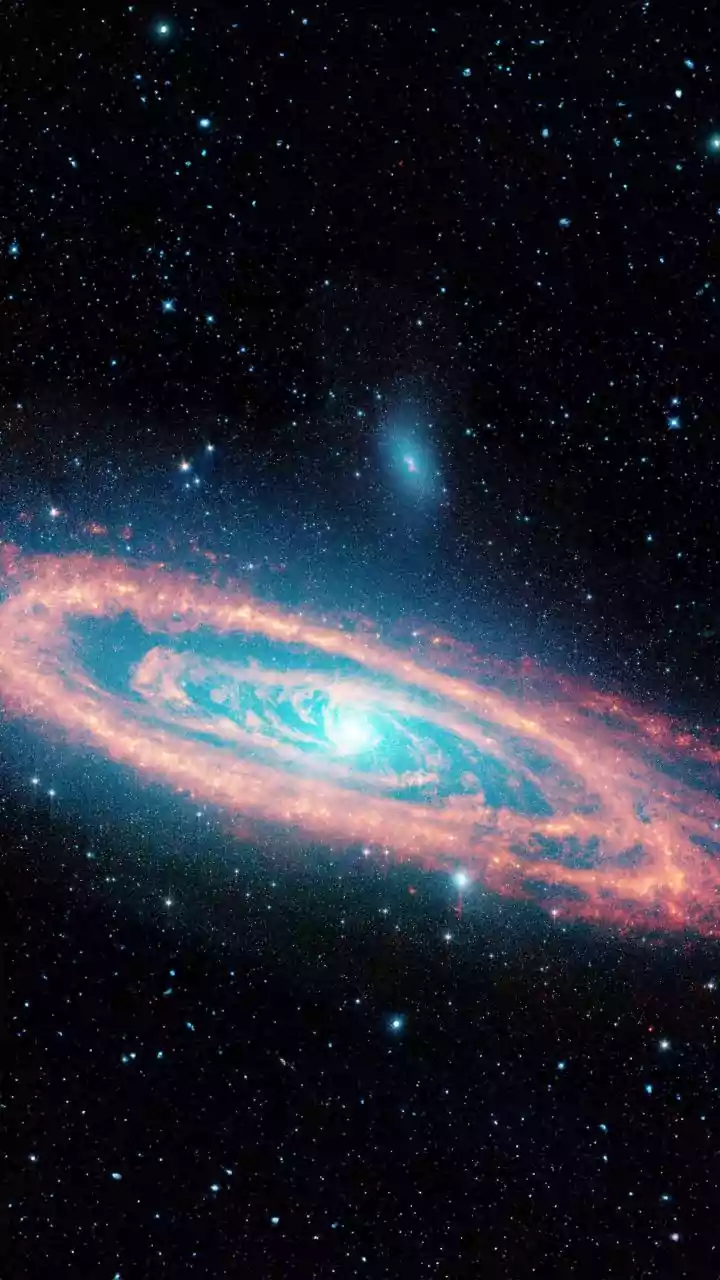
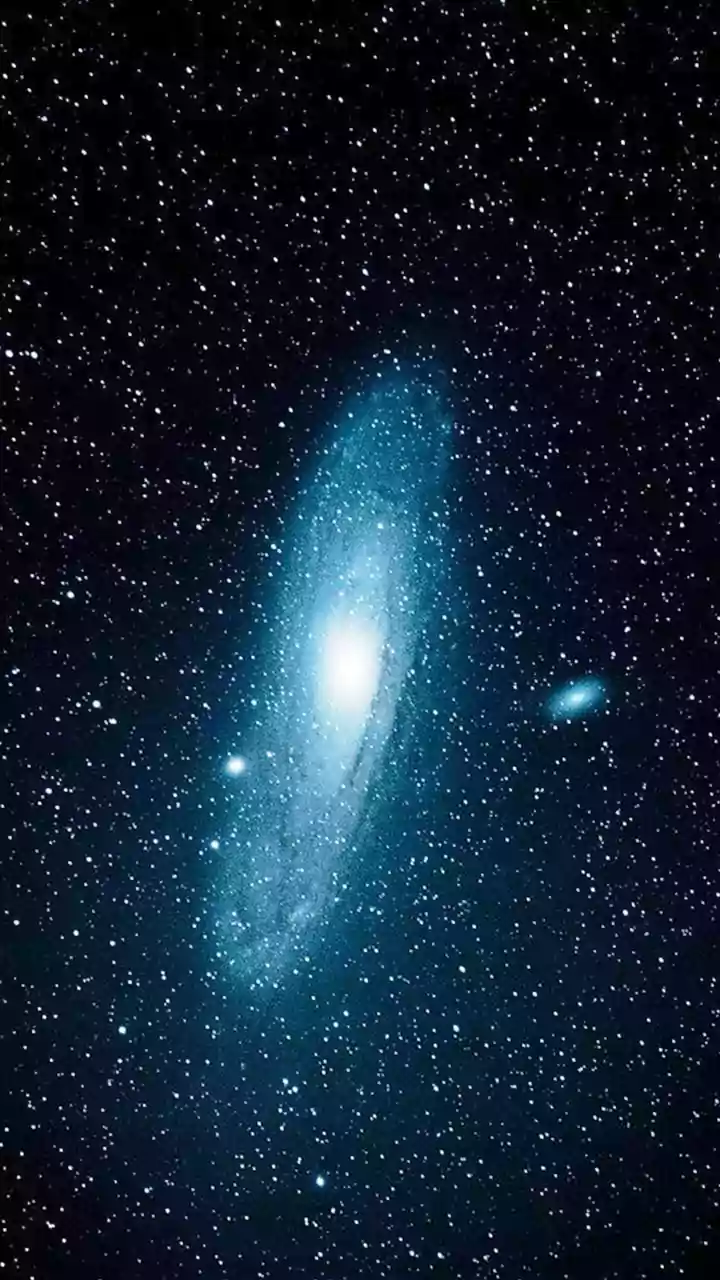
Next is a target that is truly mind-bending. The Andromeda Galaxy, or M31, is the closest major galaxy to our own Milky Way, located about 2.5 million light-years away. The light you are seeing left Andromeda when early human ancestors were first walking the Earth. Finding it requires a bit more patience. The easiest way is to use the constellation Cassiopeia, which forms a distinctive 'W' shape. The right-hand 'V' of the 'W' acts as an arrowhead pointing roughly in Andromeda's direction. Scan this area slowly with your binoculars. Don't look for a star; look for a faint, elongated, fuzzy patch of light, like a tiny, ghostly cloud. That smudge is a galaxy of one trillion stars. It might not look like the spectacular images from space telescopes, but its subtle glow is an awe-inspiring sight, representing an entire island universe seen from afar.
Tips for the Indian Stargazer
Stargazing in India comes with its own set of challenges, primarily light pollution from our bustling cities. The best views will always be far from city centres, but even from a suburban balcony or rooftop, you can see these objects. The key is to let your eyes adapt to the darkness for at least 20-30 minutes. Avoid looking at your bright phone screen; use a red light if you need to consult a chart. Autumn nights, especially after the monsoon has cleared the air, often provide excellent clarity. However, be mindful of haze and atmospheric pollution, which can obscure faint objects. Check local weather and air quality forecasts before you head out. Patience is your greatest tool. The more you look, the more your eyes and brain will learn to see the faint details of the cosmos above.