



The Lithium-Ion Bottleneck
For years, the electric vehicle revolution has run on lithium-ion batteries. They are energy-dense and relatively long-lasting, making them the default choice for everything from smartphones to electric cars. However, this dominance comes with significant
drawbacks for India. The country has negligible reserves of lithium and cobalt, two critical minerals for these batteries. This dependency creates a massive import bill and exposes the nation's EV ambitions to volatile global supply chains, which are largely controlled by a few countries. Geopolitical tensions or trade restrictions, like China's export controls on graphite, can disrupt the entire manufacturing ecosystem, creating price uncertainty and production delays for Indian companies.
Enter Sodium-Ion: A Game Changer
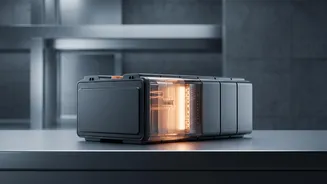
Sodium-ion batteries work on a similar principle to their lithium-ion cousins but swap out lithium for sodium as the charge carrier. The real magic lies in the raw materials. Sodium is one of the most abundant elements on Earth, found readily in seawater and mineral deposits. This makes it significantly cheaper and its supply chain far more secure. While the technology itself is still maturing, the potential is enormous. For India, a country with vast sodium resources, this shift represents a strategic move towards 'Aatmanirbhar Bharat' (self-reliant India) in the critical energy storage sector. The technology also offers major safety benefits, as sodium-ion batteries are non-flammable and can be safely transported at zero charge.
The Raw Material Cost Advantage
The core of the cost saving comes from replacing expensive and supply-constrained minerals. Lithium, cobalt, and nickel are all replaced with abundant and inexpensive alternatives like sodium, iron, and manganese. Furthermore, the anode (the negative electrode) in a sodium-ion cell can be made from hard carbon, which can be produced from agricultural waste like paddy straw—a resource India has in abundance. This not only lowers costs but also creates a circular economy. While large-scale production is needed to realize the full economic benefit, experts predict that sodium-ion batteries could be 20-40% cheaper than their lithium-iron-phosphate (LFP) counterparts once manufacturing matures. Projections suggest cost parity with lithium-ion could be reached by the end of 2026 as production scales up.
Indian Pioneers Leading the Charge
Several Indian companies are aggressively pursuing sodium-ion technology. Reliance Industries has made a significant move by acquiring UK-based sodium-ion pioneer Faradion for an enterprise value of £100 million. Reliance plans to leverage this technology at its giga-factory in Jamnagar, with manufacturing slated to begin in 2026. Another key player is the Roorkee-based startup Indi Energy, which has developed its own technology to produce hard carbon from bio-waste. The company is focused on creating a fully indigenous supply chain, from raw materials to finished cells. Other companies like Naxion Energy are also entering the market, having rolled out sodium-ion storage systems for homes and businesses. These efforts are supported by government initiatives like 'Make in India' and the push for energy security.
The Road Ahead: Challenges and Opportunities
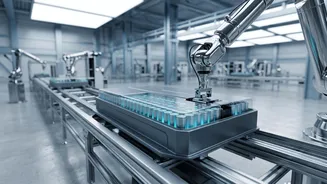
Despite the promise, the path to mass adoption has hurdles. Currently, sodium-ion batteries have a lower energy density than lithium-ion, meaning they offer less range for the same weight—a key consideration for electric cars. However, their performance in a wide range of temperatures and suitability for stationary storage and smaller vehicles like two-wheelers and three-wheelers make them an ideal starting point. The industry is still in its early stages in India compared to China, which is already commercializing the technology at a rapid pace. For India to succeed, it must accelerate commercialisation and build out the entire ecosystem, from material processing to battery pack assembly. The window of opportunity is open, but it requires swift and strategic execution.