


Why Flexibility Matters
Flexibility is much more than just the ability to touch your toes; it's a vital component of overall physical health. Having a good range of motion in your joints and muscles helps with everything from improving your posture and reducing muscle soreness
to lowering your risk of injury. When your muscles are supple, there's less strain on your body, which can alleviate chronic pain in the back, neck, and shoulders. Regular stretching through yoga not only lengthens muscle fibres but also helps retrain your nervous system, allowing for a greater range of motion over time. A consistent practice supports joint health, improves circulation, and can even help reduce stress by releasing physical tension.
Cat-Cow (Marjaryasana-Bitilasana)
This gentle, flowing movement is one of the best ways to warm up the spine and is perfect for beginners. It increases the flexibility of your neck, shoulders, and spine while gently stretching your back and core. To begin, position yourself on all fours with your wrists directly under your shoulders and your knees under your hips. As you inhale (Cow Pose), drop your belly towards the mat, lifting your chest and tailbone while looking forward. As you exhale (Cat Pose), round your spine toward the ceiling, tucking your chin to your chest and pressing the mat away from you. Repeat this fluid movement for 5-10 breaths, syncing your breath with each transition.
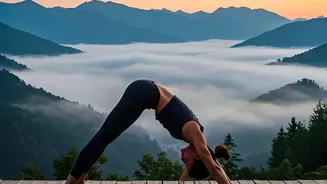
Downward-Facing Dog (Adho Mukha Svanasana)
A foundational pose in yoga, Downward-Facing Dog is a full-body stretch that targets hamstrings, calves, shoulders, and the spine. From your hands and knees, tuck your toes and lift your hips up and back, forming an inverted 'V' shape. Keep your head between your upper arms. For beginners, tight hamstrings are common, so feel free to generously bend your knees to keep your spine long. You can also 'pedal' your feet, bending one knee and then the other, to gently stretch your hamstrings. Press firmly into your hands to take pressure off your wrists and actively engage your core.
Warrior II (Virabhadrasana II)
Warrior II is a powerful standing pose that builds strength while improving flexibility in the hips, groin, and chest. Start by standing with your feet wide apart, about 4 to 5 feet. Turn your right foot out 90 degrees and your left foot in slightly. Bend your right knee until it is directly over your ankle, keeping your thigh parallel to the floor. Extend your arms parallel to the floor, reaching them actively in opposite directions, and gaze over your right hand. This pose deeply stretches the inner thighs and opens the hips, which is especially beneficial for those who sit for long periods.
Triangle Pose (Trikonasana)
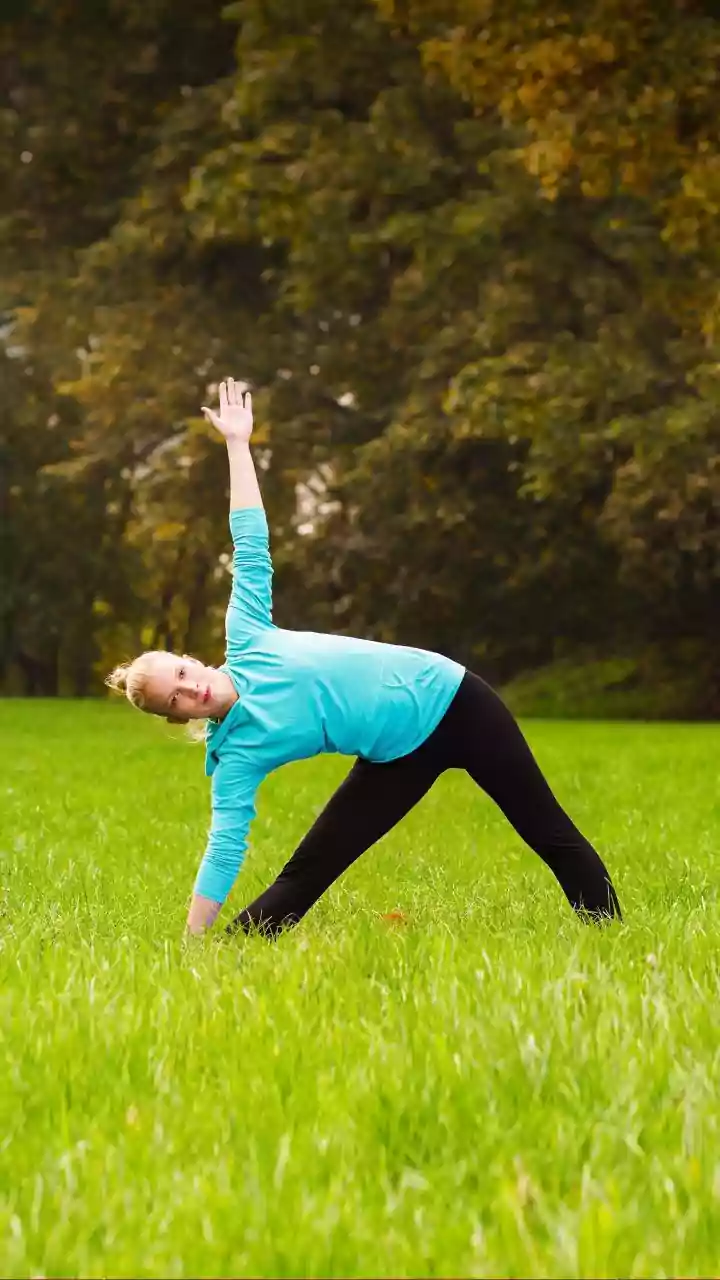
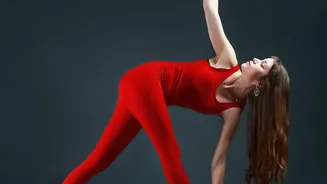
Triangle Pose is excellent for stretching the hamstrings, hips, and groin while also opening the chest and shoulders. From a wide-legged stance, turn your right foot out 90 degrees. Straighten both legs and extend your torso to the right, over your right leg. Hinge at your hip and lower your right hand to your shin, ankle, or a block, extending your left arm toward the ceiling. The goal is not to touch the floor but to create a long, straight line from your left fingertips to your right. This pose lengthens the side of the body and improves balance and stability.
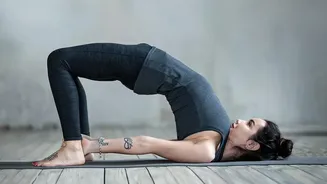
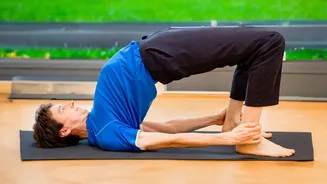
Bridge Pose (Setu Bandhasana)
A gentle backbend, Bridge Pose helps stretch the front of the body, including the chest, neck, and spine, while strengthening the back and glutes. Lie on your back with your knees bent and feet flat on the floor, hip-width apart. Your feet should be close enough that you can touch your heels with your fingertips. Press into your feet and shoulders to lift your hips off the floor. Keep your thighs parallel. This posture helps improve posture and can relieve backaches by creating flexibility and endurance in the spine.