



The Reign of the Potato Chip
Let’s be honest: we all love a good potato chip. That perfect, machine-engineered crunch, the satisfying slick of salt and grease on your fingertips, the sheer variety of flavours from 'Magic Masala' to 'Cream & Onion'. The chip is the default party guest,
the go-to movie night companion, and the comforting friend after a long day. It’s a marvel of food science, designed for maximum “craveability.” But its reign comes at a cost. We reach for them knowing they are a guilty pleasure, a festival of refined carbs, unhealthy fats, and sodium. The pleasure is fleeting, often followed by a shadow of regret and a feeling of lethargy. For all its engineered perfection, the potato chip is, nutritionally speaking, a bit of a dead end.
Enter Makhana: The Humble Challenger
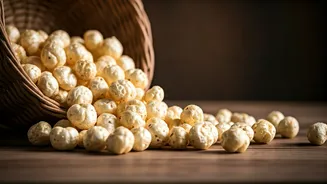
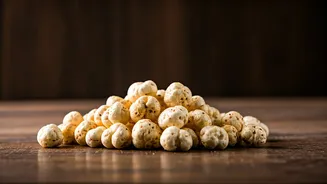
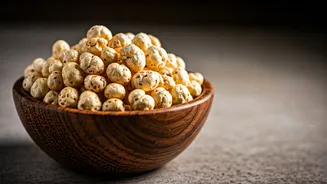
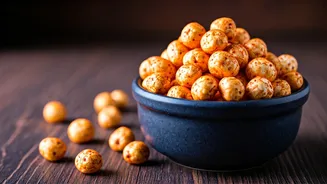
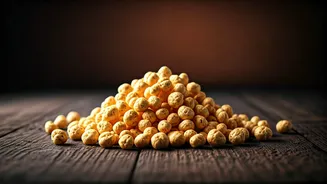
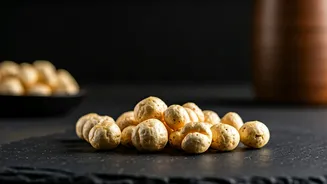
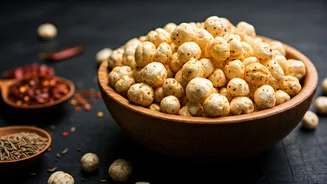
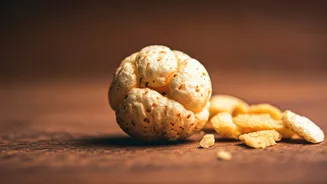
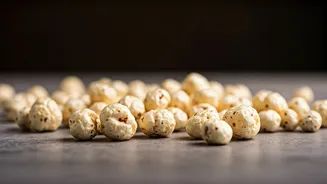
Now, consider its challenger: makhana. Known as fox nuts or puffed lotus seeds, these airy, white balls are anything but a new invention. They are the seeds of the Euryale ferox plant, harvested from the stagnant waters of wetlands and ponds, primarily in Bihar. For centuries, makhana has been a staple in traditional Indian households, used in fasts (vrat), offered as prasad, and cooked into curries like 'Makhane Kheer'. They were the original 'puffs' long before corn curls were ever extruded from a machine. Traditionally, they were simply roasted in a little ghee and sprinkled with black salt. But today, this humble seed is getting a modern makeover, stepping out of the pooja room and into the global snack aisle.
The Nutritional Knockout
This is where the comparison gets clinical. A standard serving of fried potato chips is a calorie-dense affair, loaded with saturated fats and sodium. Makhana, when roasted, flips the script. It’s naturally low in calories and fat. A cup of makhana contains significantly less fat than a handful of chips. Moreover, makhana is a good source of protein, magnesium, potassium, and fibre—nutrients that are often stripped away or absent in processed snacks. It’s also gluten-free and has a low glycaemic index, which means it releases energy slowly, keeping you fuller for longer without spiking your blood sugar. For anyone looking to snack smarter without sacrificing satisfaction, the nutritional scorecard isn’t even a close contest. Makhana wins by a landslide.
A Canvas for Flavour
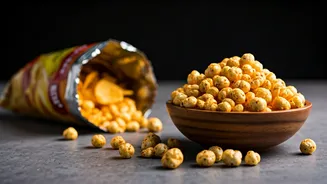
But what about taste? The magic of makhana lies in its subtlety. On its own, it has a mild, neutral taste and a uniquely satisfying crunch that’s less aggressive than a kettle chip but more substantial than popcorn. This neutrality makes it an incredibly versatile canvas for flavour. Modern brands are coating them in everything from peri-peri and pudina to wasabi and Himalayan pink salt. At home, you can toss them with chaat masala, turmeric and black pepper, or even cocoa powder and jaggery for a sweet treat. Unlike potato chips, which often rely on artificial powders for their flavour, makhana absorbs spices beautifully, allowing for a more natural and customisable taste experience.
The Guilt-Free Crunch
Perhaps the most significant advantage makhana has is psychological. We’ve been conditioned to see snacking as an indulgence, something to feel slightly bad about. With chips, it’s easy to cross the line from a small bowl to an empty bag. Makhana changes this dynamic. Because it’s light, airy, and nutritionally beneficial, you can enjoy a generous bowl without the associated guilt. It’s a snack that nourishes rather than just fills. This shift from 'guilty pleasure' to 'wholesome enjoyment' is powerful. It allows us to honour our craving for a crunchy snack without compromising our wellness goals. It’s the evolution of snacking—moving from empty calories to mindful munching.