






The Arrival: A Rocket Ready for Orbit
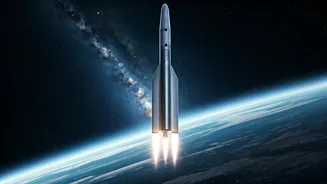
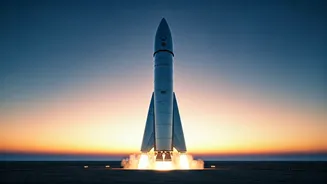
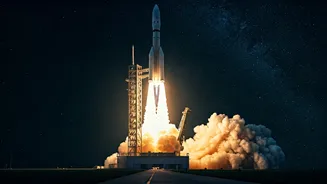
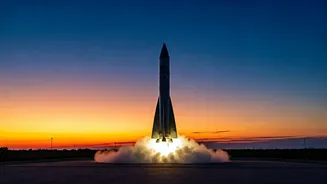
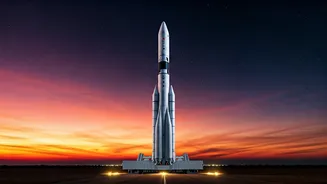
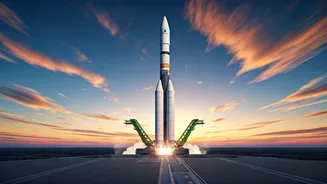
Hyderabad-based startup Skyroot Aerospace has announced that the launch window for Vikram-1's maiden flight is set between July 12 and August 4, 2026. Named 'Mission Aagaman', a Sanskrit word for 'arrival', the launch is more than just a test flight;
it signals the arrival of India's private sector on the global space stage. The seven-storey-tall rocket is already fully stacked on the launchpad at the Satish Dhawan Space Centre in Sriharikota, awaiting final clearances. This moment follows Skyroot's successful 2022 suborbital launch of Vikram-S, but Aagaman is the big leap—the first attempt by an Indian private company to place a vehicle into orbit, a feat that will validate years of design and development.
What Makes Vikram-1 a Game-Changer?
Vikram-1 isn't just another rocket; it's a showcase of cutting-edge, homegrown technology designed for efficiency and cost-effectiveness. It is built with an all-carbon-fiber composite structure, making it incredibly lightweight yet strong. Crucially, it is powered by advanced 3D-printed engines and high-thrust solid-fuel boosters. This use of 3D printing dramatically reduces manufacturing time by up to 80% and cuts engine weight in half, innovations that are key to making space launches more frequent and affordable. Named after Dr. Vikram Sarabhai, the father of India's space program, the rocket series honors a legacy of public achievement while paving a new path for private innovation.
A 'Cab Service to Space'
The primary mission for Vikram-1 is to serve the booming global market for small satellite launches. It's designed to carry payloads of up to 350 kg to Low Earth Orbit. In a world where satellite operators often wait months or even years for a spot on a large rocket, Skyroot aims to offer a reliable, on-demand service—a 'cab to space' for small satellites. The maiden flight itself is partially commercial, carrying payloads for a mix of domestic and international customers, a clear sign of the business-first approach. If successful, Skyroot plans to commence full commercial flights after one or two demonstration launches, positioning itself as a key competitor to ISRO's own Small Satellite Launch Vehicle (SSLV) and international players like Rocket Lab.
An Industry Transformed
The Vikram-1 launch is a landmark moment made possible by the Indian government's 2020 space sector reforms, which opened the doors for private participation. Until then, private companies were mostly limited to being component suppliers for the Indian Space Research Organisation (ISRO). Now, with the support of the regulatory body IN-SPACe, startups like Skyroot can build, own, and operate their own launch vehicles, using ISRO's world-class infrastructure. This policy shift aims to grow India's share of the global space economy from its current 2% to a projected $44 billion by 2033. With over 200 space startups now active in India, Vikram-1 is the tangible proof that this new ecosystem is not just a policy on paper but a powerful engine for innovation and economic growth.