






The Budget Airline Baggage Game
Low-cost carriers make their money on ancillary charges, and baggage is a primary source of this revenue. This is why their carry-on rules are notoriously strict. For most domestic Indian airlines like IndiGo, SpiceJet, and Air India Express, the cabin
baggage allowance is typically one bag weighing no more than 7kg. The dimensions are also tightly controlled, often around 55cm x 35cm x 25cm, though this can vary slightly by airline and aircraft. Some airlines also permit a small personal item like a laptop bag or purse, but the combined weight often still falls under the main 7kg limit. Exceeding these limits, even by a small margin, can result in hefty fees at the gate, often far more than what you would have paid to check a bag in advance. Mastering the art of carry-on packing is therefore not just about convenience; it's a direct money-saving strategy.
Compression Cubes vs. Regular Packing Cubes
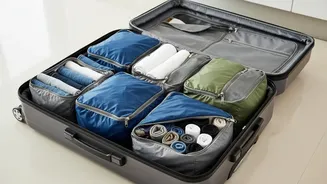
You may have heard of packing cubes, which are great for organizing your suitcase. Compression cubes take this a step further. While a standard packing cube is a zippered pouch that compartmentalizes your clothes, a compression cube has a second, outer zipper. After you fill the cube, you close this second zipper, which squeezes the fabric together, forcing out excess air and reducing the overall volume of the contents. This is not a vacuum seal, but it significantly compacts bulky items like sweaters, jackets, and trousers. This allows you to fit more into your carry-on or, more strategically, to make your packed bag smaller and less likely to bulge, ensuring it fits into the dreaded airport sizer.
How to Pack Using Compression Cubes
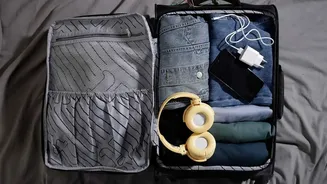
The key to maximizing the effectiveness of compression cubes is the packing method. Instead of folding your clothes, roll them tightly. This technique not only saves space but also helps to minimize wrinkles. Start by laying your clothes flat, then roll them into compact cylinders. Place these rolls side-by-side inside the compression cube, packing them in snugly. A good strategy is to use different-sized cubes for different items: a medium cube for shirts and trousers, a small cube for underwear and socks, and perhaps another for a light jacket. Once a cube is full, close the main zipper. Then, carefully close the second compression zipper. You’ll be surprised at how much flatter the cube becomes. This organization also makes unpacking at your destination a breeze; you can transfer the cubes directly into hotel drawers.
A Word of Caution: Volume vs. Weight
Compression cubes are a miracle for saving space, but they do not reduce the weight of your belongings. This is the single most important rule to remember. You can compress a week's worth of clothes into a tiny, dense package, but it will still weigh the same. After you’ve packed your bag, you must weigh it on a luggage scale to ensure it’s under the 7kg limit enforced by most Indian budget carriers. If you are over the limit, you will still be charged. The true advantage of the cubes is in creating the space needed to carry essentials without resorting to an oversized, check-in bag. They allow you to pack smarter and more efficiently within the existing weight constraints, not to magically lighten your load.