




The Promise of a Breakthrough
Every few months, it seems, a new study makes waves with tantalizing clues about how exercise works its magic on a molecular level. The latest buzz comes from a study published in early July 2026, where researchers identified a specific gene that helps
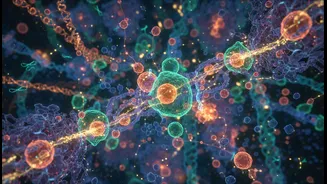
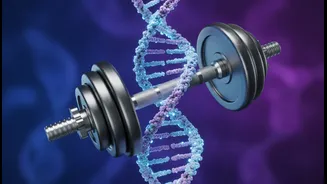
explain why physical activity is so good at keeping muscles healthy as we age. Scientists at Duke-NUS Medical School found that exercise helps reduce levels of a gene called DEAF1, which tends to accumulate in older muscles. When DEAF1 levels are high, they disrupt the muscle's natural ability to repair itself. By exercising, you essentially flip a switch, lowering DEAF1 and allowing the muscle's housekeeping systems to get back to work clearing out damage and maintaining strength. It’s a fascinating discovery that reinforces what we already know—exercise is a powerful tool for healthy aging. Naturally, findings like these lead to the question: could we one day create a treatment that mimics this effect, offering the benefits of muscle rejuvenation to those who can't exercise?
From the Lab Bench to Your Gym Bag
This is where we need to take a deep breath. While discoveries like the DEAF1 switch are crucial for advancing our knowledge, there is a vast gulf between a finding in a laboratory and something you can use. Many of these foundational studies are conducted in animal models, most commonly mice. While mice are invaluable for research, their physiology is not identical to ours. A treatment that works wonders for a mouse running on a tiny treadmill might have a different effect, or no effect at all, in humans. Furthermore, lab conditions are perfectly controlled. The animals have a consistent diet, environment, and specific, measurable exercise routines. Human lives are far messier. We have different genetics, diets, stress levels, and sleep patterns, all of which can influence how our bodies respond. This is why a promising result in a lab is not a conclusion, but merely the starting point of a very long and rigorous journey.
The Scientific Gauntlet: A Multi-Year Marathon
The path from an early discovery to a widely available treatment or supplement is less of a sprint and more of an ultra-marathon. Take, for example, a molecule called Lac-Phe, first identified in 2022. Studies showed that this metabolite is released during intense exercise and helps suppress appetite in mice, leading to headlines about a potential “exercise pill” for weight loss. While the science is promising, it was only in 2025 that the first Phase I human trial began to assess its effects. This is the typical timeline. After initial lab work, a compound must go through multiple phases of human clinical trials to test for safety (Phase I), effectiveness (Phase II), and comparison against existing treatments in large groups (Phase III). This process takes years, and many promising candidates fail along the way. Other so-called “exercise mimetics,” compounds designed to activate the same pathways as exercise, are also in early, preclinical stages of development. They represent the future, but it's a distant one.
What Really Works While We Wait
So, what should you do with this information? Don’t throw out your running shoes just yet. The science is exciting, and it’s worth following, but it shouldn't change your approach to fitness today. The most effective, reliable, and scientifically proven way to get the benefits of exercise is, and remains, exercise itself. While we wait for the potential breakthroughs of the 2030s, the pillars of health and fitness remain unchanged. Consistency is the most important factor. A little bit of movement done regularly is far more effective than sporadic, intense sessions. A balanced routine that includes cardiovascular work (like walking, running, or cycling) for heart health and resistance training (like lifting weights or bodyweight exercises) to build and maintain muscle mass is ideal. Finally, don't underestimate the power of rest and nutrition, which are essential for allowing your body to recover and adapt. These are the strategies that are proven to work right now, for everyone.