


A Disaster on a Sunny Morning
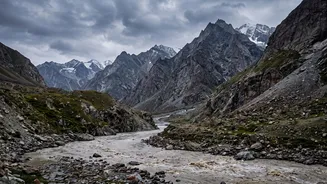
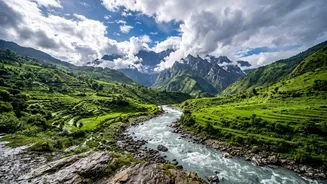
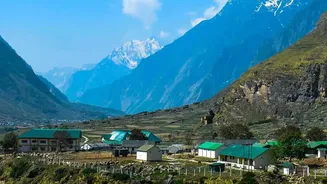
On May 5, 2012, life along the Seti River near Pokhara was proceeding as usual. The river, which was normally a raging, milky-white torrent fed by high-altitude glaciers, had been strangely calm and clear for days. Around 9:30 AM, without warning, a thunderous
roar echoed from the mountains. A massive slurry of water, mud, and rock surged down the narrow gorge, destroying villages, sweeping away homes, and tragically claiming 72 lives. The suddenness and scale of the flood on a day with no significant rainfall left both locals and experts baffled, sparking an urgent investigation into its origins.
Theory 1: The Usual Suspects
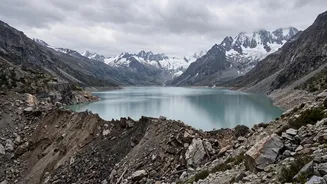
Initial theories pointed to two likely culprits common in the Himalayas: an earthquake or a Glacial Lake Outburst Flood (GLOF). The region is seismically active, and a powerful tremor could easily destabilise a mountainside. A GLOF occurs when a lake formed by a melting glacier breaches its natural dam, releasing enormous volumes of water. However, both theories quickly ran into problems. Seismic stations did record a signal, but it appeared to be the result of a massive landslide, not the trigger. Furthermore, glaciologists confirmed there were no large glacial lakes in the Seti's headwaters capable of producing such a flood, effectively ruling out a classic GLOF.
Theory 2: A Catastrophic Collapse
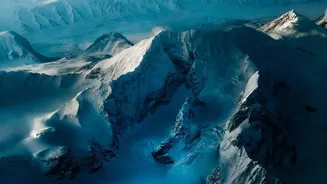
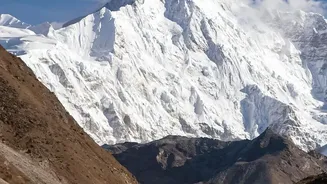
With the simplest explanations discounted, scientists turned their attention to the towering peaks of the Annapurna Massif, the source of the Seti River. Using satellite imagery and analysing seismic data, a far more complex and dramatic picture began to emerge. Evidence pointed to a massive rock and ice avalanche from a nearly vertical cliff face on a ridge of Annapurna IV, one of the range's highest peaks. A huge section of the mountain, estimated to be over 20 million cubic metres, had broken off from an altitude of nearly 7,000 metres.
The Verdict: A Multi-Stage Avalanche
The scientific consensus, pieced together by experts including those from NASA, revealed a devastating chain of events. It wasn't a single event, but a cascade. Weeks before the main flood, smaller rockfalls had already partially blocked the deep, narrow Seti gorge, causing water to back up. Then, on May 5, the colossal rock and ice avalanche from Annapurna IV occurred. Plummeting over 3,000 metres, the friction from the fall likely melted the ice almost instantly, while the impact generated hurricane-force winds that flattened forests. This superheated, high-speed slurry of rock, water, and air slammed into the already-dammed river gorge, bursting it open and sending the combined mass downstream at incredible speed. It was this powerful, multi-stage event—not a simple earthquake or GLOF—that created the deadly debris flow.
Why the Distinction Matters
Understanding the precise cause of the Seti flood is more than an academic exercise. While earthquakes are unpredictable, hazards like rock and ice avalanches are linked to the geological instability of the high Himalayas. This instability can be exacerbated by factors like permafrost thaw, a potential consequence of a warming climate. Pinpointing the mechanism as a catastrophic rockfall rather than a GLOF allows for more accurate hazard mapping. Authorities can better identify dangerously steep and fractured rock faces high above river valleys. This knowledge is critical for planning infrastructure, such as hydropower plants, and developing early warning systems that monitor for seismic tremors caused by avalanches, not just earthquakes. It provides a clearer, albeit frightening, picture of the evolving risks faced by communities living in the shadow of the world's tallest mountains.