






An Accidental Experiment
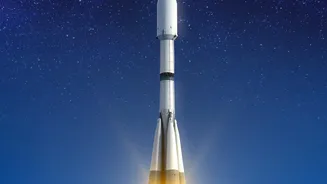
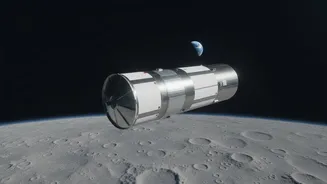
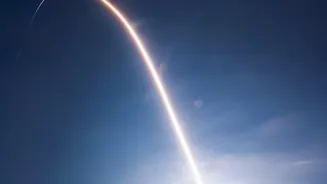
The object in question is the upper stage of a Falcon 9 rocket that launched in January 2025, successfully deploying two lunar landers. After completing its primary mission, the booster was left in a chaotic orbit. Gravitational forces and solar activity
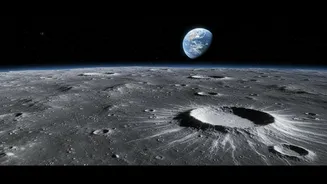
eventually put it on a collision course with the Moon, an event predicted by astronomers months ago. The impact occurred on August 5, 2026, near the western edge of the Moon. While humanity has been crashing things into the Moon since the Soviet Union's Luna 2 in 1959, these events are still relatively rare. And when they happen, they provide a unique, if accidental, chance to conduct science without the cost of a dedicated mission.
Kicking Up Dust for Clues
The biggest prize for scientists is analysing the plume of material—called ejecta—blasted from the surface. This cloud of dust and rock, potentially thrown dozens of kilometres high, contains material from beneath the top layer of lunar soil, or regolith. By studying the light that passes through or reflects off this plume, researchers can determine its chemical composition. The most exciting possibility is the detection of water ice. In 2009, NASA intentionally crashed its LCROSS probe into a permanently shadowed crater at the south pole and confirmed the presence of water ice in the resulting plume. While this recent impact wasn't in a similarly promising location, any data on subsurface composition helps piece together the Moon's history and resource availability.
Reading the Scars
The impact itself leaves a fresh crater, estimated to be about 60 feet wide. This newly exposed scar is a pristine window into lunar geology. Spacecraft like NASA’s Lunar Reconnaissance Orbiter (LRO), which has been circling the Moon since 2009, will take detailed before-and-after images of the site. By comparing these images, scientists can study the crater’s exact size, shape, and the pattern of the ejected debris. This tells them about the physical properties of the lunar regolith—its depth, compaction, and the size of the rocks within it. It’s like a construction crew digging a test pit, but on a celestial scale, revealing the structure and strength of the ground that future astronauts and habitats will rely on.
Listening to the Moon's Interior
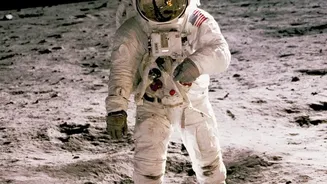
An impact of this energy creates seismic waves—a moonquake—that ripple through the lunar body. During the Apollo program, astronauts deliberately crashed spent rocket stages onto the Moon to be measured by seismometers they had left on the surface. Analyzing how those vibrations traveled helped scientists map the Moon's internal structure, revealing it has a crust, mantle, and core, much like Earth. Though the Apollo seismometers stopped working in 1977, observing this new impact provides a chance to refine models that correlate an impact's flash with the seismic energy it produces. This helps prepare for future missions that will once again place seismic sensors on the Moon, allowing for a far more detailed understanding of its deep interior.
A Lesson in Lunar Traffic Control
This rogue rocket stage also serves as an important, real-world test for tracking objects in the Earth-Moon system. As nations and private companies plan a new era of lunar exploration, including permanent bases through programs like Artemis, the space around the Moon will get much busier. Understanding the trajectories of space debris and the risks they pose is critical for the safety of future missions. This event gives scientists a chance to test their tracking models against a real impact, improving their ability to predict and potentially mitigate hazards for the infrastructure and astronauts we plan to send to the lunar surface.