





What Exactly Did ISRO Test?
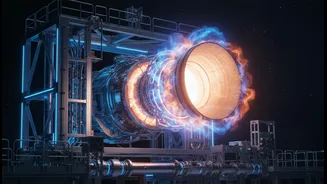
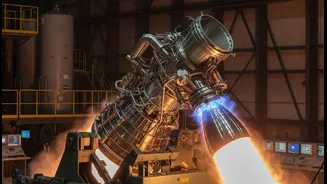
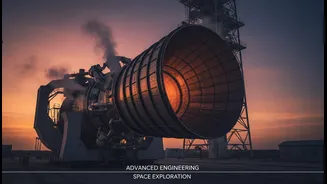
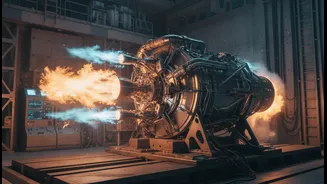
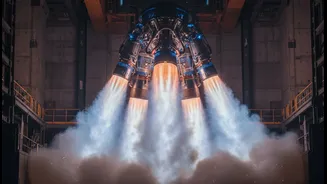
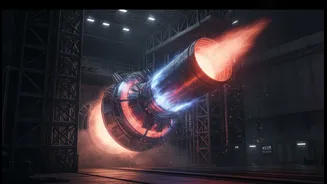
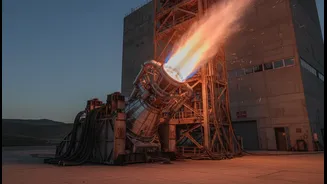
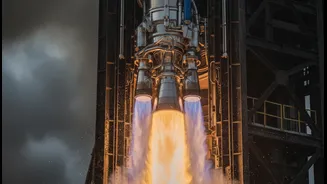
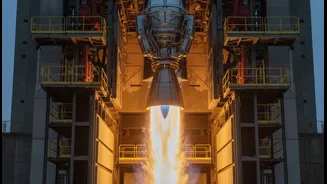
On June 24, at its Propulsion Complex in Mahendragiri, Tamil Nadu, ISRO conducted a 'hot test' on a key component called the Power Head Test Article (PHTA). Think of this as the heart and lungs of a new, powerful rocket engine called the SCE-200. This
engine is a semi-cryogenic engine, which means it uses a combination of super-cooled liquid oxygen and a highly refined form of kerosene, dubbed 'Isrosene', as propellant. The PHTA itself includes the crucial turbo-pumps, pre-burner, and control systems, but not the final thrust chamber where the iconic flames erupt. The test pushed the hardware to generate 175 tonnes of thrust, which is 88% of its full capacity. This was the eighth and most powerful test in the series, giving scientists confidence to proceed to a full-power test at 200 tonnes.
The High-Stakes Gamble: What Were the Risks?
Testing rocket engines is an inherently risky business. These are machines that operate under immense pressures and extreme temperatures. A 'hot test' involves igniting propellants and running the machinery at punishing levels, creating a controlled explosion. The main turbo pumps in this test had to deliver pressures of 400 and 500 bar. Any failure in the components, from a faulty valve to a microscopic crack in the metal, could lead to a catastrophic explosion that could destroy the engine and the test facility. Previous tests in the development of rocket engines, both in India and globally, have sometimes ended in failure, causing setbacks. For ISRO, a major failure would not only mean a financial loss but also a significant delay to its most ambitious projects. This is why tests are conducted in incremental steps, moving from 47% and 60% thrust in earlier tests to 88% in this one, ensuring every part works as predicted before moving to the next stage. A successful test validates the design and builds confidence; a failure provides crucial, albeit harsh, data for improvements.
The Payoff: Unlocking India's Space Future
The benefits of this successful test are enormous and will ripple across India's entire space program. The new SCE-200 engine is designed to replace the current L110 core stage of India's heaviest rocket, the LVM3. This single semi-cryogenic engine will be more powerful than the two Vikas engines it replaces. The immediate benefit is a significant boost in payload capacity. The LVM3 will be able to lift heavier satellites into orbit, increasing its geostationary transfer orbit capacity from four tonnes to potentially five or more. This makes India more competitive in the global commercial launch market, which is projected to grow substantially. Furthermore, using refined kerosene is cheaper, easier to handle, and less toxic than the hypergolic fuels used in the current L110 stage. This simplifies launch operations and reduces costs, making space access more efficient.
The Big Picture: What This Means for India
For the average citizen, this technical achievement translates into national pride and technological self-reliance. Mastering semi-cryogenic technology places India in an elite club of nations with this capability. This engine is a cornerstone for ISRO's future ambitions, most notably the Gaganyaan mission, which aims to send Indian astronauts into space. A more powerful LVM3 is essential for launching the heavier modules required for human spaceflight and potentially for building a future Indian space station, the Bharatiya Antariksha Station. The success of this engine development program means India will not have to depend on foreign technology for its heavy-lift launch requirements. It strengthens the nation's strategic autonomy in space, a critical factor in today's geopolitical landscape. It’s a clear signal of India's growing prowess as a major space-faring nation, capable of complex, homegrown technological feats that will define the future of exploration and satellite deployment.