






The Monsoon Cleaning Challenge
As the rains arrive, high humidity turns our homes into a breeding ground for mould and mildew. With windows often shut against the downpour, ventilation is poor, trapping moisture and allowing musty smells to settle into everything from clothes and carpets
to wooden furniture. This damp environment makes surfaces feel perpetually sticky and creates the perfect conditions for fungi and bacteria to thrive. In Indian cities, where apartments can be compact and rapid urbanisation has reduced natural drainage, these problems are magnified, making effective cleaning a crucial part of seasonal home care.
Why Harsh Chemicals Fall Short
Reaching for a bottle of bleach or a strong phenyl-based cleaner might seem like the obvious solution, but it can be counterproductive during the monsoon. These products release volatile organic compounds (VOCs), which are airborne chemicals that can irritate the respiratory system, trigger allergies, and cause headaches. In a poorly ventilated, humid home, these VOCs become trapped indoors, significantly worsening air quality. Furthermore, the sticky residue some chemical cleaners leave behind can actually attract more grime in damp weather. This has led to a growing awareness of the health risks associated with frequent exposure, particularly for children, the elderly, and domestic workers.
Embracing the Gentle Approach
The alternative is a return to simple, effective, and non-toxic ingredients, many of which are already in our kitchens. Gentle cleaning methods focus on using natural substances that clean and disinfect without polluting your indoor air. This approach is not only safer for your family's health but also better for the environment, as it avoids sending harsh chemicals down the drain. Solutions made from vinegar, baking soda, and lemon are gaining popularity because they are affordable, effective, and don't come with the health warnings of their chemical counterparts.
Your Natural Monsoon Cleaning Toolkit
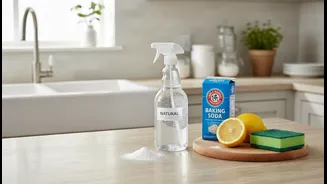
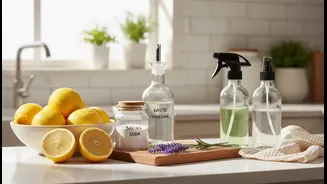
Building a gentle cleaning arsenal is simple. White vinegar is a star player; its acidity is excellent for cutting through grime and inhibiting mould growth. Baking soda is a powerful natural deodoriser and a mild abrasive perfect for scrubbing surfaces without scratching them. Lemon juice acts as a natural bleaching agent and leaves behind a fresh, clean scent. For added power, essential oils like tea tree, eucalyptus, and neem offer natural antibacterial and antifungal properties, making them perfect for floor cleaners and surface sprays.
Tackling Mould, Odours, and Grime
To combat mould on walls or in cupboards, a spray made of equal parts white vinegar and water is highly effective. Just spray the affected area, let it sit, and wipe clean. For stubborn musty odours in wardrobes or rooms, place open bowls of baking soda or coffee grounds to absorb the smell naturally. To clean floors, skip the sticky chemical cleaners and mop with hot water mixed with a splash of vinegar. This disinfects the surface and dries without residue. For greasy kitchen surfaces, a paste of baking soda and water or a spray of citrus-infused vinegar can cut through grime effortlessly.
Beyond Cleaning: A Healthier Home
Adopting gentle cleaning methods has benefits that extend beyond just a tidy space. It contributes to a healthier indoor environment by reducing exposure to potentially harmful chemicals that can trigger respiratory issues. It encourages mindfulness about the products we use and their impact on our surroundings. This shift also involves other smart monsoon habits, such as ensuring cross-ventilation whenever the rain stops, using dehumidifiers in damp corners, and dealing with any leaks promptly to prevent moisture buildup from the start.