








A Tale of Two Airports
For decades, international travel in India meant a journey through major hubs like Mumbai or Delhi. That paradigm is shifting. The country's next wave of growth is taking flight from new launchpads: upgraded Tier-2 city airports and secondary airports in major metropolitan
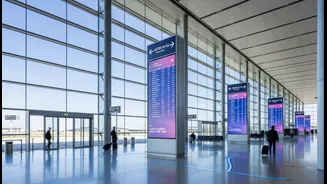
regions. Two prime examples are Indore’s Devi Ahilya Bai Holkar Airport and the brand-new D.B. Patil International Airport in Navi Mumbai. While one represents the growing ambition of a regional economic powerhouse, the other is designed to decongest a sprawling metropolis and create a new economic center of gravity. Both projects share a common goal: to leverage international connectivity as a direct pipeline for business, tourism, and regional prosperity, moving beyond the initial excitement of their first flights.
Navi Mumbai: A New Gateway for the West
The Navi Mumbai International Airport (NMIA) is set to begin international passenger and cargo operations from July 15, 2026. This launch is more than just an infrastructural milestone; it's a strategic move to ease the immense pressure on Mumbai's single, saturated airport. Initial services will connect to Gulf destinations like Abu Dhabi, a major transit hub and a key market for travellers in the Mumbai Metropolitan Region (MMR). Developed to handle 20 million passengers annually in its first phase, NMIA is a catalyst for the entire Navi Mumbai, Panvel, and Ulwe region. Its impact is envisioned across real estate, logistics, and employment, transforming the area into a self-sufficient hub rather than just a suburb of Mumbai. The airport’s success will hinge on seamless multi-modal connectivity, including highways and metro lines, to truly integrate it into the regional ecosystem.
Indore: Connecting Central India to the World
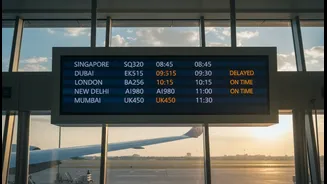
Meanwhile, Indore is carving out its own space on the international map. After a brief suspension, international services are resuming on July 15, 2026, with a new Air India Express flight to Abu Dhabi. This replaces a previous Sharjah service and offers a strategic advantage: Abu Dhabi's Zayed International Airport is a major global hub, providing streamlined connections to Europe and North America without needing a stop in Delhi or Mumbai. For the burgeoning pharma, IT, and textile industries of Madhya Pradesh, this direct link is a significant logistical upgrade. The airport is already seeing over 12% annual passenger growth and has ambitious expansion plans, including a runway extension to accommodate larger aircraft and proposals for new routes to destinations like Singapore and Bangkok. This calculated expansion reflects Indore's rise as a key economic centre in its own right.
The Economic Multiplier Effect
Beyond passenger convenience, these international connections are economic engines. For businesses, they mean faster and more efficient export-import channels for time-sensitive cargo like pharmaceuticals and agricultural products. This is a crucial advantage for industries in and around Indore. In Navi Mumbai, the airport is expected to attract corporate offices, hotels, and logistics companies, creating a vibrant economic zone. Both airports will also unlock regional tourism potential. An international flight to Indore makes heritage sites like Ujjain and Mandu more accessible to global tourists. Similarly, NMIA opens up the Konkan coast and nearby hill stations to foreign visitors, bypassing the congestion of Mumbai. This decentralization of tourist entry points can lead to more distributed economic benefits.
Challenges Beyond the Inaugural Flight
The true test for both airports lies beyond the initial launch. The headline-making claim of a new international flight is one thing; sustaining it is another. Airlines require consistent passenger and cargo loads to make routes profitable. For Indore, the challenge will be to demonstrate enough demand to attract more carriers and destinations beyond the Gulf. For Navi Mumbai, the primary hurdle is ensuring its connectivity and operational efficiency are competitive enough to draw traffic away from the established Mumbai airport. High operating costs at a new greenfield airport can also be a deterrent for airlines. Long-term success will depend not just on the airport infrastructure itself, but on the parallel development of surrounding industrial corridors, tourism facilities, and robust last-mile connectivity.