








Beyond Footprints: The Artemis Base Camp
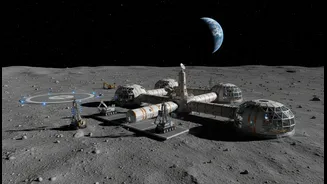
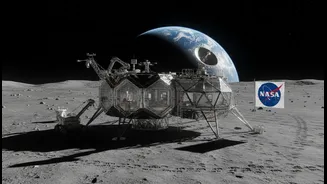
For decades, going to the Moon meant brief visits. The Apollo missions were about planting a flag and coming home. NASA's new vision is fundamentally different. The goal is to stay. This initiative is centered around establishing the 'Artemis Base Camp'
near the Moon's south pole. The plan involves a phased approach, starting with robotic missions to survey the area and test technologies, followed by crewed landings that will gradually build up infrastructure. This includes a surface habitat, advanced rovers for long-range exploration, and power systems to create a sustainable outpost for astronauts to live and work for extended periods, potentially for up to two months at a time. The ultimate objective is to create a permanent hub for science and exploration.
A New Frontier for Science
The scientific drive behind the Moon base is immense. The lunar south pole was chosen for a key reason: the potential presence of water ice in permanently shadowed craters. This ice is a game-changing resource. It can be a source of drinking water and breathable oxygen for astronauts, and its components—hydrogen and oxygen—can be used to make rocket propellant. This could effectively turn the Moon into a refueling station for deeper space missions, including voyages to Mars. Beyond water, scientists are eager to study the unique geology of the Moon to understand the history of our solar system. A base would also serve as a pristine platform for astronomy, free from the interference of Earth's atmosphere.
India's Stake in the Lunar Future
This isn't just a story about NASA. India is a key partner in this new chapter of lunar exploration. In 2023, India signed the Artemis Accords, a set of principles for peaceful and cooperative space exploration. This strategic move shifts India from being an independent space power to a crucial stakeholder in a global framework. This partnership provides ISRO with access to valuable data from missions like Artemis II, which helps refine planning for India's own ambitious Gaganyaan human spaceflight program. Furthermore, it ensures that Indian technology is compatible with global systems, preventing isolation and opening doors for joint missions and deeper collaboration in the future, such as the planned NASA-ISRO Synthetic Aperture Radar (NISAR) mission.
The New Space Race Is a Team Sport
While the Artemis program is led by the US and its partners, it exists in a broader geopolitical context. China, in collaboration with Russia and other nations, is also planning its own International Lunar Research Station (ILRS) at the south pole, with a roadmap to establish a presence in the 2030s. This signals a new era of space activity, one that is less of a head-to-head race and more of a complex interplay of competition and cooperation. For a rising power like India, being a respected partner in a major international coalition like Artemis is strategically significant, positioning it as a leader in shaping the future rules of space governance.
Your Career Could Be in Space (Even on Earth)
For young Indians, the most exciting part of this lunar push is the explosion of opportunities it will create. The growing space economy isn't just for astronauts. Building and sustaining a Moon base requires a vast ecosystem of jobs right here on Earth. There will be a massive demand for aerospace engineers, data scientists, robotics experts, and software developers. But it extends further. We will need experts in space medicine to study the effects of long-duration missions on the human body, lawyers to navigate the complexities of international space treaties, and specialists in resource management and logistics. With India's private space sector booming, companies will be looking for talent to contribute to global supply chains, building everything from satellite components to life-support systems.