







What Exactly Was Tested?
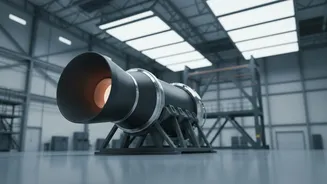
The Indian Space Research Organisation (ISRO) has successfully completed ground tests for one of the most vital components of the Gaganyaan mission's Crew Escape System (CES). Specifically, engineers put the high-altitude escape motor through its paces
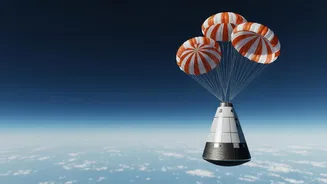
under simulated flight conditions. Think of the Crew Escape System as a highly advanced 'eject' button for the astronaut capsule. If something were to go catastrophically wrong with the main rocket during its ascent, the CES is designed to fire powerful motors that pull the crew module away from the danger in milliseconds, saving the lives of those on board. This system is non-negotiable for human spaceflight, and every part of it must work perfectly, every single time.
Simulating a High-Altitude Crisis
Testing a rocket engine designed to work high up in the atmosphere presents unique challenges. The conditions are vastly different from those at sea level—the air is thin, and the pressure is extremely low. To validate the engine's performance, ISRO engineers had to replicate these 'high-altitude flight stress conditions' in a specialised ground facility. This involves creating a near-vacuum environment to ensure the engine ignites and performs exactly as it would during a real emergency abort sequence at altitudes where the atmosphere has little to no impact. The recent tests were designed to confirm that the solid-fuel motor provides the required thrust for the specified duration under these intense, simulated conditions.
The Ultimate Safety Net
The entire Gaganyaan program is built on a foundation of safety. While the GSLV Mk3 rocket (re-christened LVM3 for human spaceflight) is being made more reliable than ever, space travel is inherently risky. The Crew Escape System is the astronauts' ultimate safety net. It comprises a series of motors that work in sequence. A Pad Abort Test, conducted in 2018, validated the system's ability to work on the launchpad. In-flight abort tests, like the TV-D1 mission in late 2023, have demonstrated the system's ability to function at lower altitudes and specific speeds. This latest engine test focuses on the high-altitude escape scenario, ensuring there is a safe way out for the crew at virtually any point during the rocket's climb to orbit.
Why This Test Matters
A successful test of the high-altitude escape motor is more than just a technical achievement; it's a massive confidence boost for the entire programme. It means ISRO is systematically ticking off all the critical safety requirements needed to 'human-rate' its launch vehicle. Human-rating is the rigorous process of certifying that a spacecraft and rocket are safe enough to carry people. It involves layers of redundancy and proven escape systems. By proving the reliability of this key engine, ISRO is showing its commitment to astronaut safety above all else, clearing a major hurdle on the path to the first crewed mission.
The Road Ahead for Gaganyaan
With this milestone achieved, the focus will shift to further integrated tests of the complete Crew Escape System. The next steps for the Gaganyaan programme involve more uncrewed test flights to validate all systems in a real-world environment. These missions, which may carry the humanoid robot Vyommitra, will test everything from life support and propulsion to re-entry and recovery procedures. Each successful test brings India closer to the historic moment when it will launch its own astronauts from Indian soil, joining an exclusive club of space-faring nations with independent human spaceflight capability. The first crewed mission is anticipated to take place after 2026, following a series of successful uncrewed flights.