



A Cosmic Message in a Bottle
In a groundbreaking series of observations, astronomers have begun to analyze the composition of dust that originated far beyond our own solar system. This isn't science fiction; it's the result of cutting-edge technology and meticulous research, allowing
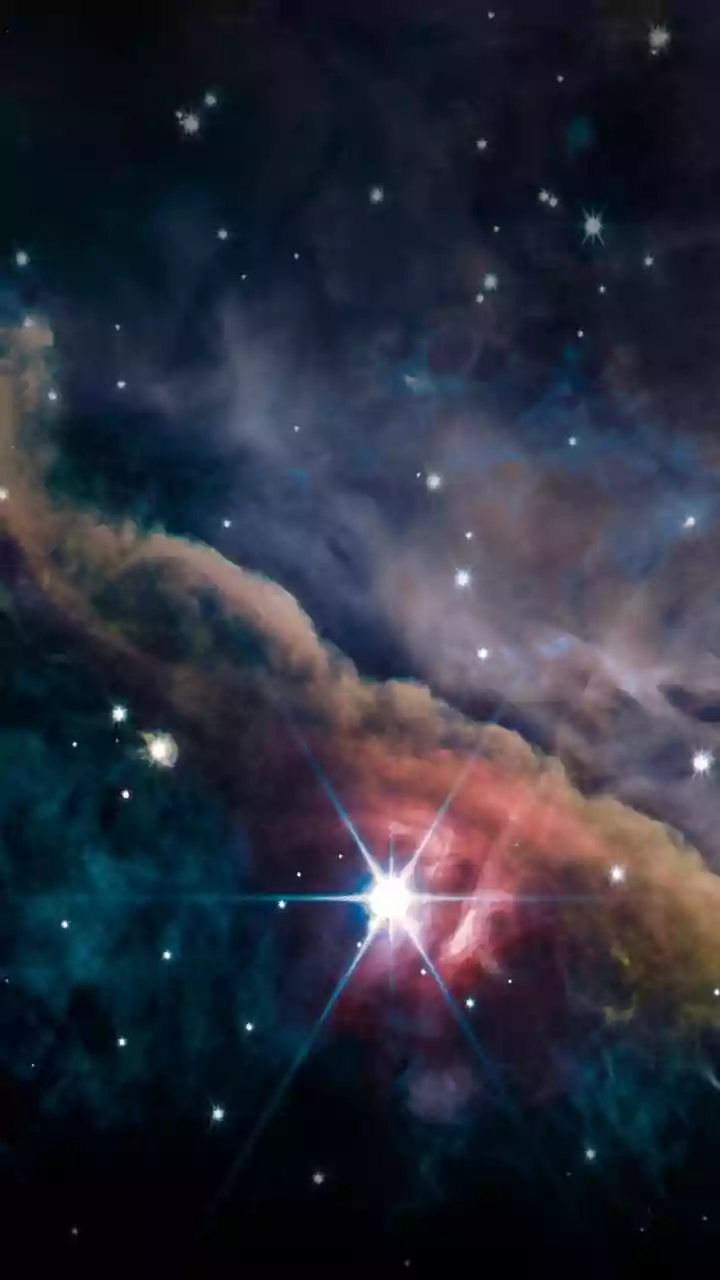
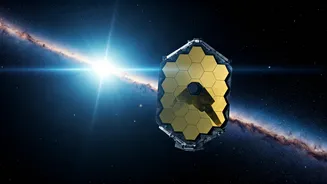
us to study the raw materials of alien worlds. Recent findings from the James Webb Space Telescope (JWST) have provided an unprecedented look at this cosmic dust, revealing complex molecules and elements that are the very building blocks of stars and planets. These tiny particles, often smaller than a grain of sand, act like messengers, carrying chemical secrets from their home systems across the vastness of interstellar space.
How to Catch Stardust
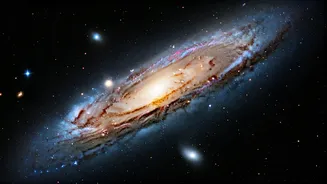
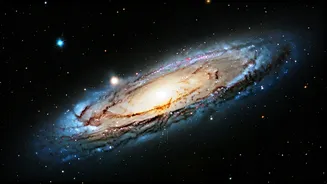
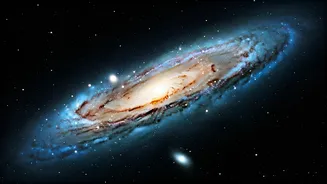
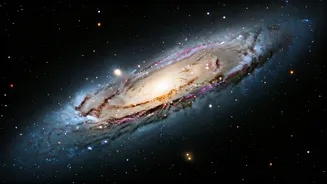
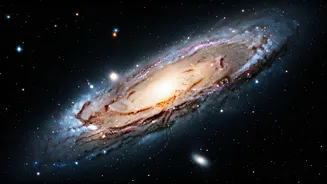
Catching and 'reading' this dust is a monumental challenge. Some particles travel through our solar system and can be analyzed remotely, while others are found in more dramatic settings. One recent study focused on dust being blown out of a distant galaxy called Makani by powerful stellar winds. Using the JWST's incredibly sensitive infrared instruments, scientists were able to detect the faint glow of specific molecules clinging to these dust grains, even after they had journeyed over 300,000 light-years. This technique allows astronomers to perform a chemical analysis without ever physically capturing the particles. It’s like identifying the ingredients of a cake just by smelling its aroma from across a field.
The Surprising Ingredients
So, what are these cosmic dust grains made of? The analysis has revealed a mix of familiar and surprising components. Scientists have identified silicates—minerals that are the primary component of most rocks on Earth—as well as various forms of carbon. More excitingly, the JWST has detected polycyclic aromatic hydrocarbons (PAHs), complex organic molecules that are considered crucial for the early development of life. Finding these molecules in dust from other systems suggests that the fundamental ingredients for life might be more common across the universe than previously thought. In some cases, in galaxies with very few heavy elements, astronomers were shocked to find dust made almost entirely of iron, a composition never seen before in such environments.
Rewriting the Story of Galaxy Formation
These discoveries are doing more than just satisfying our curiosity; they are fundamentally changing our understanding of how galaxies and planetary systems evolve. For a long time, it was believed that significant dust production required a rich supply of heavy elements. However, recent observations of chemically simple galaxies, similar to those in the early universe, show that they are surprisingly proficient at making dust. This implies that the first galaxies after the Big Bang may have been able to form planets much earlier than models predicted. The dust isn't just a byproduct; it's a key player, shielding newborn stars and providing the raw material for planets to coalesce. By studying dust from other systems, we are essentially getting a blueprint for how galaxies like our own Milky Way came to be.