




Why August is Prime Time for Saturn
While Saturn's biggest night of 2026 is its opposition on October 4th, when Earth passes directly between it and the sun, the show starts much earlier. Throughout August, the ringed planet will rise earlier each night and grow progressively brighter in our
sky. For observers, this means the planet becomes an easier and more rewarding target as the month goes on. You can find it in the pre-dawn sky, shining like a bright, steady, golden-hued star. On the mornings of August 29th and 30th, the waning moon will be nearby, acting as a convenient marker to help you locate the planet. This build-up makes August an ideal training ground for the main event in October.
Your Stargazing Starter Kit
The beauty of astronomy is that you can start with nothing more than your own eyes. Saturn is one of the farthest planets easily visible without any equipment. From a reasonably dark location, you'll be able to spot it as a bright point of light that, unlike stars, doesn't twinkle. If you have a pair of binoculars, even standard 10x50 models, you can get a better sense of the planet. While you won't resolve the rings, you may notice that Saturn appears as a slightly elongated, oval-shaped object, confirming it's not a star. To truly witness the magic of the rings, you'll need a telescope. But you don't need a professional-grade instrument; even a small beginner telescope with at least 25x to 50x magnification will reveal the rings as a distinct structure separate from the planet.
Finding the Ringed Planet
Don't worry about being an expert navigator. Saturn follows a predictable path across the sky called the ecliptic, the same general route taken by the sun and moon. During August 2026, you can find it rising in the east in the hours after midnight. The easiest way for a beginner to get started is by using a stargazing app on their smartphone. Apps like Star Walk 2, Stellarium, or Sky Tonight use your phone's location and sensors to show you a real-time map of the sky. Simply point your phone towards the sky, and the app will identify the bright objects for you, making it incredibly simple to pinpoint Saturn's exact location.
What to Look For
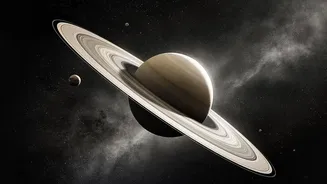
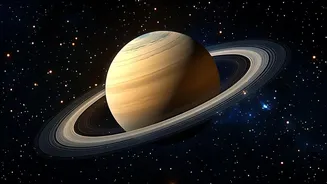
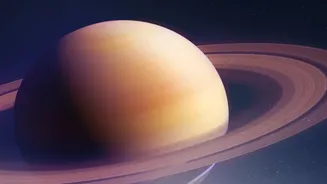
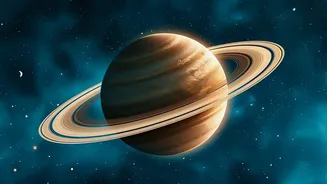
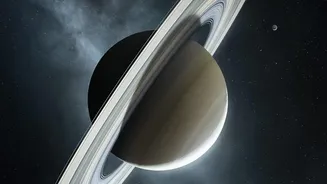
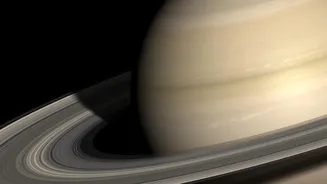
The first time you see Saturn's rings through a telescope is an unforgettable moment for any amateur astronomer. With a small telescope, you'll see the planet's disc and the rings as a single, awe-inspiring system. As you move to more powerful instruments (100x magnification or more), you might be able to spot more detail, like the Cassini Division—a noticeable dark gap between the main rings. You may also see Saturn's largest moon, Titan, which appears as a faint, star-like dot near the planet. The planet itself has a three-dimensional appearance, looking more like a marble than a flat disc, with its shadow often visible falling across the rings behind it.
Turning a Gaze into a Hobby
Using Saturn's August appearance as a launchpad, you can easily dive deeper into the world of amateur astronomy. This month also features the peak of the Perseid meteor shower around August 12-13, offering another spectacular reason to look up. Don't feel you need to do it alone. Many cities and towns in India have local astronomy clubs that welcome beginners. These groups often host public viewing nights where you can look through a variety of telescopes and learn from experienced observers. Exploring other celestial targets, like the moon's craters, Jupiter and its four Galilean moons, or sparkling star clusters, can quickly turn a single night of Saturn-gazing into a lifelong passion.