


An Exceptional Month for Sky-Watchers
October is a fantastic time for stargazing in India. The retreat of the monsoon clouds leaves behind clearer, more stable skies, especially from the middle of the month onwards. This clarity, combined with pleasant evening temperatures, creates an ideal
setting for a family outing, whether it's on a terrace, in a local park, or just in the backyard. This October is particularly special. Saturn reached 'opposition' on October 4, 2026, a celestial event where Earth passes between the Sun and the ringed planet. This alignment makes Saturn appear at its brightest for the year, and it remains brilliantly visible throughout the month, rising around sunset and staying up all night. You don't need to have seen it on the exact date; the excellent viewing opportunity extends for several nights and weeks, making any clear evening in October a great time to look for it.
Your Celestial Viewing Guide
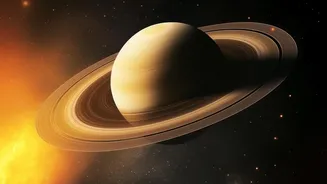
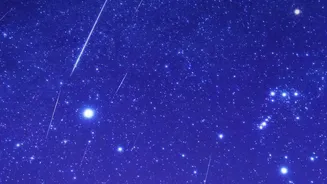
So, what can you and your family spot in the night sky? The star of the show is undoubtedly Saturn. Visible for most of the night, it will appear as a bright, steady, yellowish point of light. While you won't see its famous rings without a telescope, knowing you are looking at the ringed giant is a thrill in itself. But Saturn isn't alone. In the early part of the month, you might catch a glimpse of Venus and Mercury low on the western horizon shortly after sunset. Later in the month, a couple of hours after midnight, the mighty Jupiter rises. On October 6th, a beautiful waning crescent Moon will appear close to Jupiter in the pre-dawn sky, creating a lovely pairing. For those with extra patience, October also features two meteor showers: the Draconids (peaking October 8-9) and the Orionids (peaking October 21-22), which could reward you with a few 'shooting stars'.
What You'll Need (and What You Won't)
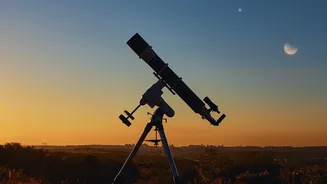
The best part about beginner planet-watching is that you don't need expensive equipment. The most important tool is your own curiosity. Planets like Saturn and Jupiter are visible to the naked eye. To get started, you only need a few simple things. A stargazing app on your smartphone is your best friend. Free apps like Sky Map, Star Tracker, or Stellarium Mobile can help you identify planets, stars, and constellations simply by pointing your phone at the sky. Many have a red-light mode to protect your night vision. Some apps, like Bhagol, even offer an Indian vocabulary for the sky. Beyond an app, consider a comfortable blanket or chairs, some warm clothes as the night cools, and maybe a pair of binoculars. Binoculars are a great first step before a telescope, as they are lightweight and can reveal details like Jupiter's four largest moons.
A Step-by-Step Family Guide
Ready to go? First, check the weather forecast for a clear, cloudless night. Second, find the darkest spot you can. Even moving to a part of your building's terrace or a local park away from direct streetlights can make a huge difference. Give your eyes about 20-30 minutes to fully adjust to the darkness; you'll be amazed at how many more stars appear. Use your stargazing app to find the planets. A good trick to distinguish a planet from a star is that planets tend to shine with a steady light, while stars twinkle. Start with the easiest target, like bright Saturn in the evening. Point it out to the kids and use the app to learn a fun fact about it. The goal isn't to become an expert in one night, but to spark a sense of wonder.
Make it a Family Tradition
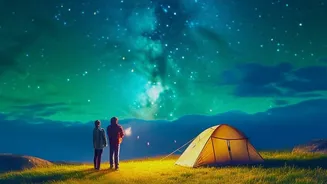
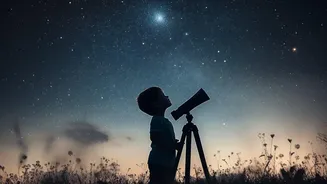
Turn this celestial viewing into a memorable family ritual. Keep your first session short and fun, maybe 30 minutes, to hold everyone's interest. Pack a flask of hot chocolate or some snacks to make it feel like a special event. Encourage your children to ask questions and look things up together. You can even start a simple logbook, sketching what you saw and noting the date and time. You can tell the ancient stories and myths associated with the constellations you spot, connecting science with culture. Celebrating each small discovery—a planet identified, a satellite spotted zipping across the sky—makes the experience rewarding for everyone. It’s a wonderful way to connect with both the universe and each other, creating memories that will last long after the night is over.