





A GPS Pathfinder for the Moon
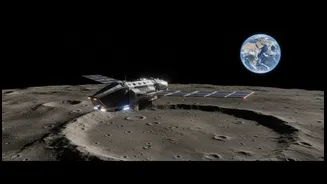
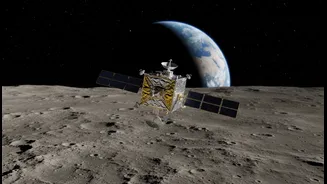
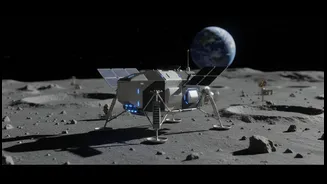
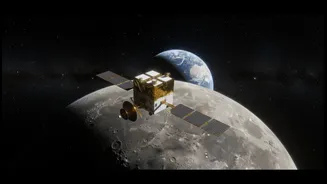
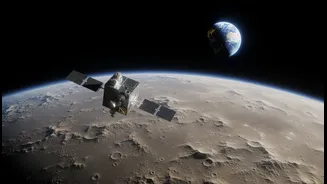
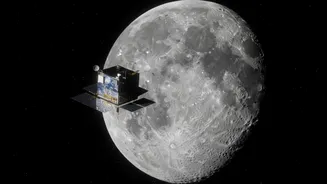
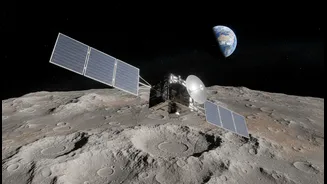
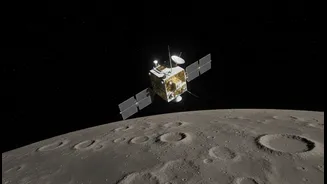
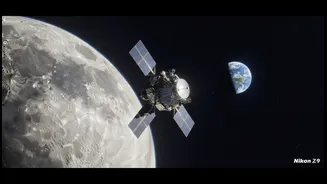
Launched in June 2022, the Cislunar Autonomous Positioning System Technology Operations and Navigation Experiment (CAPSTONE) is a microwave-sized CubeSat with a big job. Its primary mission was to be the first spacecraft to fly in a near-rectilinear halo
orbit (NRHO), the same challenging, fuel-efficient path planned for the future Lunar Gateway space station. This highly elliptical orbit uses a delicate gravitational balance point between the Earth and Moon, offering a stable staging area for missions with minimal fuel needed to maintain position. CAPSTONE's job was to validate this orbit and test an autonomous navigation system, allowing spacecraft to determine their position relative to others, like NASA's Lunar Reconnaissance Orbiter, without constantly phoning home to the Deep Space Network on Earth. The mission, which successfully concluded its NASA objectives in mid-2026, proved the stability of the orbit and the viability of the navigation tech.
The Blueprint for a Lunar Outpost
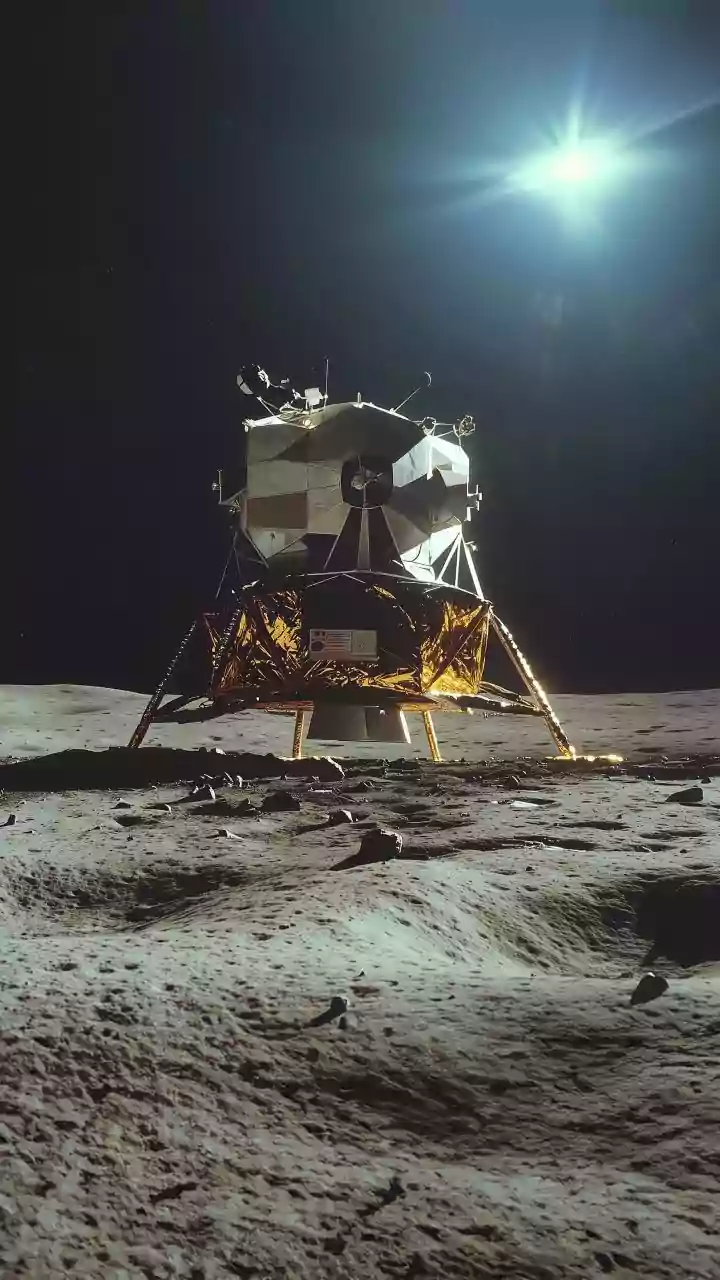
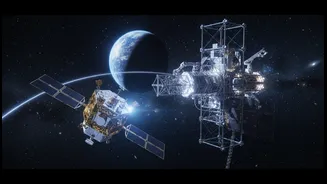
The successful demonstration of the NRHO is more than a technical achievement; it's a foundational step for the Artemis program's long-term goals. This orbit is critical for the Lunar Gateway, an outpost planned to support sustained human presence on and around the Moon. The Gateway will serve as a command center, science lab, and staging point for missions to the lunar surface and, eventually, Mars. By proving a spacecraft could successfully enter and operate in this unique orbital path, CAPSTONE retired significant risks for the far larger and more complex Gateway. It provided invaluable real-world data on station-keeping requirements and operational challenges, effectively serving as a scout for the permanent infrastructure to come. This ensures that when the multi-billion-dollar components of the Gateway arrive, they are entering a well-understood environment.
Unlocking the Cislunar Economy
Herein lies the real opportunity. A permanent outpost like the Gateway, enabled by the pathfinding work of CAPSTONE, is the anchor for a future cislunar economy. With reliable infrastructure in place, a host of commercial activities becomes viable. This includes not just resupply missions for the station itself, but potentially lunar mining, space tourism, advanced materials science, and satellite servicing. The Gateway acts as an aggregation point, a predictable hub where commercial landers can dock and transfer cargo or crew, reducing the complexity of direct-to-surface missions. NASA's strategy is to stimulate this marketplace by becoming a reliable anchor customer, purchasing services from commercial partners for everything from cargo delivery to astronaut spacesuits. CAPSTONE's success de-risks the orbit, making the entire ecosystem a more attractive and predictable arena for private investment.
A New, Cost-Effective Mission Model
Beyond the technology it tested, the CAPSTONE mission itself represents a paradigm shift. Unlike traditional, multi-billion-dollar NASA-led projects, CAPSTONE was a relatively low-cost venture, awarded as a $13.7 million contract to a private company, Advanced Space, which owns and operates the spacecraft. This public-private partnership demonstrates a faster, more agile way to conduct vital space exploration. By leveraging the innovation and efficiency of the commercial sector, NASA can test critical technologies without the massive overhead of a conventional mission. After its primary objectives were met, the spacecraft was even transformed into a flexible testbed for new software and communications technologies, demonstrating that a single, affordable launch can provide sustained value. This model—where NASA buys a service rather than building the entire mission from scratch—is crucial for expanding opportunities for smaller, more affordable missions to the Moon, Mars, and beyond.