



Often one of the first poses taught in a yoga class, Cat-Cow is a simple, gentle flow that offers profound benefits for your spine and mind. It's the perfect starting point for anyone looking to build a safe and sustainable yoga practice.
What is Cat-Cow and Why Practice It?
Cat-Cow, known
in Sanskrit as Marjaryasana-Bitilasana, is not one static pose but a dynamic, flowing movement between two positions. It's a foundational yoga sequence practiced on hands and knees, where the spine fluidly alternates between a rounded (Cat) and an arched (Cow) position. The primary purpose is to gently warm up the body, particularly the spine, making it an excellent precursor to more advanced yoga or other physical activities. Its benefits are numerous, including improved spinal flexibility, relief from back and neck tension, better posture awareness, and a calming of the mind by linking breath to movement. This gentle motion also massages the abdominal organs, which can aid digestion.
A Step-by-Step Guide to Cat-Cow
To perform the classic Cat-Cow pose, you only need a mat or a soft surface. Start in a 'tabletop' position on your hands and knees. Align your wrists directly under your shoulders and your knees directly under your hips, about hip-width apart. Your spine should be neutral, forming a straight line from your head to your tailbone. Inhale as you move into Cow Pose: let your belly drop towards the floor, lift your chest and tailbone towards the ceiling, and gently raise your gaze forward without straining your neck. Exhale as you transition into Cat Pose: press through your hands to round your spine towards the ceiling, like a cat stretching. Tuck your tailbone under and gently release your chin toward your chest. Continue flowing between these two poses for 8-10 breaths, allowing your breath to guide the rhythm of the movement.
Common Mistakes to Avoid
To get the most out of the pose and prevent strain, be mindful of common alignment issues. One frequent error is moving too quickly and not synchronizing the movement with your breath. The flow should be slow and deliberate. Another pitfall is collapsing in the lower back during Cow Pose or only rounding the upper back in Cat Pose; aim to articulate the entire spine. Also, avoid craning your neck back too far in Cow Pose, which compresses the vertebrae. Instead, keep the neck as a natural extension of the spine. Ensure your elbows are not locked but have a micro-bend to protect the joints, and distribute your weight evenly through your hands to avoid wrist strain.
Modification for Sensitive Knees
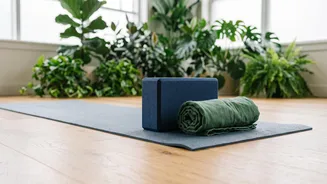
Kneeling on a hard floor can be uncomfortable for many people. If you feel pressure or pain in your kneecaps, the solution is simple: add cushioning. Place a folded blanket or towel under your knees for extra support. You can also double up your yoga mat by folding it in half. This extra padding allows you to focus on the spinal movement without being distracted by knee discomfort, making the pose much more accessible and enjoyable.
Modifications for Wrist Pain
Bearing weight on the hands can be challenging for those with wrist sensitivity or injuries. Instead of placing your palms flat on the floor, you have a couple of excellent alternatives. You can make gentle fists and rest your weight on your knuckles, which keeps the wrists straight. Another popular option is to lower onto your forearms, with your elbows directly under your shoulders. This variation still allows for the full range of spinal motion in Cat-Cow without putting any pressure on the wrists.
Try It Seated or Standing
Cat-Cow is not limited to the floor. A seated version is perfect for an office break or for those with limited mobility. Sit on the edge of a sturdy chair with your feet flat on the floor and hands on your knees. Inhale to arch your back and lift your chest, and exhale to round your spine. You can also perform a standing variation by placing your hands on a wall or the back of a chair, with your feet hip-width apart. From there, move through the same spinal flexion and extension. These variations provide the core benefits of spinal mobility anywhere, anytime.