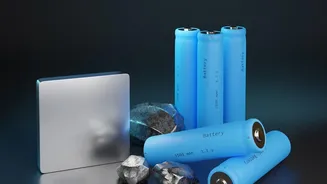





What Are Solid-State Batteries?
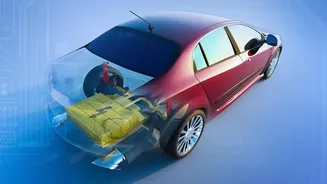
At its core, a battery works by moving ions between a positive (cathode) and negative (anode) electrode. In the lithium-ion batteries that power almost every e-scooter and smartphone today, this movement happens through a liquid or gel-like substance
called an electrolyte. While efficient, this liquid is often flammable, which is the root cause of the infamous 'thermal runaway' events that can lead to fires. Solid-state batteries, as the name suggests, replace this flammable liquid with a solid material, often a thin layer of ceramic, polymer, or glass. This fundamental change in design is what makes them so revolutionary. The solid electrolyte is non-flammable and more stable, effectively eliminating the primary fire risk associated with current batteries.
A Leap Forward in Safety and Performance
The single biggest advantage of solid-state technology for the average scooter owner is safety. By removing the flammable liquid electrolyte, the risk of a battery catching fire from damage, overcharging, or manufacturing defects is dramatically reduced. But the benefits don't stop there. Solid-state batteries can pack more energy into a smaller, lighter package. This increased energy density could mean doubling the range of an e-scooter without increasing the battery's size or weight. Furthermore, their stable structure allows for much faster charging speeds. While current scooters take several hours to charge, solid-state technology could slash that time to under 15 minutes for an 80% charge. They also promise a longer lifespan, capable of handling thousands of charge cycles with minimal degradation compared to their lithium-ion counterparts.
The Breakthroughs Making It Possible
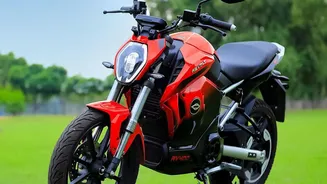
For years, solid-state batteries were considered a promising but distant technology, always just over the horizon. The primary hurdles were high manufacturing costs and difficulties in mass production. However, recent advancements are changing the equation. Researchers and companies have made significant strides in developing new solid electrolyte materials, like sulphides and polymers, that are more conductive and easier to work with. The challenge has been to press these solid layers together perfectly, without microscopic gaps, on a massive scale—a complex and expensive process. Now, several global players like Toyota, Samsung SDI, and CATL have announced pilot production lines and have set commercialization targets for as early as 2027. One company, Verge Motorcycles, has even started delivering the world's first motorcycles equipped with solid-state batteries to customers in 2026.
The 'Budget' Question: When Will It Be Affordable?
While the technology is incredibly promising, the term 'budget' is the key challenge. Currently, producing a solid-state battery is significantly more expensive than a comparable lithium-ion one—some estimates suggest it can be four to eight times more costly. This is due to the specialised materials and complex, high-precision manufacturing processes required. Because of this, the first electric scooters and motorcycles featuring this technology will be premium, high-end models, likely arriving in late 2027 or 2028 at a significant price premium. Widespread adoption in the budget scooter segment in India depends on economies of scale. As manufacturing techniques improve and gigafactories are built, costs are expected to fall dramatically, but experts predict that true cost parity with today's batteries may not be reached until the early to mid-2030s.
The Road Ahead for India
The Indian EV ecosystem is taking notice. Companies like Ola Electric have announced major investments in R&D and plans for gigafactories that include a focus on solid-state cell manufacturing. Other homegrown firms like GODI, Vikram Solar, and Gegadyne Energy are also actively involved in battery research and development, aiming to innovate in this space. The Indian government's production-linked incentive (PLI) schemes for battery manufacturing are also designed to encourage such advanced-technology ventures. However, a realistic timeline suggests that imported vehicles with solid-state batteries might appear in the early 2030s, with mass-market local production for budget scooters following in the years after that. For the near future, Indian consumers can expect continued improvements in existing lithium-ion technology, which is becoming safer and more affordable every year.