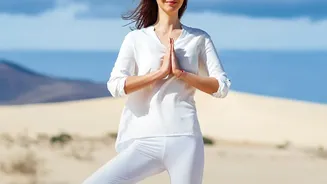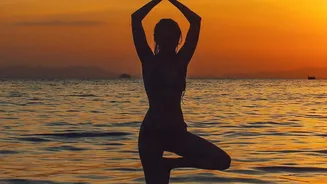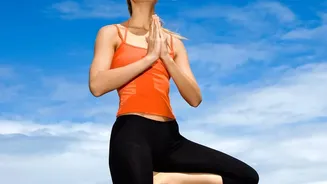



Graceful and grounding, Tree Pose, or Vrksasana, is a yoga staple that challenges our stability. But achieving its serene form isn't about force. It's about finding smart alignment and the right variation to avoid strain and truly blossom.
Establishing Your Roots
Before exploring
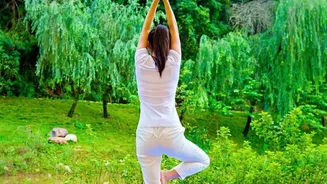
variations, mastering the foundation is key. Begin in Mountain Pose (Tadasana), standing tall with your weight distributed evenly across both feet. Shift your weight onto one foot, feeling all four corners of the foot ground into the floor. Engage the muscles of your standing leg to create a strong, stable trunk. The most critical rule is to place the sole of your bent foot either on your inner ankle, calf, or high up on the inner thigh—never directly on the knee joint. Placing pressure on the side of the knee can lead to instability and potential injury. Create an active connection by pressing the foot into the leg and the leg back into the foot; this creates a stable midline and prevents slipping.
Common Misalignments and How to Fix Them
One of the most frequent mistakes is allowing the hip of the bent leg to hike up, creating an uneven pelvis. This often happens when trying to force the foot too high. To fix this, lower the foot and consciously drop the hip until both hip points are level and facing forward. Another common issue is leaning the torso to one side to compensate for poor balance. Instead, focus on engaging your core muscles to keep your spine long and centered. Also, be mindful of your breath; holding it creates tension, while a steady, calm breath promotes stability. Finally, fix your gaze (drishti) on a non-moving point in front of you to help maintain focus and balance.
Beginner-Friendly Variations for Stability
If you're new to Tree Pose or feel wobbly, modifications are your best friend. The simplest option is to place the bent foot on the inner ankle of the standing leg, keeping your toes on the floor like a kickstand for extra support. From there, you can progress to placing the foot on the inner calf. Using a wall is another excellent way to build confidence; stand with one side next to a wall and rest a hand on it for support as you find your alignment. You can also practice a seated version of the pose on a chair, which provides all the hip-opening benefits without the balance challenge.
Deepening Your Pose Safely
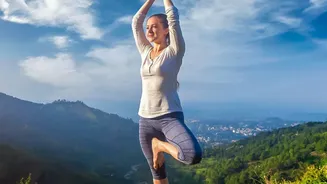
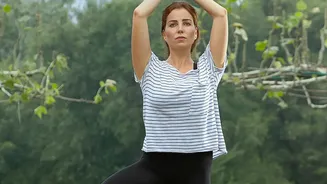
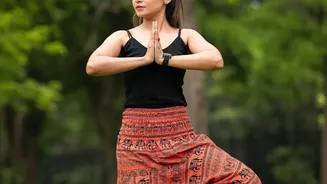
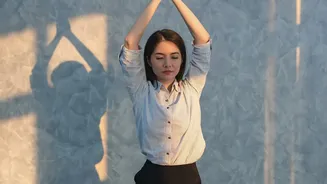
Once you feel stable with the foot on your inner thigh, you can explore different arm variations to change the pose's dynamic. The classic expression is with hands in a prayer position (Anjali Mudra) at the heart center. To increase the challenge, you can extend your arms overhead like branches, either with palms touching or apart. For a chest-opening variation, you can interlace your fingers behind your back. These shifts in arm position alter your center of gravity and require more core engagement to maintain balance. Remember, the goal isn't to force the bent knee far back but to gently encourage the hip to open over time.
Advanced Expressions of Tree
For seasoned practitioners, more advanced variations can offer new challenges. One option is a sidending Tree Pose, where you reach one arm up and over, creating a gentle stretch along the side of your body. Another advanced form is HalfndLotus Tree Pose (Ardha Padmasana in Vrksasana), where the top of the lifted foot rests high on its opposite thigh. This requires significant hip flexibility and should only be attempted if you can do so without any pain in its knee. These variations demand a high degree of balance, strength, and focus, reminding us that even a familiar pose has new depths to explore.