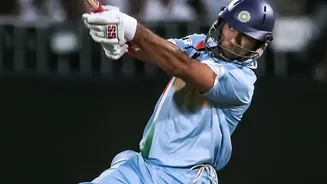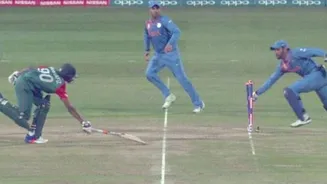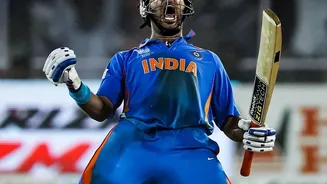


In April 2011, Yuvraj Singh was on top of the world, the Player of the Tournament in India's World Cup victory. Yet, the years that followed saw a profound struggle. What followed was not a simple dip in form but a battle for his life and career.
The Peak Before the Fall
To understand
Yuvraj Singh's struggle, one must first remember his zenith. Throughout the 2011 ICC World Cup, he was the nation's hero. He scored 362 runs and took 15 crucial wickets, an all-round performance for the ages. He was instrumental in India lifting the trophy after a 28-year wait. Yet, behind the heroic facade, a sinister battle was already underway. During the tournament, he experienced persistent coughing, vomiting, and breathing difficulties, symptoms he pushed through to help his team triumph. Unbeknownst to the world, a tumour the size of a golf ball was growing between his lungs.
A Life-Altering Diagnosis
Months after the World Cup celebrations, in late 2011, Yuvraj's health issues could no longer be ignored. In February 2012, he was diagnosed with a rare germ-cell cancer called mediastinal seminoma. The diagnosis was a seismic shock, shifting his focus from cricket to survival. He travelled to the United States for treatment, undergoing three gruelling cycles of chemotherapy in Boston and Indianapolis. The treatment was physically and mentally devastating. It ravaged his body, causing hair loss, weakness, and a catastrophic loss of the stamina that had defined him as an elite athlete. The man who hit six sixes in an over now struggled with basic physical tasks.
The Gruelling Comeback Trail
Though the chemotherapy was successful, the road back to professional cricket was immensely difficult. Yuvraj made his international comeback in September 2012, a remarkable feat just months after finishing his treatment. However, he was a changed player. The physiological effects of chemotherapy on an athlete's body are profound, often leading to decreased muscle strength, reduced endurance, and persistent fatigue. While he showed flashes of his old brilliance, including a career-best ODI score of 150 against England in 2017, consistency became his biggest challenge. His appearances for India became sporadic as he moved in and out of the side over the next few years.
An Evolving Team and Rising Standards
While Yuvraj was fighting his personal battle, Indian cricket was moving forward. Under a new generation of leadership, particularly with Virat Kohli's captaincy, fitness standards in the team skyrocketed. The introduction of stringent tests became the new benchmark for selection. A player's ability to maintain peak physical condition was no longer a bonus but a necessity. For Yuvraj, regaining the explosive power and supreme fitness of his pre-2011 days proved an insurmountable challenge. The game had become faster and more athletic, and new, younger players were emerging to stake their claim in the middle order.
A Legacy of Resilience
Yuvraj's post-2011 career was marked by inconsistency and criticism, most notably after his slow innings in the 2014 World T20 final, an event he later called shattering. He was left out of the 2015 World Cup squad and played his last international match in 2017 before retiring in 2019. In later interviews, he spoke about not feeling supported towards the end of his career, which contributed to his decision to retire. However, to view his later years as a failure is to miss the point entirely. The primary reason for his struggle was a life-threatening illness that would have ended the career of most athletes. His fight was not just to score runs, but to reclaim his life.