

Gajar (Carrot)
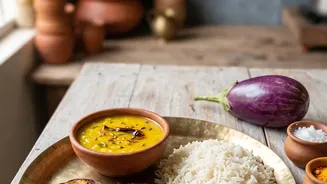
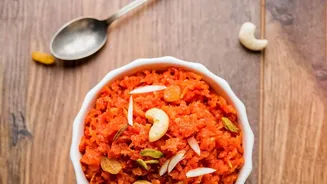
Winter brings sweet, red carrots that are a staple across the country. In North India, they are famously slow-cooked with milk, sugar, and ghee to make the decadent Gajar ka Halwa, a quintessential winter dessert. But their journey doesn't end there.
In the South, these same carrots are finely chopped or grated to create a vibrant Carrot Poriyal. This simple stir-fry, tempered with mustard seeds, urad dal, and curry leaves, offers a savoury counterpoint to the halwa's richness and is a perfect side dish for rice with sambar or rasam.
Mooli (Radish)
The sharp, peppery flavour of Mooli, or white radish, is a beloved winter characteristic. North Indian households expertly stuff grated and spiced mooli into whole wheat dough to make Mooli Parathas, a hearty breakfast often served with a dollop of butter or curd. Travel South, and the radish transforms completely. Here, it is known as Mullangi and is a star ingredient in Mullangi Sambar. Cubed and cooked with lentils and tamarind, the radish absorbs the tangy, spicy flavours of the sambar, shedding its sharp pungency to become tender and savoury, showcasing its incredible adaptability.
Palak (Spinach)
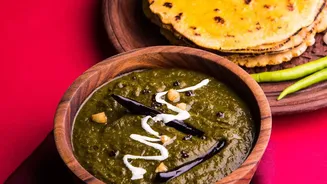
Spinach is a winter green that thrives in India's cooler months. Its most famous North Indian avatar is Palak Paneer, where the earthy spinach is pureed into a creamy, lightly spiced gravy that coats soft cubes of paneer. However, in South India, spinach (often called Pasalai Keerai or Palakura) is prepared in a lighter fashion. It is commonly used in dishes like Palak Kootu, a flavourful lentil and coconut-based stew, or Palakura Pappu, a simple dal where the spinach is cooked with lentils until tender. These preparations highlight the green's fresh taste without the heavy cream of its northern counterpart.
Bajra (Pearl Millet)
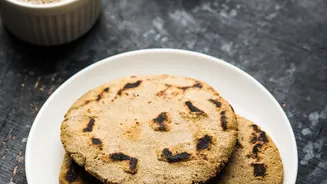
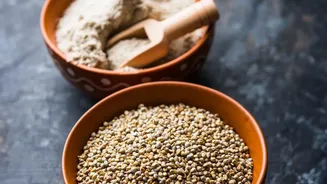
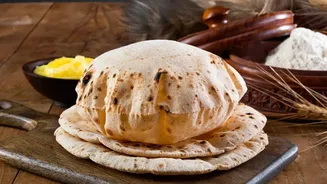
Bajra is a hardy, warming millet traditionally consumed in the winter. In the arid regions of Rajasthan and Gujarat, Bajra Roti or 'Rotlo' is a rustic, unleavened flatbread often enjoyed with ghee, jaggery, or a spicy garlic chutney. The same millet, known as Kambu in Tamil Nadu, finds a home in Southern cuisine. It is used to make Kambu Dosai, a nutritious and crispy crepe, or Kambu Koozh, a fermented porridge that is a cooling and nourishing meal, showcasing the grain's ability to be both a hearty bread and a light, fermented dish.
Shakarkandi (Sweet Potato)
Sweet potato, or Shakarkandi, is a winter delight enjoyed throughout India. In the North, it's often fire-roasted by street vendors and served as Shakarkandi Chaat — diced and tossed with tangy chutneys and chaat masala. In the South, this root vegetable, called 'Sakkaravalli Kizhangu', is the hero of a popular side dish, Poriyal. It's cubed and stir-fried with a classic South Indian tempering of mustard seeds and curry leaves, sometimes with a sprinkle of coconut. This simple preparation allows the natural sweetness of the vegetable to shine in a savoury context.
Amla (Indian Gooseberry)
The tart and nutrient-dense Amla arrives with the winter chill. In North India, it is often preserved to last the season, most famously as Amla Murabba, where the fruit is candied in a fragrant sugar syrup, or as a spicy pickle. In the South, where it is known as Nellikai, its sourness is celebrated in fresh preparations. Nellikai Sadam (gooseberry rice) is a popular dish where grated amla is mixed with rice and a tempering of spices to create a tangy and flavourful one-pot meal, similar to lemon rice. It is also used to make pachadi (a type of raita) and pickles.
Amaranth Greens (Chaulai/Thotakura)
Amaranth greens, known as Chaulai in the North and Thotakura in the South, are a nutritious leafy vegetable available in winter. In North Indian kitchens, Chaulai is often prepared as a simple saag or sabzi, stir-fried with garlic, onions, and minimal spices. The Southern approach is similar in technique but distinct in flavour. Thotakura Vepudu (stir-fry) is a common preparation, often finished with a coarse powder of roasted peanuts or coconut, adding a delightful texture and nutty flavour. It's also a key ingredient in Thotakura Pappu, a comforting dal that is a staple in Andhra cuisine.