
The 'Just Right' Zone Isn't Enough
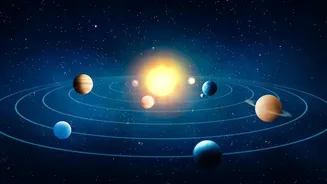
For decades, astronomers have focused their search for life on exoplanets within the habitable zone—the orbital band around a star where it's not too hot and not too cold for liquid water to exist on a planet's surface. This region gets its 'Goldilocks'
nickname because, like the fairy tale porridge, the temperature has to be 'just right'. Liquid water is considered a fundamental ingredient for life as we know it, making these planets prime targets. However, scientists increasingly realize that simply being in this zone is no guarantee of habitability. A planet's ability to hold onto liquid water depends heavily on other factors, most importantly the presence and composition of its atmosphere. Venus, for instance, sits within the optimistic edge of our sun's habitable zone, yet its surface is hot enough to melt lead. This highlights a crucial fact: a planet's address is only the beginning of the story.
The Protective Blanket That Makes Life Possible
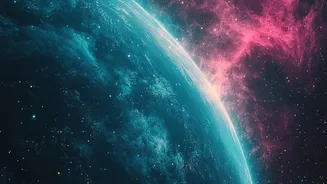
A suitable atmosphere is what can 'make' a habitable world. It acts like a planetary-scale blanket, trapping heat through the greenhouse effect to keep surface temperatures stable and warm enough for liquid water. Without its atmosphere, Earth's average temperature would plummet to a frigid -18 degrees Celsius, well below freezing. This atmospheric pressure is also what allows water to remain liquid on the surface. But its role doesn't stop there. An atmosphere shields the surface from harmful ultraviolet radiation and high-energy particles streaming from its star. A planet's size and gravity are critical for holding onto this gaseous envelope; planets smaller than about half of Earth's mass lack the gravitational pull to maintain a significant atmosphere. The composition also matters immensely. Gases like carbon dioxide, water vapor, and others must be present in the right balance to regulate temperature effectively.
When Good Atmospheres Go Bad
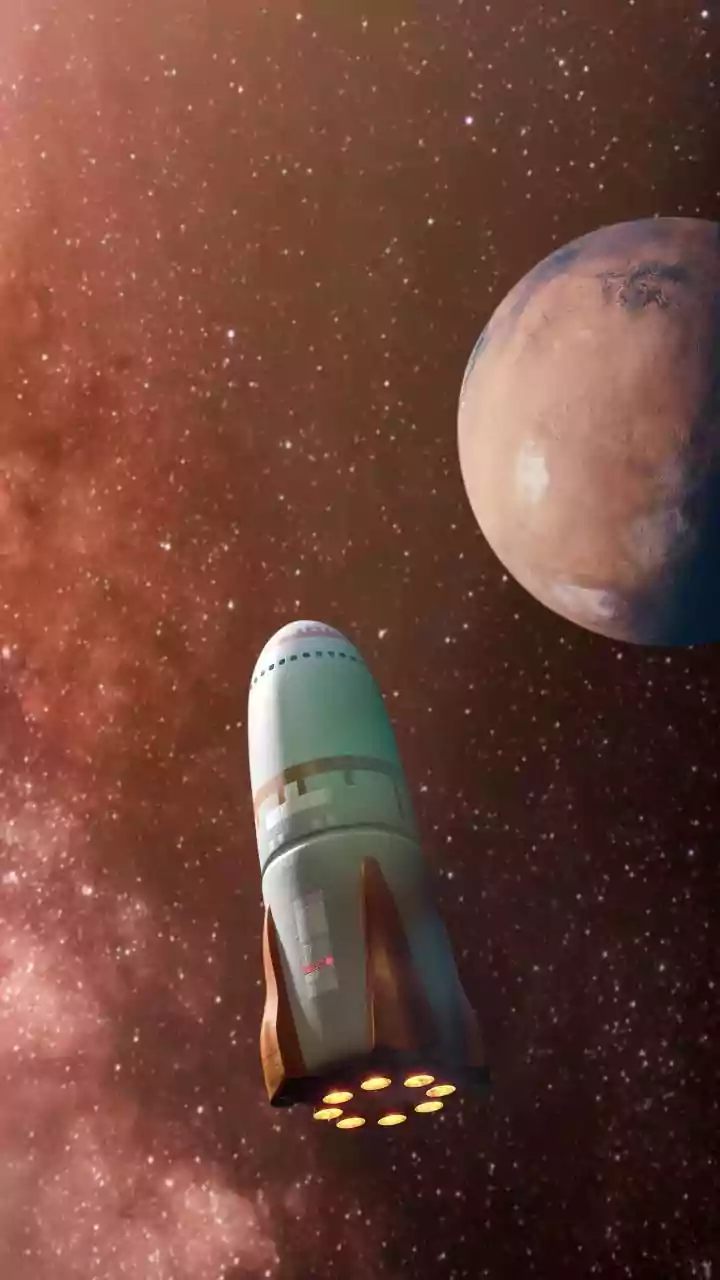
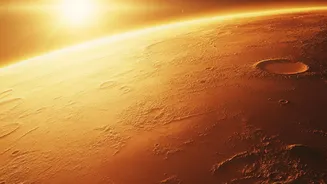
Just as an atmosphere can create a haven for life, it can also 'break' a planet, turning it into a sterile world. Look no further than our neighbors for proof. Venus is the classic example of a runaway greenhouse effect. Early in its history, it may have had oceans, but as the sun's brightness increased, water evaporated, creating a thick, heat-trapping atmosphere. This created a vicious cycle where rising temperatures led to more evaporation, until the oceans boiled away and carbon dioxide choked the planet, resulting in the scorching hothouse we see today. Mars represents the opposite problem: atmospheric stripping. Once warmer and wetter, Mars lost its global magnetic field billions of years ago. Without this protective shield, the solar wind—a constant stream of charged particles from the sun—gradually eroded its atmosphere, thinning it to less than 1% of Earth's and leaving behind a cold, dry desert. Recent data from NASA's MAVEN mission shows this stripping process continues today.
Reading the Air on Distant Worlds
The key to sorting potentially habitable worlds from the duds lies in studying their atmospheres, a task for which the James Webb Space Telescope (JWST) is perfectly suited. Using a technique called transmission spectroscopy, the telescope analyzes starlight as it passes through an exoplanet's atmosphere. Different gases absorb specific colors of light, leaving a chemical fingerprint that scientists can read to determine the atmosphere's composition. In a significant breakthrough reported in July 2026, astronomers detected the first confirmed atmosphere around a rocky, Earth-like planet in the habitable zone, called LHS 1140 b. By observing helium escaping the planet, they confirmed it has retained its atmosphere for billions of years, making it a prime candidate for further study. These observations are moving the search for life beyond just finding planets at the right distance and into the complex, crucial work of understanding the very air they breathe.