




Beyond the Straight Line of DNA
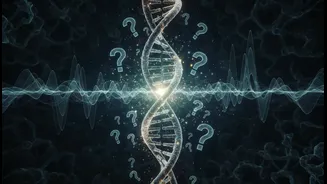
For decades, we’ve pictured DNA as a long, linear string—a two-metre-long instruction manual tightly packed inside a microscopic cell nucleus. This one-dimensional view helped scientists identify specific genes, like oncogenes (cancer-causing genes) and
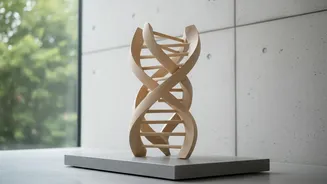
tumour suppressors, that play a role in cancer. Traditional treatments often target the activity of these mutated genes or the proteins they create. However, this is only part of the story. It turns out that the physical shape and organisation of DNA are just as important as the sequence itself. Our DNA is not just a random tangle; it's meticulously organised into complex 3D structures, including intricate loops and folds known as chromatin loops or topologically associating domains (TADs). These loops act like a filing system, bringing distant parts of the DNA into close physical contact. This allows a gene in one location to be controlled by a regulatory element, like an enhancer or a 'switch', that might be hundreds of thousands of letters away on the linear sequence.
When Good Loops Go Bad
In a healthy cell, these DNA loops create what scientists call “insulated neighbourhoods”. They ensure that genes are only switched on by their correct regulatory partners, preventing biological wires from getting crossed. However, in cancer cells, this sophisticated architecture can break down. Research has shown that the 3D genome in cancer cells is often different from that in healthy cells. Sometimes, the boundaries that insulate these neighbourhoods are broken. When this happens, a powerful enhancer that is normally kept separate can suddenly come into contact with a dormant oncogene. This faulty connection can switch the oncogene into overdrive, fuelling uncontrolled cell growth and tumour development. Studies in brain tumours, leukaemias, and bladder cancer have linked these architectural changes to cancer progression. In some cases, mutations don't alter a gene itself but instead affect proteins like CTCF, which act as the anchors for these DNA loops, causing the structure to collapse.
A New Arsenal of Cancer-Fighting Strategies
This new understanding of the 3D genome opens up entirely new avenues for cancer therapy. Instead of just targeting the products of faulty genes, scientists are now looking for ways to target the faulty architecture itself. One promising area involves developing drugs that can restore the correct looping structures or prevent the abnormal interactions that drive cancer growth. Another fascinating discovery is the role of extrachromosomal DNA (ecDNA). These are small, circular loops of DNA that exist outside of our chromosomes and often carry extra copies of powerful oncogenes. Because they are not part of the main chromosomes, they can replicate rapidly, helping tumours evolve and develop resistance to treatment. Researchers are now developing drugs that specifically target the vulnerabilities created by ecDNA, aiming to selectively kill cancer cells that rely on them. This includes molecules that interfere with the replication or repair mechanisms that ecDNA depends on.
The Road Ahead is Complex but Promising
While the prospect of 'genome architecture therapy' is exciting, the road from the laboratory to the clinic is long and challenging. The 3D genome is incredibly complex, and researchers are still working to fully understand the mechanisms that control it. It's not always clear whether changes in DNA looping are a cause or a consequence of cancer. However, the progress is rapid. Scientists are using advanced imaging and AI-driven analytics to map these structures in stunning detail, identifying new vulnerabilities in cancer cells. Clinical trials for drugs that target processes related to DNA structure and repair, such as PARP inhibitors and ATR inhibitors, are already showing promise in treating certain cancers. The ultimate goal is to develop precision medicines that can either fix the broken DNA architecture or exploit it to destroy cancer cells without harming healthy tissue. This represents a fundamental shift from a gene-centric view to a more holistic, structure-based approach to oncology.